Wednesday, August 1, 2018
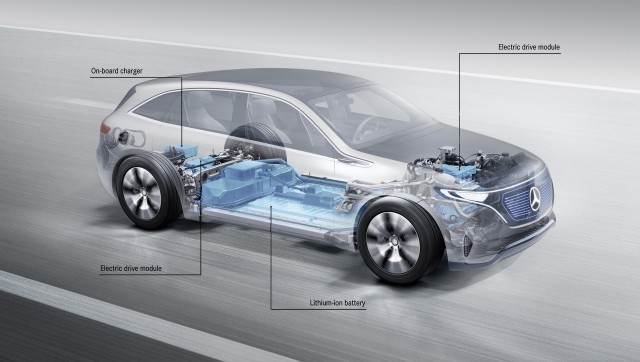
Mercedes-Benz EQS caught in spy shots
Sunday, March 25, 2018
BEST PERFORMING ELECTRIC VEHICLE STOCKS


Friday, September 22, 2017
Ten Global Companies Commit To 100% Electric Vehicles
Following in the wake of initiatives such as RE100 and EP100, the newest initiative to focus on helping businesses commit to 100% targets to help the environment (EV100) launched in partnership with The Climate Group this week at Climate Week NYC. The launch includes 10 founding members — Baidu, Deutsche Post DHL Group, Heathrow Airport, HP Inc., IKEA Group, LeasePlan, METRO AG, PG&E, Unilever, and Vattenfall. Where RE100 seeks to accelerate the adoption of 100% renewable energy targets, and EP100 aims to increase the number of companies doubling their energy productivity, EV100 is looking to bring together companies committed to accelerating the transition to electric vehicles (EVs).
Image via ecartestdrivesTuesday, December 6, 2016
Mercedes Doubles Down On Electric Car Production
Wednesday, June 8, 2016
New IEA Report Says 1.26 Million Electric Cars Sold In 2015
Wednesday, March 9, 2016
EV Sales Rose Significantly Worldwide In 2015
Wednesday, August 12, 2015
Swincar E-Spider Is Part Car, Part Lunar Rover
Friday, May 22, 2015
Electric Cars Proving Increasingly Popular With Customizers
Tuesday, March 24, 2015
Richard Branson Hints At Electric Car From Virgin
Monday, October 24, 2011
GM to invest $325 million in electric vehicle parts manufacturing
On Friday General Motors announced it would be investing $325 million to support production of future electric vehicle components in its Warren, Mich. plant.
The money is to go toward tooling and equipment and would add or retain 418 jobs at the facility which currently has 679 employees.
“This investment in the future recognizes the excellent work force and operation of this plant,” said GM Manufacturing Manager Gerald Johnson. “While we aren’t sharing many details about this product, I can tell you that this investment demonstrates how GM, working with our UAW partners, continues to innovate and bring new electrification solutions to our customers.”
GM Warren Transmission employee Michael Burrows assembles a six-speed transmission on Friday in Warren, Mich.
No timing was given for when these EV-oriented upgrades would be made. Presently most of the plant’s employees are engaged in building six-speed automatic transmissions for the Chevrolet Traverse, Buick Enclave, GMC Acadia crossover vehicles and Chevy Malibu sedan.
The suburban Detroit facility has 2.1 million square-feet of space, equivalent to the area of 15 city blocks, and in 2010 produced more than 338,000 transmissions.
Partial credit for adding EV parts to its production was taken by the United Auto Workers union, which negotiated the project and jobs during recently settled contract talks.
“We are very proud of the membership of UAW Local 909 whose hard work and dedication to building quality products is why this new electric drive unit module is being built in the United States,” said Joe Ashton, UAW vice president representing the GM Department. “These good paying, middle class jobs are very important for the State of Michigan and the Metro Detroit area. It is the UAW’s goal to increase employment at GM and show the world that we can compete with anyone.”
These are strong words that – added to GM’s comments – could partially allay concern among those who question GM’s commitment to electrification following news that it would introduce no new Voltec models until 2015.
The decision to build EV parts also adds a piece to the information puzzle following GM’s announced plans to co-develop electric vehicles with battery maker A123 Systems.
We do not know if Voltec parts would also be made at Warren, or if this is for the Spark EV, or battery electric vehicles yet to be made known.
The company has said it would build the Voltec-based Cadillac ELR and Spark EV, but has not specified their timing either.
Nor did GM disclose how many new jobs would be created to make electrified vehicle parts versus jobs that are merely being retained, so we have no idea of the scope of this initiative.
So go figure. At the rate of announcements in the past weeks and months, we would not be surprised to hear more dribs and drabs of EV news not long from now, but GM is being careful not to release information ahead of time.
The only story the company is telling loud in clear is regarding its big picture commitment to create more electrified vehicles, and to remain competitive with them on a world scale.
Source: GM-Volt.com
Thursday, February 10, 2011
Sunday, December 26, 2010
Smith Electric Vehicles US Finalizes Purchase of Smith Electric UK for $15M
Smith Electric Vehicles US (SEVUS) will finalize the purchase of its United Kingdom-based parent company, Smith Electric Vehicles (UK), creating the world’s largest manufacturer of commercial electric vehicles. The $15-million sale will be effective 1 Jan. 2011. Smith UK’s current owner, the Tanfield Group, will retain 49% equity in Smith Electric Vehicles US This percentage is subject to dilution as Smith raises additional equity capital.
The purchase will be split into 20 payments, payable monthly, with the first payment made on completion of the sale. Interest will accrue on the principal outstanding amount at the rate of 4% over base rate. In the event of an IPO of SEVUS, the full balance would immediately fall due. SEV reported losses of £2.159 million (US$3.333 million) for the 6 months to 30 June 2010 and net assets at that date of £9.607 million (US$14.8 million).
This sale signals a bright future for the electric commercial vehicle industry. Being in a position to unify Smith’s divisions after less than two years of operating in the United States is evidence that the market for affordable, sustainable commercial fleets is fertile. The unification of Smith Electric Vehicles will create operational efficiencies and market synergies that will make Smith more financially sound and productive.
—Bryan Hansel, CEO of Smith Electric US
Smith UK has been a leading manufacturer of zero-emissions battery-electric commercial vehicles in Europe since the 1920s. It operates an unrivaled UK-wide service and support network that already maintains more than 5,000 vehicles for major fleet operators. The US branch of Smith, launched in 2008, has licensed the proprietary technology for its all-electric Smith Newton trucks from the US division.
In 2009 Smith Electric US licensed the technology from the Tanfield Group and began to introduce the Smith Newton to the United States. Smith Electric US is now a privately-held company owned by Private Investors, Tanfield, and Management, headquartered in Kansas City, Missouri. The consolidation enhances a possible public offering of its equity securities in the United States.
Source: Green Car Congress
Monday, August 23, 2010
CES Study Finds 40% of American Adults Likely to Test Drive an EV
Forty percent of consumers report they are likely to test drive an electric vehicle, according to a new study of online American adults from the Consumer Electronics Association (CEA). The study, Electric Vehicles: The Future of Driving, suggests electric vehicles entice consumers with improved environmental quality and potential cost savings, but leave them with questions about battery life and convenience of battery charging.
Consumers are open to considering an electric vehicle in the future, with 42% reporting they are likely to follow news reports about electric vehicles. However, overall awareness of the various types of alternative vehicles remains low. While nearly one-third (32%) report they are familiar, or very familiar, with hybrid vehicles, only about one-quarter are familiar with electric-powered vehicles (25%).
Those consumers who are open to buying an electric vehicle cite the positive environmental impact and potential cost savings as primary reasons to do so. More than three-quarters of those surveyed (78%) said the vehicle’s ability to run without gasoline is the greatest advantage, followed by less pollution (67%), and the lack of need for oil changes and tune-ups (60%).
For a new product category, interest in electric vehicles is strong and likely to grow as more vehicles enter the market and consumers become more aware of them. Manufacturers, dealers and other sellers will need to emphasize mileage and battery-related specifications when promoting and selling electric vehicles.
—Chris Ely, CEA’s manager of industry analysis
According to the study, consumers perceive several disadvantages about electric vehicles. Concerns about mileage potential before needing to recharge (50%) and battery life (34%) top the list. Cost of the vehicle, reliability and availability of charging stations are also key concerns many consumers have.
The study finds running out of battery power on the road (71%), lack of charging stations and/or not being able to recharge (66%) and limited mileage (59%) are the most common perceived disadvantages with electric vehicles. Home charging stations may also impact purchase decisions. Half of consumers (51%) would be less likely to consider purchasing an electric vehicle if they would have to install special charging equipment for the batteries.
Environmental benefits, coupled with potential cost savings in fuel and tune-ups, will lead to increased interest for electric vehicles and potential floor traffic at dealerships. But concerns regarding battery life, charging stations and limited mileage may keep some consumers away until a comprehensive infrastructure is in place.
—Chris Ely
For the first time, electric vehicles will be featured at the 2011 International Consumer Electronics Show (CES), showcasing a full range of high- and low- speed vehicles, energy storage devices and charging equipment. This new CES TechZone will feature major automotive companies, including Audi, in the Las Vegas Convention Center’s North Hall.
Electric Vehicles: The Future of Driving (August 2010) was conducted from 27 May – 3 June 2010. It was designed and formulated by CEA Market Research, the most comprehensive source of sales data, forecasts, consumer research and historical trends for the consumer electronics industry. The complete report is available free to CEA member companies at members.CE.org. Non-members may purchase the study for $699 exclusively at mycea.CE.org.
Source: Green Car Congress
Thursday, July 22, 2010
Senate Energy Committee approves $3.6B for electric vehicles

The Senate Energy Committee has approved a $3.6 billion bill to boost electric vehicles.
The bill approved on a 19-4 vote this morning is a scaled-back version of an $11 billion bill first proposed in May.
But its fate is still in doubt as Senate Democrats are debating whether to include new electri vehicle funding as part of an energy bill they hope to approve before Congress goes home next month.
Separately, the committee approved a bill introduced by Sen. Debbie Stabenow, D-Lansing, that would extend the $25 billion retooling loan program for advanced technology vehicles. But the Senate hasn't yet said how much more it might add to the program.
The Stabenow measure expands the eligibility of vehicle technologies that would qualify for the program, including natural gas vehicles. It would also urge the Energy Department to carry out research programs for advanced technologies for vehicles, and to study whether the federal government could convert thousands of government vehicles to natural gas power.
The Stabenow measure would also make medium- and heavy-duty trucks eligible for the program.
The bill approved by the Energy Committee, which was authored by U.S. Sen. Byron Dorgan, D-N.D., seeks to promote the deployment of plug-in electric vehicles through a series of "deployment communities."
The Promoting Electric Vehicle Act
"Passing this legislation will strengthen our national security and improve the air we breathe, while relying on our abundant and diverse electricity supply to fuel our cars," Dorgan said. "We are now one step closer to dramatically reducing our dangerous dependence on foreign oil that hurts our economy, helps our enemies and puts our security at risk. Domestic petroleum will always be an important part of our country's energy strategy, but we also must invest in alternative energy approaches including electric cars."
The bill would create "deployment communities" across the country, where targeted incentive programs for electric vehicles and charging infrastructure systems would help demonstrate rapid market penetration and determine what best practices would be helpful for nationwide deployment of electric vehicles.
Dorgan wants to electrify half its cars and trucks by 2030, which if achieved, would cut U.S. demand for oil by about one-third.
Advocates of electric vehicles praised the vote.
"Republicans and Democrats have taken another critical step toward finally ending our nation's dangerous dependence on oil," said Robbie Diamond, president of the Electrification Coalition.
Congress has already set aside billions of dollars to boost electric vehicles, including $2.4 billion in grants for electric vehicle and battery research. It also approved a $7,500 tax credit for purchasing electric vehicles.
Source: Detroit News