Showing posts with label China. Show all posts

Tuesday, January 8, 2019

Tesla breaks ground on China factory for Model 3 and Model Y

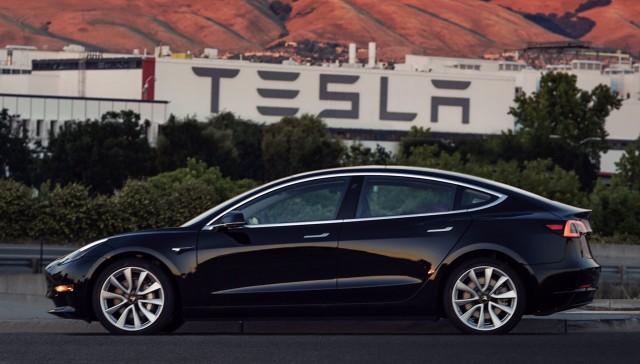
2017 Tesla Model 3, in photo tweeted by Elon Musk on July 9, 2017


Tesla CEO Elon Musk announced on Twitter Sunday night that the company would break ground on its new Chinese factory on Monday.

Musk said the plant, known as Gigafactory 3, will produce up to 500,000 Model 3 and Model Y vehicles for China and other nearby markets when it is completed in 2020.
Initial construction, however, planned to be completed this summer, will allow the factory to begin producing Model 3 sedans by the end of the year. Musk said it will reach volume production of the Model 3 next year.
Looking forward to breaking ground on the @Tesla Shanghai Gigafactory today!
Aiming to finish initial construction this summer, start Model 3 production end of year & reach high volume production next year
694 people are talking about this
The said the plant will produce "affordable versions" of the Model 3 and Model Y, while more expensive versions, such as the Model 3 Performance, along with the Model S and Model X will continue to be produced at the company's main factory in Fremont, California, and exported to China.
Shanghai Giga production of Model 3/Y will serve greater China region
Shanghai Giga will produce affordable versions of 3/Y for greater China. All Model S/X & higher cost versions of Model 3/Y will still be built in US for WW market, incl China.
1,029 people are talking about this
As the company's troubled ramp-up of existing Model 3 production showed, Tesla is in dire need of more manufacturing space than the Fremont factory affords. (When it needed a second assembly line for the Model 3, it famously constructed one in a tent in the Fremont parking lot.)

Musk has also said the company needs the Chinese factory, outside Shanghai, to reduce tariffs that China imposed on imported cars in retaliation for President Trump's tariffs on Chinese steel.
Tesla's next model, the Model Y small SUV, was originally slated to go into production in 2019, but the company currently has no factory space to produce it. The company has also promised a new roadster, as well as a pickup and a semi in coming years.

The factory is dubbed Gigafactory 3, following the company's designation of its giant battery factory—the largest factory under a single roof—in Nevada as Gigafactory 1, and a Solar City factory to produce solar cells outside Buffalo, New York, as Gigafactory 2.
The company secured the site in Shanghai's free trade zone in October. Pictures of the bare site, and videos of construction of a fence around it have been circulating since November.

Wednesday, November 7, 2018

Electric Tuk-tuks Power EV Revolution in India

When you think of the countries that are driving the EV revolution, you might think of China, or Norway, or– being the birthplace of Tesla, and all– even the United States. One country you probably don’t think about, however, is India. You should think of India, though, because there are more than 1.5 million electric tuk-tuks on India’s roads right now.

In India, Tuk-tuks are a $1.5 Billion Business

Longtime readers of Gas 2 already know that I love me a good tuk-tuk. Based on Vespa’s three-wheeled Ape cargo scooter, India’s tuk-tuks can be converted into solar-powered food trucks or continent-crossing adventure-mobiles, and that’s why they work in India: they’re cheap, adaptable, and durable. Those three qualities make the little trikes interesting, but they also make tuk-tuks the go-to vehicle for India’s massive rickshaw taxi industry.
It’s those rickshaw taxi services, whose profits are put at risk as fuel prices rise and fall, who have been driving the EV revolution in the Asian country. Last year, for example, a company called SmartE (an Uber-style ride-hailing service) deployed more than 1,000 electric tricycles in the cities of Gurgaon and Faridabad, offering services from key train stations. In all, more than new 11,000 electric tuk-tuks are being put into service on Indian roads each month– and that’s a statistic that got Bloomberg’s attention.


Bloomberg writes that, “about 1.5 million battery-powered, three-wheeled rickshaws – a fleet bigger than the total number of electric passenger cars sold in China since 2011.” Which is cool, but the most interesting part of the story is that this EV “revolution” is happening without government subsidy or direction. “drivers of the ubiquitous three-wheelers weaving through crowded, smoggy streets discovered that e-rickshaws are quieter, faster, cleaner and cheaper to maintain than a traditional auto rickshaw. They also are less strenuous than cycle rickshaws, which require all-day peddling. So with more rides possible in a day, the e-rickshaws are proving more lucrative.”
So, maybe that whole “free market” thing has some merits, now and again. I mean, I’m not particularly convinced, but maybe you guys are more libertarian than I am. Let me know what you think of the whole e-tuk-tuk thing happening in Indian in the comments section at the bottom of the page. Enjoy!

Source | ImagesBloomberg, via Motorpasión.

Sunday, July 1, 2018

Ford Hits CO2 Emissions Targets — 8 Years Early!


Earlier this week, Ford announced that it had achieved its stated goal to reduce the CO2 emissions of its manufacturing facilities to more sustainable levels. The kicker, though, is that it didn’t just meet its 2017 goal. The Blue Oval has met its 2025 goal. (!)
I will freely admit that I’ve been a bit hard on Ford lately forever, but stuff like committing its EV development to China while its US lineup languishes is annoying. The company’s decision to wait for an NEP mandate to commit to electric, biofuel, or fuel cells is also pretty f***ing maddening. Still, this is a big win, and I’m happy to give the Ford guys a well-earned victory lap for it.
You can check out the official Ford press release, below. Then let us know what you think of the company’s efforts to reduce its carbon footprint in the comments section at the bottom of the page. While you’re there, feel free to bitch and moan about how terrible the Electric Focus is, too. Enjoy!

    FORD HITS CO2 MANUFACTURING EMISSIONS REDUCTION TARGET EIGHT YEARS EARLY

    • Ford Motor Company announces in its 19th annual Sustainability Report that it has achieved the company’s manufacturing emissions reduction goal eight years ahead of schedule
    • The goal was set in 2010, aiming to reduce the company’s global carbon dioxide emissions from manufacturing operations by 30 percent per vehicle produced by 2025
    • Ford’s energy conservation work played a major role in achieving the goal eight years early, including paint and other process improvements, LED lighting, plant consolidations and new energy efficient facilities – and more
    DEARBORN — Today Ford Motor Company announces as part of its 19th annual Sustainability Report it has met its goal to reduce manufacturing emissions – eight years ahead of schedule.
    In 2010, Ford’s Environmental Quality Office announced a goal – to reduce the company’s carbon dioxide emissions from manufacturing operations by 30 percent per vehicle produced by 2025. Ford hit the target twice as fast as expected. The results are dramatic, with a global manufacturing CO2 emissions reduction of more than 3.4 million metric tons from 2010 to 2017 – equivalent to greenhouse gas emissions from more than 728,000 passenger vehicles driven for one year.
    “We are proud of the work we have done to achieve this goal,” said Bruce Hettle, group vice president, manufacturing and labor affairs. “We’ve made several improvements to our manufacturing operations – from the lighting we use to plant consolidations – all of which played a role in dramatically reducing our CO2 footprint.”
    Ford reduced its emissions footprint through energy conservation and efficiency changes at Ford’s manufacturing facilities, such as installing more than 100,000 LED light fixtures and updating paint operations.
    “Painting operations use a large amount of energy,” said Andy Hobbs, director, environmental quality office. “Introducing technology that allows wet-on-wet paint application and eliminates a drying oven, in more plants has significantly decreased energy use while maintaining quality.”
    Minimum Quantity Lubrication is another energy-reducing technology. In MQL, a machining tool is lubricated with a very small amount of oil sprayed directly on the tip of the tool in a finely atomized mist, instead of with a large quantity of coolant/water mixture.
    Ford now is working on setting a new goal – this one, focused on renewable energy. “We will continue to set ambitious goals and work to create innovative practices to achieve them,” said Hettle. “Our next strategy will focus on increasing Ford’s use of renewable energy while maintaining our energy efficiencies.”
    Ford also remains focused on reducing vehicle emissions by doing its share to deliver on CO2 reductions consistent with the Paris Climate Accord. The company is charting its course for the future by investing $11 billion to put 40 hybrid and fully electric vehicle models on the road by 2022.


Source | Images: Ford.

Friday, June 22, 2018

Trump Trade War Will Hurt GM, Tesla in China


In response to Trump’s new trade policies, China has announced it intends to impose an additional 25% tariff on cars imported from the United States, which could bring the total levy to 50%. The existing 25% import duty is scheduled to go away on July 1, but things are very fluid at the moment as The Mouth That Roared stomps around the White House in a state of high dudgeon.
Donald Trump’s ill-considered trade war against China will have the same effects all wars have — collateral damage. And standing in the crosshairs of the conflict are Tesla and General Motors, both of which are anxious to expand their presence in the Chinese automotive marketTesla is in the midst of negotiations to build a new factory in the Shanghai Free Trade Zone. GM has been doing business in China for 21 years and is looking to cash in on the electric car revolution the Chinese government is demanding.
So far, the conflict has been mostly a war of words, with The Donald doing what he usually does — bullying, blustering, and browbeating opponents real or imagined. No one seems to notice that if his threats don’t work, he tends to slink away with his tail between his legs, declaring victory to any who will listen. The Chinese, however, are not neophytes when it comes to high stakes games. Their response so far has been carefully calibrated to cause the most economic pain for Trump supporters.

Trade War Will Hurt GM in China

Trump doesn’t care about anyone but Trump. He hasn’t got time to study and understand a situation. Details bore him. He refuses to read the briefing papers his staff prepares for him. He is too busy preening and tweeting to govern. So he is unaware that Chinese people actually prefer to buy Chinese products. Golly, what a shocker, huh?
As Bloomberg points out, Hyundai got jammed up with the Chinese government recently because Korea allowed a US-made antimissile defense system to be installed on its borders. Suddenly, China said electric cars with batteries made in Korea could not be sold there. Hyundai was forced to switch its battery supply from Korean companies to Chinese battery makers.
The damage was done. Chinese shoppers avoided Hyundai showrooms like the plague and sales went into a steep decline. Similarly, when China and Japan got into a flap over who should control the South China Sea in 2012, Toyota, Nissan, and Honda saw their sales fall off a cliff. Some Chinese citizens got so angry they burned down a Honda showroom in the port city of Qingdao.
Even without tariffs, governments can make it hard for foreign companies to do business domestically. Some may remember the days when Japan was the most powerful economy in the world. (Hard to believe today but true nonetheless.) As flotillas of Japanese cars swarmed across the Pacific toward America, US manufacturers complained bitterly that Japan put so many bureaucratic obstacles in their path that selling their cars was in Japan was nearly impossible.
Cars languished at Japanese ports waiting for customs inspectors who never showed up. Japan declared that all American-made cars had crappy exhaust systems. Manufacturers were forced to rip off the factory exhaust systems and replace them with aluminized components. Eventually, the manufacturers just bit the bullet and made aluminized exhaust systems standard equipment on every car manufactured. The change actually benefited American consumers. When was the last time you replaced a muffler? A nation that wants to put the kibosh on imports has a thick playbook of bureaucratic hurdles that can be set in place with a phone call from the right government minister.
“China could retaliate against U.S. President Donald Trump’s tariffs on Chinese goods with a full-blown boycott of American automobiles in the nation,” says Steve Man, a senior auto analyst for Bloomberg Intelligence in Hong Kong. He warns Trump’s tariffs “could derail automakers’ plans to open new manufacturing and export bases in China.” The risk is that after the dust settles and China and the United States kiss and make up — which will happen eventually — Chinese shoppers may simply turn their backs on all US goods. Whether American manufacturers will ever be able to recover from Trump’s intemperate assault on trade relations is an open question.
Additional import duties could hobble Tesla’s push to open a factory in China. Some people will still pay 50% over sticker price for Tesla, of course, but they will be few and far between. One phone call from Beijing could delay an agreement for a factory in Shanghai for years. Investors in automotive stocks recognize the dangers ahead. Tesla was down 6.6% in trading on June 19 and GM stock suffered a 4% decline.
No one denies there is a trade imbalance between China and the US. It make no sense that American companies have had to pay a 25% tariff to sell cars in China while Chinese companies could ship cars to the US and pay little to no import duty. It makes no sense that American companies have been required to enter into a joint venture with a Chinese company in order to build factories in China while a Chinese company is under no such obligation if it wants to operate a factory in the US. Those are issues that need to be addressed. But whether using the economic equivalent of a tactical nuclear device to address those inequities is wise is a question on the minds of many people.