This week marks the first in which American motorcycle icon Harley-Davidson has to face stiff trade tariffs in EU markets. It’s a move that’s being called a retaliation to Trump administration tariffs on European aluminum and steel that sees a 25% import tariff on large motorcycles coming from the US.
“Large”, in this case, references motorcycles whose engines displace 500cc or more. That means the new 25% tax will hit both Harley-Davidson and Indian Motorcycles, but won’t impact electric brands like Zero. To quote Asphalt and Rubber, “the (EU) is adding the 25% tariff to the goods that fall under HS code 87114000 & 87115000 on the Harmonized Commodity Description and Coding System,” which state:
87114000: Motorcycles, incl. mopeds, with reciprocating internal combustion piston engine of a cylinder capacity > 500 cm3 but <= 800 cm3
87115000: Motorcycles, incl. mopeds, with reciprocating internal combustion piston engine of a cylinder capacity > 800 cm3
There is speculation that this move is intended to specifically target Harley-Davidson, rather than Indian.Harley has received some Trump flavored love recently, and just so happens to be based in Wisconsin. Wisconsin is the home of Paul Ryan, the Speaker of the House of US Representatives and Republican Party big shot. Harley sold roughly 40,000 motorcycles in Europe last year compared to a handful of Indian bikes as that company still seems focused on building out its US-based business.
What do you guys think? Is the EU specifically targeting a GOP stronghold and a largely conservative base of Harley customers with this move, or is Harley just getting caught in the crossfire of a bigger issue? Is “Trump Flavored Love” the worst thing Stormy Daniels you’ve had to think of today, or do you kind of like the sound of it? Let us know your thoughts on these and other pressing matters of national importance in the comments section at the bottom of the page.
In response to Trump’s new trade policies, China has announced it intends to impose an additional 25% tariff on cars imported from the United States, which could bring the total levy to 50%. The existing 25% import duty is scheduled to go away on July 1, but things are very fluid at the moment as The Mouth That Roared stomps around the White House in a state of high dudgeon.
So far, the conflict has been mostly a war of words, with The Donald doing what he usually does — bullying, blustering, and browbeating opponents real or imagined. No one seems to notice that if his threats don’t work, he tends to slink away with his tail between his legs, declaring victory to any who will listen. The Chinese, however, are not neophytes when it comes to high stakes games. Their response so far has been carefully calibrated to cause the most economic pain for Trump supporters.
Trade War Will Hurt GM in China
Trump doesn’t care about anyone but Trump. He hasn’t got time to study and understand a situation. Details bore him. He refuses to read the briefing papers his staff prepares for him. He is too busy preening and tweeting to govern. So he is unaware that Chinese people actually prefer to buy Chinese products. Golly, what a shocker, huh?
As Bloomberg points out, Hyundai got jammed up with the Chinese government recently because Korea allowed a US-made antimissile defense system to be installed on its borders. Suddenly, China said electric cars with batteries made in Korea could not be sold there. Hyundai was forced to switch its battery supply from Korean companies to Chinese battery makers.
The damage was done. Chinese shoppers avoided Hyundai showrooms like the plague and sales went into a steep decline. Similarly, when China and Japan got into a flap over who should control the South China Sea in 2012, Toyota, Nissan, and Honda saw their sales fall off a cliff. Some Chinese citizens got so angry they burned down a Honda showroom in the port city of Qingdao.
Even without tariffs, governments can make it hard for foreign companies to do business domestically. Some may remember the days when Japan was the most powerful economy in the world. (Hard to believe today but true nonetheless.) As flotillas of Japanese cars swarmed across the Pacific toward America, US manufacturers complained bitterly that Japan put so many bureaucratic obstacles in their path that selling their cars was in Japan was nearly impossible.
Cars languished at Japanese ports waiting for customs inspectors who never showed up. Japan declared that all American-made cars had crappy exhaust systems. Manufacturers were forced to rip off the factory exhaust systems and replace them with aluminized components. Eventually, the manufacturers just bit the bullet and made aluminized exhaust systems standard equipment on every car manufactured. The change actually benefited American consumers. When was the last time you replaced a muffler? A nation that wants to put the kibosh on imports has a thick playbook of bureaucratic hurdles that can be set in place with a phone call from the right government minister.
“China could retaliate against U.S. President Donald Trump’s tariffs on Chinese goods with a full-blown boycott of American automobiles in the nation,” says Steve Man, a senior auto analyst for Bloomberg Intelligence in Hong Kong. He warns Trump’s tariffs “could derail automakers’ plans to open new manufacturing and export bases in China.” The risk is that after the dust settles and China and the United States kiss and make up — which will happen eventually — Chinese shoppers may simply turn their backs on all US goods. Whether American manufacturers will ever be able to recover from Trump’s intemperate assault on trade relations is an open question.
Additional import duties could hobble Tesla’s push to open a factory in China. Some people will still pay 50% over sticker price for Tesla, of course, but they will be few and far between. One phone call from Beijing could delay an agreement for a factory in Shanghai for years. Investors in automotive stocks recognize the dangers ahead. Tesla was down 6.6% in trading on June 19 and GM stock suffered a 4% decline.
No one denies there is a trade imbalance between China and the US. It make no sense that American companies have had to pay a 25% tariff to sell cars in China while Chinese companies could ship cars to the US and pay little to no import duty. It makes no sense that American companies have been required to enter into a joint venture with a Chinese company in order to build factories in China while a Chinese company is under no such obligation if it wants to operate a factory in the US. Those are issues that need to be addressed. But whether using the economic equivalent of a tactical nuclear device to address those inequities is wise is a question on the minds of many people.
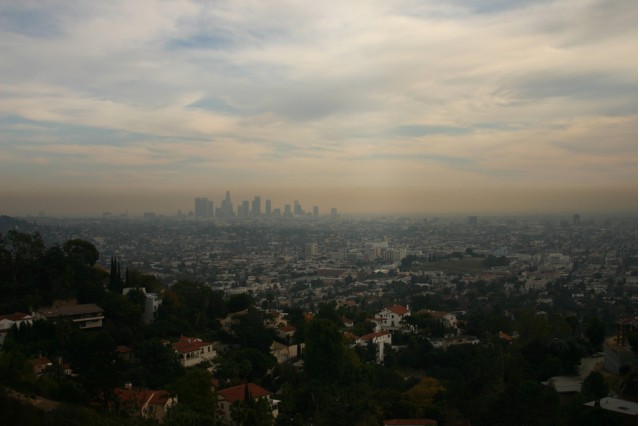
Smog over Los Angeles, courtesy Flickr user steven-buss
The EPA is planning to cancel the special waiver that California has relied on since 1970 to set its own emissions standards,according to aBloombergreport.
As part of its plan to reverse a program to steadily tighten fuel economy standards that it coordinates with California and the National Highway Traffic Safety Administration, the EPA has drafted a proposal to freeze those standards in 2021 and prevent California from setting its own standards, theBloomberg report says.
California has had the right to set its own standards since President Richard Nixon signed the Clean Air Act Extension in 1970, because California had already implemented its own emissions limits to clean up the smog that got trapped in the Los Angeles basin. The Act required the EPA to grant California special waivers to set its own tighter standards, as long as they meet certain requirements, because it already had a program in place to mitigate pollution in LA. The steady sunshine there creates more smog, and cool ocean air blowing over the coastal mountains traps the smog in populated inland valleys.
Now, for the first time, the EPA is planning to cancel that waiver, according to the draft proposal. The Bloomberg report cited sources familiar with discussions, but not authorized to talk about the proposal publicly.
The EPA is involved in fuel economy standards because of a 2007 Supreme Court ruling that required the EPA to regulate carbon-dioxide emissions, which can only be done by improving fuel economy. Since 2009, the EPA has worked with NHTSA and the California Air Resources Board to coordinate fuel economy standards. The NHTSA, part of the Department of Transportation, officially sets fuel economy standards, while the EPA regulates emissions including carbon dioxide.
California and 16 other states (plus Washington, D.C.) announced last month that they would sue the EPA over its plan to reverse scheduled increases in fuel economy standards for the 2020 through 2025 model years. The 16 states (plus D.C.) that sued include 12 that follow California's tighter standards. Other states are forbidden from setting their own emissions standards under the Clean Air Act, but they can choose to follow California's standards instead of the EPA's.
Congress required fuel economy standards to be raised for the first time since 1992, to at least 35 mpg, under the Energy Independence and Security Act, signed by President George W. Bush in 2007. After the 2008 election, the Obama Administration was left to implement the increases in the face of the 2007 Supreme Court ruling on CO2 emissions. It set a rising curve of standards through 2025, with a "mid-cycle review" scheduled for 2017—after a new President would take office—to address whether standards following that were realistically achievable.
During the 2016 election, in the final years of the Obama Administration, the EPA documented its case for maintaining the standards in a 1,200-page review. After Donald Trump was elected in November 2016, the EPA finalized its decision to keep the increasing standards in place through 2025 in the final month of Obama's presidency.
As soon as Trump took office, the automakers met with the new Administration to ask that the mid-cycle review be reopened with an eye toward loosening the standards. After Scott Pruitt was appointed EPA Administrator he reopened the review, providing a 38-page legal justification.
This week, the Science Advisory Board, an EPA watchdog, took issue with Pruitt's justification, saying it didn't pass scientific muster, and the board plans to review the decision.
After the 17 states decided to sue and a public uproar ensued, the automakers went back to the Trump Administration and reiterated that the most important thing to them was to have a single set of fuel economy standards that they could count on.
Following that meeting, the EPA reportedly added the proposal to revoke, or circumvent and nullify the California waiver, effectively requiring that all states follow the same emissions and fuel economy standards.
If the EPA attempts to revoke or nullify California's waiver and the states' lawsuit continues, however, fuel-economy standards are likely to be tied up in court with an uncertain outcome for years.
"It's very unclear what they're doing," says Simon Mui, a senior scientist at the Natural Resources Defense Council. "From a legal standpoint, this has never been done before."
US automakers are screaming that no one wants high efficiency, low emissions EV automobiles as they grovel before President Trump, begging him to roll back fuel economy standards (as if he could do such a thing unilaterally, which he can’t). But cities are the places where auto emissions do the most harm.
Now in a campaign coordinated by Los Angeles mayor Eric Garcetti, 30 US cities are telling car makers they will buy $10 billion worth of EV vehicles if the companies will build them. “No matter what President Trump does or what happens in Washington, cities will continue leading the way on tackling climate change,” Matt Petersen, Los Angeles’s chief sustainability officer, tells Automotive News.
In addition to Los Angeles, the cities involved include San Francisco, Portland, Seattle, Chicago, Kansas City, Denver, Houston, and Boston. “If you build it, we will buy it,” Chris Bast, Seattle’s climate and transportation policy adviser.
The offer from the cities is not just for automobiles and light duty trucks. It includes requests for vehicles that don’t even exist yet, such as street sweepers, trash haulers, and fire trucks. In all, the order would total 114,000 electric or hybrid vehicles. That’s more than 70% of all EV sales last year.
The Alliance of Automobile Manufacturers, which is advocating strongly for a rollback of higher CAFE standards, is unimpressed by the cities’ offer. “Combined, those models were all outsold by a single model of pickup truck,” sniffs Wade Newton, a spokesperson for the Alliance. Yeah, that’s the point, you ignorant yahoo!
The cities’ initiative could move the needle on EV sales says Colin McKerracher, an analyst with Bloomberg New Energy Finance. While it would be spread out over several years, it would provide electric vehicle manufacturers reliable demand as federal policies shift and gas prices fluctuate. “I wouldn’t underestimate this,” McKerracher says. “What automakers really want in investing in electrification, whether that’s for passenger vehicles or commercial-use vehicles, is certainty.”
The initiative is in the RFP or “request for proposals” stage. The cities have asked manufacturers to tell them what products they have that will meet their current and future needs and how much they will cost. To date, 40 manufacturers have responded, including several bus and truck makers.
Emissions from cars and trucks became the largest U.S. source of greenhouse gases last year, surpassing power plants for the first time since 1979. That makes the EPA standards that Trump is thinking of rolling back critical to meeting U.S. goals agreed to at the COP21 climate change summit in Paris.
“Now more than ever there is a need for cities’ leadership on climate,” Daniel Zarrilli, New York City’s senior director of climate policy and programs, said in an interview. “We really want to send a message that there is a growing market for electric vehicles — regardless of what is happening in D.C.”
There has been much consternation among the Tesla fan base about Elon Musk’s recent alignment with the Trump administration. This article makes a case that Musk actually has to become a voice of council for the new President if Tesla is to remain at the forefront of the EV and energy systems sectors. Here are 10 reasons why.
Tesla has always been a disrupting force.
Tesla’s business strategies have always been outside the mainstream. Their first vehicle on the market, the Model S, was a high end automotive model rather than a basic, entry-level vehicle. They redesigned what a car was all about so that it integrated software and hardware. They challenged the distribution model and provide their own retail showrooms in place of dealerships. To continue on the forefront of technology innovation and disruption, Elon Musk needs to be part of conversations like those with Trump, distasteful as they may sometimes be.
U.S. manufacturing job creation goals benefit both sides.
Starting from a position of strong design and technology, Tesla has worked toward the goal of reliable and timely manufacturing. “We take it very seriously, and we need to solve it if we’re going to scale and scale rapidly,” Musk said. One way of solving Tesla’s manufacturing needs was to hire the “best manufacturing people in the world” to join Tesla so they would become “super good at making large complex objects.” Job growth as policy has been a consistent U.S. executive branch goal, and Trump would like to be able to say that he created as many jobs as his nemesis, Bill Clinton, who created the most number of jobs per capita — 21.5 million —during his term. Musk can help.
Clean energy can surely use the government’s nod of approval.
Although electric cars are “clean” because they emit no exhaust pollution, they still have a carbon footprint since the electricity that powers them is largely centralized and generated from fossil fuels. Musk intends to reframe how people acquire electricity. Through the installation of solar panels on houses through sister organization, SolarCity, Tesla will be able to help residential homeowners to decentralize electricity generation, which SolarCity acknowledges. “Federal, state and local governments offer incredible solar energy tax credits and rebates to encourage homeowners to switch to renewable energy to lower their energy usage and switch to solar power.” A happy SolarCity/ executive branch relationship can support solar rebates and promote solar roofs across the U.S.
Regulations can help or hurt a business.
As example of how regulations can affect Tesla’s business plans, all one need to do is look to Musk’s vision around cars being autonomous. “All you will need to do is get in and tell your car where to go,” Musk said in October. Unlike typical automakers who test with qualified drivers in controlled environments, Tesla gathers data through its customers via software called Shadow Mode, comparing a human driver’s actions to that of a computer. Self-driving cars require state approvals; Michigan became the first state to to approve self-driving cars back in December. A Trump nod to other states who are shuffling their administrative feet can help accelerate self-driving ubiquity.
Federal government nods may help Tesla’s future business expansions.
Among the variety of business expansions on Tesla’s drawing table are transformations in mass transit with a self-driving bus and goods transportation with a Tesla semi. With issues of relaying, battery swapping, and electrification to be solved for these concepts to be viable, Tesla needs to keep a good relationship with the U.S. government. Needs to raise capital, such as was sought for the Model 3 and Gigafactory in August, 2016, require regulatory filings with the U.S. Securities and Exchange Commission. Last year, SpaceX received help from the Pentagon to develop a new rocket engine. The government/ business connection is always looming behind Tesla expansion plans.
He can boost the company’s visibility through the councils.
It doesn’t hurt to see the Tesla brand name in the news as Trump promotes his relationships with the business sector. Every time that Trump promotes his Strategic and Policy Forum or his manufacturing council, Musk and Tesla receive news headlines. That publicity only helps the Tesla business model to thrive, even if it’s sometimes from disgruntled progressives.
Elon Musk can advocate for change from within circles of influence.
Successful businesses have a vital role in advocating and lobbying with each level of government to gain the greatest benefits possible. They hope to find common ground on policy proposals most favorable to their business plans. Tesla’s work with governmental agencies provides a forum for developing and organizing company ideas, which can then grow and flourish. For example, Trump may become interested in Mars missions through Musk’s influence.
Businesses rely on favorable government policies.
Tesla has quickly become an automaker, an energy company, the builder of a massive battery factory in Nevada, and a solar company through its merger with SolarCity. The Master Plan Deux is here at hand. A Trump White House and executive branch seems at this writing not to be receptive to Musk’s social justice vision of breaking the ties with the fossil-fuel era. It remains to seen whether federal incentives to support electric cars will continue under Trump or whether clean-energy initiatives endorsed by President Barack Obama will continue
Keep your friends close and your enemies closer.
The closer an enemy is, the more intimately we come to know their strengths, weaknesses, and patterns of behavior. We can use these understandings to our advantage. If Musk keeps Trump close to his ear, he is less likely to be found outside favorable federal policies. Moreover, as someone who Musk did not support during the 2016 elections, Trump’s positions, which likely engender Musk’s animosity and opposition, such as the recent anti-Muslim executive order, force Musk to rise up publicly against blatant social grievances.
The Trump effect can assuage stock market volatility.
Tesla has always been a volatile stock with wild swings the norm. That hypervolatility settled down somewhat in 2016, but Tesla will be pressed in 2017 to meet Model 3 production delivery goals and integrate the SolarCity financial element. The Trump effect can mitigate some of that market uncertainty, even if it requires Elon Musk to maintain a calm exterior composure while his insides are roiling.
Bloomberg is reporting that Mark Fields, Ford's CEO, pushed President Donald Trump for market-driven national fuel economy standards, and that up to a million jobs could be at stake if those national regulations didn't take consumer expectations into account.
Fields was reporting on his conversation with Trump in remarks made at the National Automobile Dealers Association in New Orleans, Bloomberg reports. The report also states that he and fellow CEOs Mary Barra of GM and Sergio Marchionne of FCA aren't seeking to eliminate fuel economy standards altogether, but rather to make them more flexible.
Bloomberg reports that Fields didn't cite the studies he was referring to in support of his job loss figures, so we can't independently verify Fields' math at this time. But his push to stop selling cars consumers don't want – that is to say, more hybrids and EVs than consumer demand supports right now – is clear. We've already reported on that.
To level an educated guess at what will happen next, Trump seems likely to reduce the stringent 2025 fuel economy targets, perhaps freezing them at current levels. The automakers are already invested in producing vehicles that meet current standards, and they also have to think about foreign markets like Europe that aren't likely to relax standards below current levels. If you consider economies of scale, automakers are likely to ask for federal standards that match global standards for their largest markets as closely as possible.
We'll see if Trump buys Fields' math, but Ford isn't hedging its bets. Backing out of the Mexican assembly plantcost the company $200 million – not a huge sum compared to the total value of Ford, a massive company which had its second best year ever, but still an important gesture to Trump about Ford's priorities.
Top executives from Detroit automakers met with President Trump on Tuesday to hear his statements on cutting back environment regulations to spur more domestic job creation.
Trump said he will curtail “unnecessary” environmental regulations and make it easier to build manufacturing plants in the U.S. He expects these changes to support bringing back more manufacturing jobs to Americans, a key theme from his election campaign.
“I am, to a large extent, an environmentalist. I believe in it, but it’s out of control,” Trump said.
The new administration will focus on “real regulations that mean something” while eliminating those that he finds unfriendly to business, he said.
Chief executives Mary Barra of General Motors, Mark Fields of Ford, and Sergio Marchionne of Fiat Chrysler Automobiles met with the president. Other top executives from the “Big 3” automakers were also there with some of Trump’s staff.
These executives declined to answer media questions after the meeting, including whether Trump spoke to any specific regulations he plans to cut.
Barra and Fields did make comments supportive of the meeting.
“There is a huge opportunity working together as an industry with government that we can improve the environment, improve safety, and improve jobs creation and the competitiveness of manufacturing,” Barra said to reporters after the meeting.
Fields saw positive signs in Trump’s decision the day before on the U.S. withdrawing from the Trans-Pacific Partnership. He sees it as a good example of the president’s desire to improve competitiveness and “create a renaissance in American manufacturing.”
Trump had set the tone for the meeting through a tweet soon before the meeting:
Trump has been clear about wanting to dismantle the Trans-Pacific Partnership and to stop renewal of the North American Free Trade Agreement. Since the election, he‘s been pressuring automakers to pull out of Mexico and bring back more jobs to the U.S., through a series of Twitter posts. Automakers have been responding to the pressure, including Toyota’s announcement yesterday that it will create 400 new jobs at its plant in Princeton, Ind.
The carmaker CEOs were advised yesterday by Trump to devise a “series of actions” that will boost U.S. manufacturing and to submit those plans to the administration within 30 days, according to Washington Post.
Auto executives have been in communication with the Trump administration over the Environmental Protection Agency’s abrupt decision to finish the midterm review of the 2025 fuel economy mandate. They’re asking for an easing up of the Obama administration and EPA’s targets for hitting fuel economy gains and emissions reductions that automakers say will cost them billions to reach and could result in job cuts.
Automakers will be interested in seeing whether Trump’s appointment for the EPA administrator will be approved. Oklahoma Attorney General Scott Pruitt said during the Senate confirmation hearing that he would be taking a thorough approach to reviewing the EPA head’s decision earlier this month to approve the fuel economy and emissions timeline.
“It merits review and I would review that,” Pruitt said during the hearing last week.
Some organizations had supported the EPA’s decision to move the fuel economy rules forward in January. Consumers Union, which owns Consumer Reports, sees the mandate as attainable, and constructive for cutting cost of ownership down significantly for consumers through fuel savings.
Daniel Becker, director of the Safe Climate Campaign advocacy group, told Washington Post that job creation doesn’t have to clash with regulations having a positive impact on the environment. Fuel economy standards can help consumers save money at the gas pump and free up the country from its oil dependence, he said.
“Despite the rhetoric, there is often reason behind regulations, and in this case there is overwhelming evidence of how beneficial they are for consumers, the industry and overall Americans,” Becker said.
Trump has also pledged to reduce corporate taxes. He advocates other measures that he says will support the U.S. economy and bring back jobs to Americans who have been watching them go overseas.
The president has been threating to enforce a 35 percent tariff on goods imported for sale. He’d threated to impose that hefty tariff earlier this month on BMW because of its new plant in Mexico and plans to import these vehicles into the U.S.
On Monday, Trump met with several business leaders from several industries, including Fields and Tesla CEO Elon Musk.




 Posts
Posts


