Showing posts with label Volkswagen. Show all posts

Monday, April 15, 2019

VW Reveals I.D. Roomzz Electric SUV With 280-Mile Range

The newest addition to the I.D. range is bigger than the I.D. Crozz and has three rows.

Auto Shanghai 2019 is literally just around the corner and Volkswagen wants to be among the firsts to introduce one of its latest creations – bound to strengthen the German marque’s electric I.D. range. For the uninitiated, China is currently the largest market for zero-emission vehicles in the world.
Dubbed as the I.D. Roomzz, the all-electric SUV is bound to stir the continuously growing global three-row SUV market but with zero emissions and smart in-car technologies. It sits on the modular electric drive matrix (MEB) platform but it’s bigger than the I.D. Crozz, which was debuted in Los Angeles in 2017.
In the front cabin, the I.D. Roomzz features a digital, glass-front panel. The dashboard and steering wheel floats in front of the driver as a visual display. In combination with the I.D. Pilot mode, the I.D. Roomz concept vehicle can be driven autonomously without an active driver.
The VW I.D. Roomzz has its own version of 4MOTION technology, with two electric motors powering the front and rear axles with a system output of 225 kiloWatt (302 horsepower). This allows the electric SUV to accelerate to 100 kilometers per hour (62 miles per hour) in 6.6 seconds and reach regulated speeds of up to 180 kph (112 mph).
More importantly, the VW I.D. Roomzz is powered by an 82-kWh battery, which allows ranges of up to 450 km (280 mi) under WLTP, or 475 km (295 mi) under NEFZ in China.
VW is set to debut the production version of the I.D. Roomzz, I.D. Crozz, and the Compact I.D. in 2020, with all three models to be sold globally. On the other hand, the I.D. Vizzion sedan and I.D. Buzz will debut its production version in 2022.
Categories: Volkswagen

Wednesday, March 13, 2019

Volkswagen Group now planning 22M EVs in ten years; 70 new electric models by 2028

The Volkswagen Group is now planning to launch almost 70 new electric models in the next ten years instead of the 50 previously planned. As a result, the projected number of vehicles to be built on the Group’s electric platforms in the next decade will increase from 15 million to 22 million.
Further, Volkswagen has signed off a comprehensive decarbonization program aimed at achieving a fully CO2-neutral balance in all areas from fleet to production to administration by 2050. Volkswagen is thus fully committed to the Paris climate targets.
The targets of the Paris Agreement are our yardstick. We will be systematically aligning production and other stages in the value chain to CO2 neutrality in the coming years. That is how we will be making our contribution towards limiting global warming. Volkswagen is seeking to provide individual mobility for millions of people for years to come—individual mobility that is safer, cleaner and fully connected. In order to shoulder the investments needed for the electric offensive we must make further improvements in efficiency and performance in all areas.
—Dr. Herbert Diess, CEO of Volkswagen AG
The Volkswagen Group has set milestones in all areas to be achieved in the coming years on the road to complete decarbonization by 2050. The measures follow three principles:
  1. Effective and sustainable CO2 reduction.
  2. Switch to renewable energy sources for power supply.
  3. Compensate for remaining emissions that cannot be avoided.
In order to improve the CO2 balance of vehicles throughout their lifecycle, for example, Volkswagen has already made a start on the supply chain. A detailed roadmap is currently being drawn up. There is particularly significant potential as regards steel and aluminum supplies.
The 2025 target is to reduce the CO2 footprint of the vehicle fleet by 30 percent across the lifecycle compared to 2015. Volkswagen is therefore electrifying the vehicle portfolio, with investment in this area alone amounting to more than €30 billion (US$33.8 billion) by 2023. The share of electric vehicles in the Group fleet is to rise to at least 40% by 2030.
The first of the new-generation electric vehicles go into production this year: the AUDI e-tron will be followed by the Porsche Taycan. Reservations for each of these models already total 20,000 units.
Electric vehicles will be brought into the mainstream with the ramp up of the Volkswagen ID. Other models in this first wave will be the ID. CROZZ, the SEAT el-Born, the ŠKODA Vision E, the ID. BUZZ , and the ID. VIZZION.
Volkswagen selected LG Chem, SKI, CATL and Samsung as strategic battery cell suppliers to support the electric offensive. In view of the constantly increasing demand, Volkswagen is also taking a close look at possible participation in battery cell manufacturing facilities in Europe. Looking further ahead, solid-state batteries also have great potential. Volkswagen’s goal is to enable an industrial level of production with this technology together with its partner QuantumScape. (Earlier post.)
At the same time, CO2 emissions at all plants are to be cut 50% by 2025 compared with 2010. The conversion of the power station in Wolfsburg from coal to gas will reduce CO2 emissions by 1.5 million tonnes annually from 2023 onwards. Audi’s production activities at the Brussels site are already completely CO2-neutral. The Zwickau plant will not only be the lead factory for the Modular Electric Drive Toolkit (MEB); the ID. built there will be delivered to customers with a CO2-neutral balance.
The MEB lies at the heart of Volkswagen’s electric offensive. The cost of e-mobility can be significantly lowered through partnerships to enable the widest possible spread of the MEB and the associated economies of scale. That makes individual mobility affordable and usable for the mainstream in the future as well. One example of such a partnership is the planned cooperation with Aachen-based e.GO Mobile AG recently announced at the Geneva International Motor Show. (Earlier post.)
To boost e-mobility further, Volkswagen will be installing 400 fast-charging stations along Europe's major roads and highways by 2020 in collaboration with industry partners in IONITY. 100 of these will be located in Germany. That means there will be a station every 120 kilometers. Elli (Electric Life), Volkswagen’s new subsidiary, will also offer wallboxes for charging at home, using green power—initially in Germany. In addition, there will be 3,500 charging points on employee car parks at all plants with further charging opportunities at dealerships.

Tuesday, January 22, 2019

The Biggest Challenge Facing Electric Cars Is Still Affordability

Falling EV battery prices resulted in longer range. Not lower purchase prices.

When Elon Musk announced job cuts at Tesla last week, he gave a clear reason for the belt-tightening. “We face an extremely difficult challenge: making our cars, batteries, and solar products cost-competitive with fossil fuels,” he wrote to his employees. “While we have made great progress, our products are still too expensive for most people.”
Tesla showed the world that electric cars can provide long range, luxury, and incredible performance. Its vehicles upended the notion that EVs were cramped and compromised city cars. The whole industry followed Tesla by increasing the size of its batteries. That’s a good thing. But it has not helped with EV affordability.
Yes, the cost of EV batteries continues to fall. So far, that hasn’t translated to lower prices for electric cars. “Decreasing prices as a function of the battery price has allowed automakers to put vehicles out there with larger and larger batteries,” Scott Shepard, an analyst at Navigant Research, told InsideEVs. “The purchase price hasn’t dipped down. As federal purchase incentives come out of the market, you’re likely to see prices stay at the same level for you the next four to five years.”
Shepard said that Tesla’s strategy to start with the top of the market made a lot of sense. “The price premium is significantly diminished in the luxury segment because there are a lot more bells and whistles,” he said. “In the economy segment, it’s significantly more difficult to make those trade-offs.”

A People’s (Electric) Car?

That’s precisely the point made this week by Hans Dieter Pötsch, Volkswagen’s chairman. He said that it will be difficult to make a viable business out of small, entry-level EVs.
Pötsch explained: “The current price level cannot stay the same if these cars are equipped with electric motors. Therefore, it will inevitably lead to significant price increases in the small car segment.” As a result, Pötsch said that EVs could very well remain “unaffordable for people on low incomes.”
If he’s right, we can expect wealthy people to buy electric Audis, BMWs, Jaguars, Porsches, and Teslas – and even relatively expense models from the likes of Chevy. But lower-income folks will have to wait for those cars to show up on the used market.
These trends are confirmed by a survey of more than more than 22,000 EV drivers conducted by PlugInsights, the world’s largest EV driver-research panel. There’s a big distinction between consumers buying expensive long-range EVs with big batteries and those driving lower-cost electric cars with smaller batteries.
The least expensive EV is the Smart EQ ForTwo. It sells for about $16,000 after incentives.
Forty-five percent of EV buyers who bought long-range EVs (Tesla cars and the Chevy Bolt) make more than $200,000 a year. With the introduction of the Model 3, the percentage of long-range EV buyers making more than $200k has decreased to about 38 percent. But the overall EV slightly shifted toward wealthier buyers.
Meanwhile, EV buyers who purchased an electric car with fewer than 150 miles of range are a different set. Only 17.5 percent of those EV drivers make more than $200,000. From 2011 to 2018, 38 percent of folks buying lower-range EVs make less than $100,000 a year.
Elon is right. He said it five years ago and he said it again last week. EV affordability is an “extremely difficult challenge.” His email to Tesla staff explained what he believes is at stake: “Our mission of accelerating the advent of sustainable transport and energy, which is important for all life on Earth.”

Sunday, December 16, 2018

Fun revival: Electric dune buggy could join VW I.D. line

Volkswagen ID Buzz Concept


What's old is new, and what's new is old.

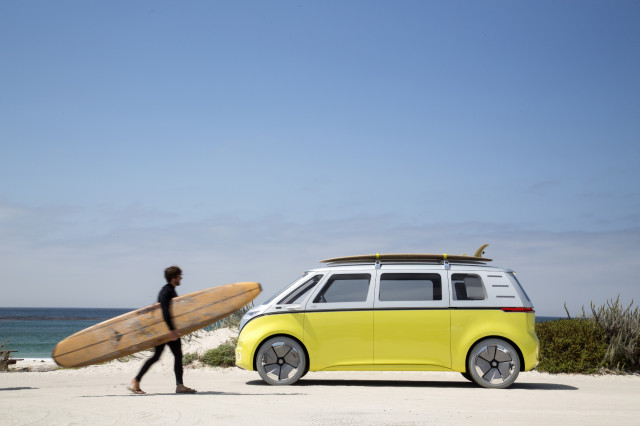
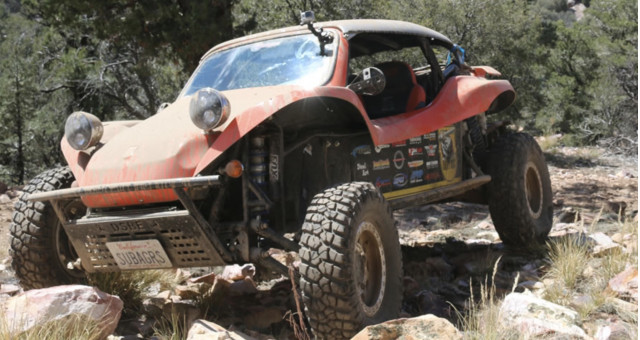
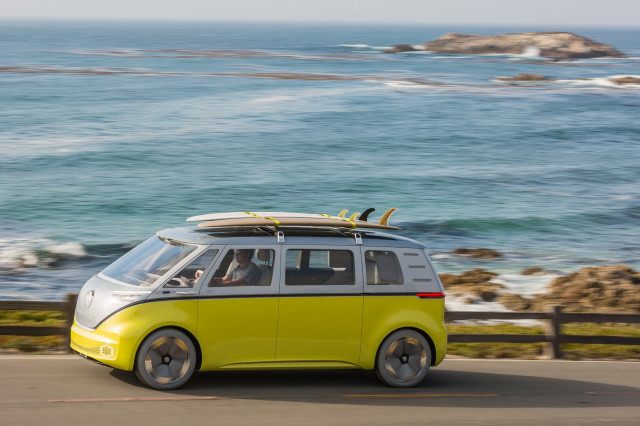
As if a Volkswagen revival of the classic Microbus—complete with a cargo-van version—weren't enough, the company revealed to British Autocar magazine that one of the next models in its upcoming electric I.D. lineup may be a revival of the off-road Meyers Manx dune buggy.
VW never built the Manx. The iconic, fiberglass-bodied dune buggies, first built in 1964, were kit-car conversions designed to fit on classic 1960s rear-engine VW Beetle floor pans—complete with VW engines hanging out the back, frequently with "stinger" tail pipes pointing proudly to the sky. (Meyers still builds some updated versions of the buggy kits.)
Meyers Manx Dune Buggy


Volkswagen's official version will be electric, based on its new MEB modular electric-car platform. The company has said other models based on the architecture will have up to 340 miles of range and will be able to charge at 125 kilowatts.

Such a minimalist design may need fewer batteries to accomplish the same mission—and without waving a pollution finger at the sky. Two electric motors are expected to give it all-wheel drive and an estimated 369 horsepower.
Volkswagen ID Buzz Concept


The electric Manx-style buggy could follow five or six other all-electric vehicles, ranging from an urban hatchback to a flagship sedan and long crossover—and that much-anticipated I.D. Buzz Microbus redux.
VW has also hinted it is working on retro-themed electric version of the classic Beetle after that. In all, the company says it will base 27 models on the new architecture to build 10 million new electric cars.

Friday, December 7, 2018

Will VW Build its New Electric Cars in Ford Factories?


Saturday, September 15, 2018

Volkswagen Group expands production in China; four new factories opened; SUVs and electromobility

With the opening of three new FAW-Volkswagen vehicle plants at three locations—in Qingdao, Foshan and Tianjin—as well as the Volkswagen FAW Platform Tianjin Branch component plant, the Volkswagen Group is strengthening its localization strategy in China.
DB2018AU02242_medium
With the opening of a second vehicle production plant in Foshan, a mega plant has been built at the South Chinese location. In addition, vehicle and component plants in Tianjin, northern China, were bundled at a single location. Together with the existing gearbox plant, further synergies will be used there to increase production efficiency.
All four new factories significantly increase the flexibility of Volkswagen Group China to react more quickly to customer needs. At the recently opened FAW-Volkswagen factory in Tianjin alone, more than 300,000 SUVs will roll off the assembly line each year, thus forming the basis for Volkswagen Group China’s SUV campaign.
With an annual production capacity now of 600,000 vehicles per year, the Foshan plant plays a pioneering role in the Volkswagen Group’s electrification strategy (“Roadmap E”). In Qingdao, too, electrified vehicles will be able to roll off the assembly line alongside cars with combustion engines in future.
We continue to expect the car market in China to develop positively. Volkswagen Group China will continue to grow accordingly. With the total market size of around 24 million cars sold, growth rates in the lower single-digit percentage range in the vehicle market already mean growth rates of several hundred thousand vehicles per year. That is why we kicked off our SUV and electric mobility campaign in China in 2018, so that we can respond to the needs of our Chinese customers even better than before. At Volkswagen we strive for continued success in this important market.
—Professor Jochem Heizmann, Member of the Board of Management of Volkswagen AG and President and CEO of Volkswagen Group China
In late August 2018, Volkswagen Group opened its new FAW-Volkswagen plant in Tianjin. SUV models, including plug-in hybrid versions, are produced here for the Volkswagen and Audi brands. Production capacity of the plant will be 1,200 units per day and 300,000 per year. In late June, Volkswagen FAW Platform Tianjin Branch opened a component plant to produce chassis for a variety of Audi and Volkswagen SUV models.
The opening of a second FAW plant in Foshan marks a significant milestone for the Roadmap E electrification strategy in China. Owing to the plant expansion in June 2018, annual production capacity in Foshan has increased from 300,000 to 600,000 vehicles. In addition to new SUV models from Volkswagen and Audi, the vehicles currently manufactured on the MQB platform are gradually being electrified. Moreover, by 2020, production of modular electric drive matrix (MEB) vehicles as well as MEB battery systems is set to commence here.
We want to make a significant contribution to electrifying the Chinese passenger car market. Around 40 different electric vehicle models are to be produced in China by 2025.
—Jochem Heizmann
Production of Volkswagen models at the FAW-VW plant in Qingdao commenced in late May. This flexible manufacturing facility allows for MQB models with internal combustion engines as well as electric drive systems to be built on the same production line. FAW-Volkswagen will also produce battery systems for the MQB platform there.
The Volkswagen Group now has over 23 production sites in China and 123 worldwide.
The Volkswagen Group founded its first joint venture in China in 1984: SAIC Volkswagen, in which the Volkswagen Group holds a 50% stake. In 1985 the first Chinese series production model, the Santana, rolled off the assembly line here. Four years later, an additional joint venture followed with FAW-VW in Changchun. A third joint venture to develop and produce an electric vehicle was added together with China’s manufacturer JAC in summer 2017, in which the Group also holds a 50% stake.
The Volkswagen Group is represented in China with 12 brands and has delivered more than 35 million vehicles with its joint venture partners FAW (FAW-Volkswagen) and SAIC (SAIC VOLKSWAGEN) since entering the Chinese market in 1984. Volkswagen Group China has more than 100,000 employees at 34 Chinese production plants in 23 locations.
In 2017, approximately 3,000 dealers (with 330,000 employees) sold 150 different Volkswagen Group models totalling 4.18 million vehicles in the People’s Republic of China – this represents an increase of 5.1% as compared to the previous year. As of August 2018, the Volkswagen Group holds an 18.3% share of the Chinese passenger car market.

Monday, July 16, 2018

Study Says Daimler Will Overtake Tesla In EV Rank – Model 3 Issues Cited For Fall


German car makers could catch up to Tesla in just a few years

The current state of affairs at the German car industry giants – Daimler AGBMW AG and Volkswagen AG – sort of resembles that first day of boot camp when the hardened drill sergeant comes into the dorm room at 4 in the morning and pulls off the fire alarm. In a nutshell, everybody’s scrambling and for the most part, look like headless chickens trying to make themselves look useful. However, according to Bloomberg, just like the marine recruits, after a few months of proper testing and training, the German car industry is set to reinvent itself as an electric vehicle powerhouse.
According to a consultancy’s ranking of electric automakers, Daimler AG, BMW AG, and Volkswagen AG might soon close by or surpass Tesla in the EV market. The ranking comes from PA Consulting, a consultancy specializing in management consulting, technology and innovation. Their ranking system factors in the strategy, battery technology, culture, supplier networks, partnerships and financial performance into an overall score. While this couldn’t be farther from reality (with the current state of affairs), the sheer might – engineering, design, production and financial aspects of the car industry. With that in mind, the German car makers are on a path to might swivel the odds in their favor within the next few years.
According to the forecast set by consultancy, Tesla is to remain the king of the castle to at least 2021. This is the time when the traditional rivals are set to flood the market with a variety of fully electric models, giving Tesla a run for their money. The forecast doesn’t go easy on Tesla, as it weighs down the California based automaker with a fall to seventh place. The pecking order in 2021 should see Daimler firmly at the helm. The Stuttgart based vehicle industry giant is then closely followed by BMW, the Renault Nissan Mitsubishi alliance and finally, the dieselgate struck, but clearly not that hurt – Volkswagen – filling the list’s last top spot before Tesla.
BMW Concept iX3
“Achieving CO2 targets and improving e-mobility performance go hand in hand,” Thomas Göttle, head of PA Consulting’s automotive business, said in a statement. “For the manufacturers, however, this also involves a great need for action in terms of organization and personnel.”
For Tesla, the highly-touted production issues, matched with an uncertain profit outlook, all played a major key in the lower ranking for the U.S carmaker, according to PA Consulting. However, there’s a long way to go until 2021, and Tesla Motors may well turn the tide. Their production woes are slowly becoming less of a burden, new markets are emerging for the electric car maker and overall, the demand for electric cars is ever growing.
Looks like we’ll find out in 2021 if this prediction turns out to be accurate.

Tuesday, July 3, 2018

New VW Camper Set to Launch Next Month

Look at those pictures. Take them all in. That van may not carry the Westfalia badge, but when the 2018 Caravan Salon in Dusseldorf rolls around on August 24th and Volkswagen reveals the production version of its all-new California XXL camper? There will be no doubt: the VW Camper Van is back!
Most recently, it has been Ford and Mercedes-based vans that wear the storied Westy name. That name, however, was made famous by VW- not the other way around. This latest VW camper, then, has some wrongs to right– and the company that brough you the original “Bulli” camper van in the 1960s hopes this new van will become just as iconic as its famous ancestor.
At nearly 6 meters long, the upcoming VW California XXL is a monster. As a result, there’s a lot more to the California XXL than just room for a folding or two. The XXL has heating elements built into the floor, climate-controlled mattresses that offer heating and cooling, a retractable wet-room shower, a chemical toilet, a full kitchen with counter top, sink, and fridges, plus a dedicated living and dining area. And, of course, most of the technology and on-board entertainment can be controlled through an app.
Under its ample skin, the Volkswagen California XXL is expected to feature a 2.0 liter version of the VW Crafter van’s diesel engine, pretty much ensuring that we won’t be seeing one in the US. Which is too bad, because the new VW camper also gets 4MOTION four-wheel drive and a pneumatic suspension that can be raised or lowered to put the XXL level on a campsite without the use of jacks. If you’ve ever spent a lot of time in an RV, you already know how slick that is.
What do you guys think of the reborn VW camper? Wouldn’t you love to take a California out to– California, on a long road trip? End up parking it somewhere outside of Napa Valley and enjoying the scenery for a few days? I would, but I’m not you. Let me know what you’d do with the California XXL in the comments section at the bottom of the page.

Source | Images: Volkswagen, via Autoexpress UK.