Showing posts with label Electric SUV's. Show all posts

Monday, June 3, 2019

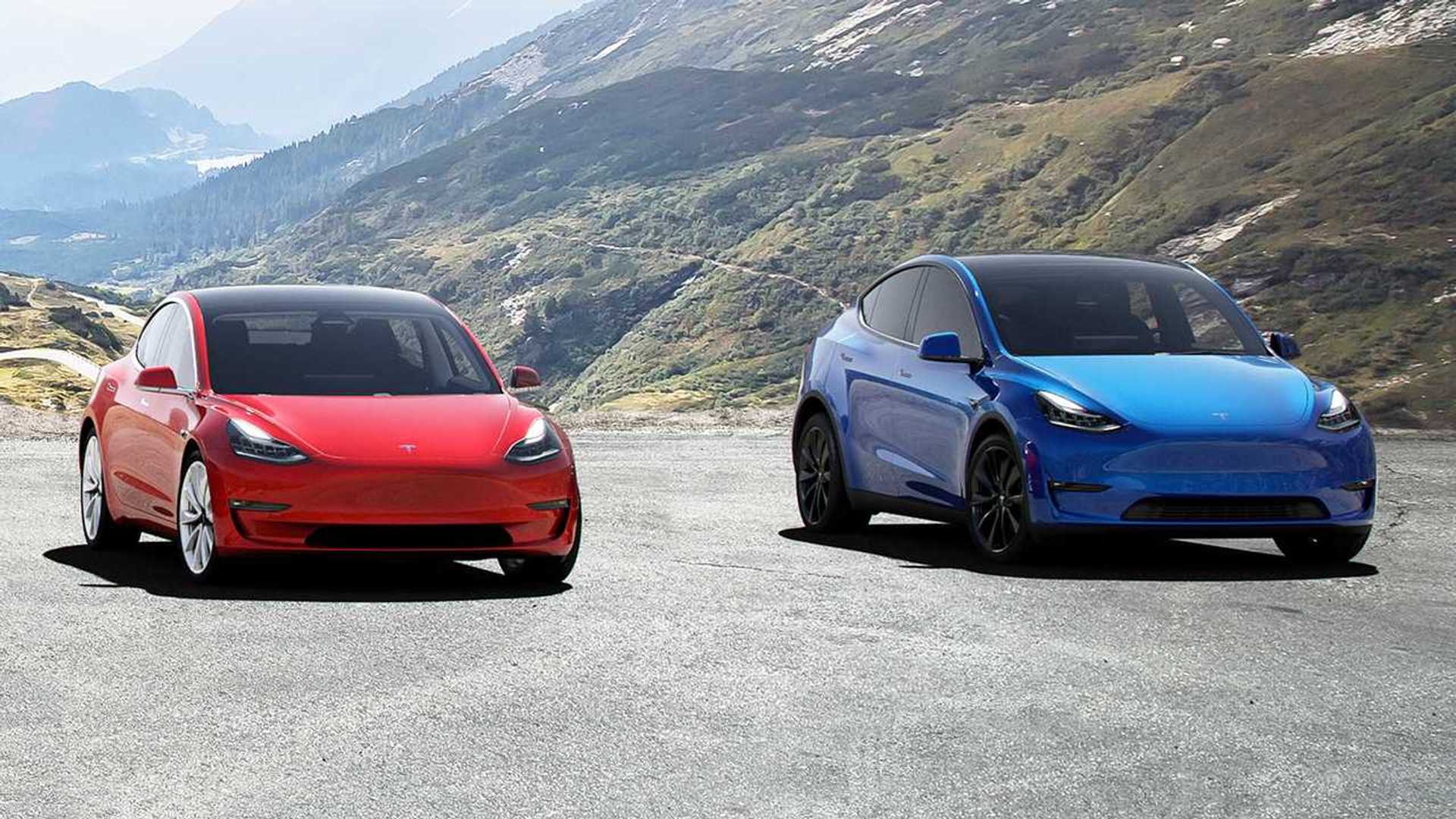
Tesla Model Y Electric Range Just 8-10% Less Than Model 3, Says Musk

As a crossover, a drop in range compared to the Model 3 is to be expected.

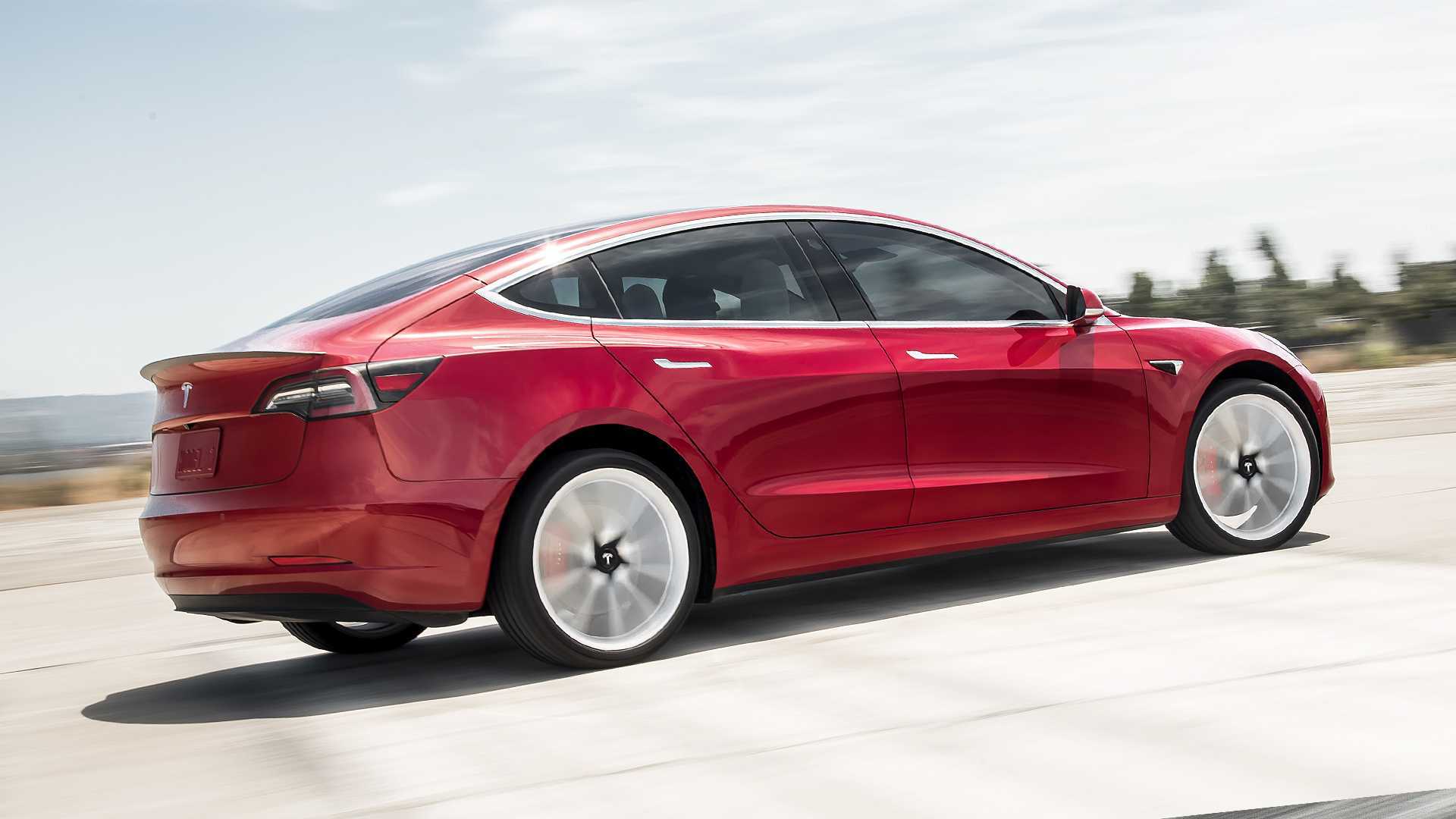
Tesla CEO Elon Musk says the range of the Model Y will be up to 10% less than the Tesla Model 3 due to its shape and weight.
In that same Ride The Lightning podcast that brought us news of the $50,000 Tesla pickup truck and the insane performance of the upcoming Tesla Roadster, we learn some information in regards to the Model Y.
In discussing the Model Y, Musk stated:
“We tried to make the car as similar to the [Model 3] as possible except in the case where a change was necessary to achieve SUV functionality…[all] while still having a low drag coefficient and not increasing the frontal area too much.”
According to Musk, the net result is a range loss of only 8-10%, as compared to the Model 3. Not bad for a vehicle that can seat up to 7 in a pinch.
While Tesla’s Model 3 sedan is a runaway success, the coming Model Y sport-utility vehicle could eventually out-sell it. Planned to debut later in 2020, it will be based on the Model 3 and start at $39,000 with a 230-mile battery range.
Unfortunately, the base model won’t be available until 2021. Tesla will initially sell costlier versions of the Model Y at launch, with a range of between 280 and 300 miles and priced up to $61,000.

Tuesday, April 23, 2019

Battery Shortages Lease to Audi e-Tron Production Delays

Building electric cars is harder than it looks.
According to a report last week in the Brussels Times, Audi is delaying the production of its planned E-tron Sportback and slowing production of its E-tron SUV following battery shortages from supplier LG Chem.
The factory that builds the e-tron has cut back from eight hours of production a day to six, and is reported to be planning to cut back from running five days a week to four, leading to a day of unemployment for workers there. The moves would cut production of the long-awaited electric car by 10,000 cars annually, from more than 55,000 to just over 45,000 in 2019, according to the Brussels Times. In the report, Audi declined to comment on the delay.
Many automakers ramping up production of plug-in hybrids and electric cars depend on LG Chem for cells, including Hyundai, Volkswagen, General Motors, Mercedes-Benz, and BMW. LG's dominance in supplying batteries to electric cars gives it power to control prices.
A report last year by Germany's Bild am Sonntag newspaper suggested that LG Chem raised prices on its batteries for the Audi E-tron by 10 percent, leading to the production shortage. Waiting lists for the car in Europe have reportedly expanded from 4-5 months to 6-7 months, as demand has also increased by 15 percent. Audi's Belgian spokeswoman Sofie Luyckx told the Brussels Times, that is "not an exceptional waiting time for an all-new Audi."
At the New York auto show last week, Audi E-tron product manager Matt Mostafaei said that the company has U.S. orders for the car, which is expected to go on sale here in May, but would not specify how many.
The delays could also be impacted by a shortage of the car's electric motors following a strike at the Hungarian factory that produces the motors.
The reports say the introduction of the E-tron Sportback, a smaller hatchback version of the E-tron SUV, has also been delayed from late this year to 2020.
Audi is planning a whole line of electric E-tron models, including the SUV, the Sportback, the e-tron GT sports sedan, a new smaller Q4 E-tron SUV, and reportedly a new E-tron GTR supercar to replace its R8 flagship, according to a new report in British auto journal Car.
If it's going to fulfill all those dreams, the company will need to secure a large and reliable source of batteries and, if these hiccups are any indication, it still might not have that.

Monday, April 15, 2019

VW Reveals I.D. Roomzz Electric SUV With 280-Mile Range

The newest addition to the I.D. range is bigger than the I.D. Crozz and has three rows.

Auto Shanghai 2019 is literally just around the corner and Volkswagen wants to be among the firsts to introduce one of its latest creations – bound to strengthen the German marque’s electric I.D. range. For the uninitiated, China is currently the largest market for zero-emission vehicles in the world.
Dubbed as the I.D. Roomzz, the all-electric SUV is bound to stir the continuously growing global three-row SUV market but with zero emissions and smart in-car technologies. It sits on the modular electric drive matrix (MEB) platform but it’s bigger than the I.D. Crozz, which was debuted in Los Angeles in 2017.
In the front cabin, the I.D. Roomzz features a digital, glass-front panel. The dashboard and steering wheel floats in front of the driver as a visual display. In combination with the I.D. Pilot mode, the I.D. Roomz concept vehicle can be driven autonomously without an active driver.
The VW I.D. Roomzz has its own version of 4MOTION technology, with two electric motors powering the front and rear axles with a system output of 225 kiloWatt (302 horsepower). This allows the electric SUV to accelerate to 100 kilometers per hour (62 miles per hour) in 6.6 seconds and reach regulated speeds of up to 180 kph (112 mph).
More importantly, the VW I.D. Roomzz is powered by an 82-kWh battery, which allows ranges of up to 450 km (280 mi) under WLTP, or 475 km (295 mi) under NEFZ in China.
VW is set to debut the production version of the I.D. Roomzz, I.D. Crozz, and the Compact I.D. in 2020, with all three models to be sold globally. On the other hand, the I.D. Vizzion sedan and I.D. Buzz will debut its production version in 2022.
Categories: Volkswagen

Thursday, March 29, 2018

SF Motors reveals two electric SUVs with 300 miles of range

Nicole Lee / Engadget
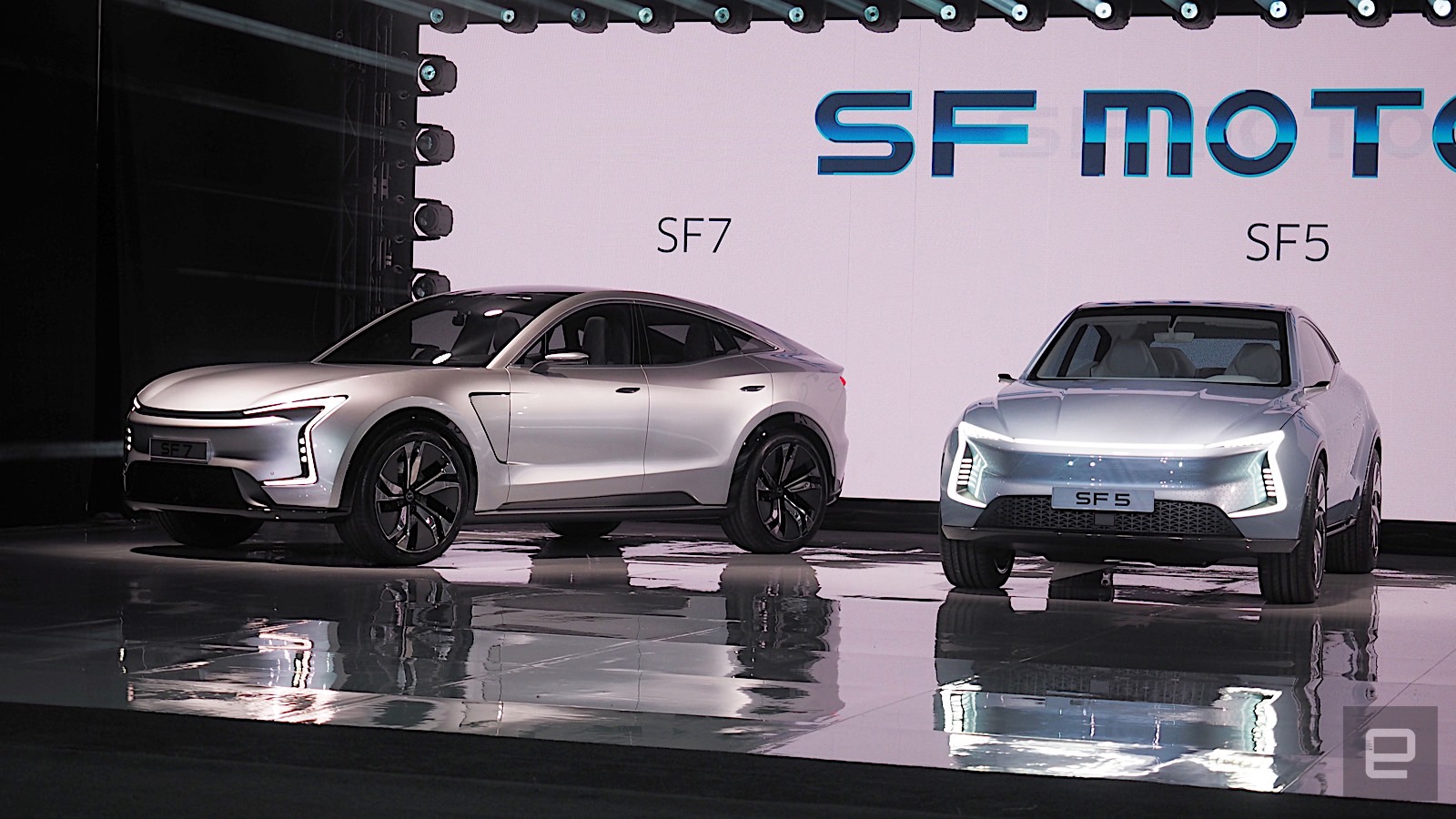
While much of the automotive world is focused on the New York Auto Show, a small car startup has unveiled its first-ever vehicles on the other side of the country in Santa Clara, California. SF Motors, the US arm of Chinese company Sokon, has just announced two cars -- the SF5 and the SF7 -- as part of a whole new line of electric vehicles. The SF5 is a medium-sized crossover SUV, and the SF7 is a full-size crossover. The SF5 will be available for pre-order by the end of this year and will ship in 2019.
Both vehicles boast a proprietary powertrain that promises 1,000 horsepower and the ability to accelerate to 60 miles per hour in under three seconds. They utilize a LiDAR system for adverse weather, road conditions and more. According to SF Motors, it also developed a "range-extension platform" that helps to extend the driving range of the vehicles thanks to a "high-power onboard generator."
Interestingly, SF Motors also states that it developed its own proprietary battery cells that apparently have a range of more than 300 miles (500 km) per charge. It incorporates a so-called advanced Battery Management System, liquid-cool thermal management and "unique mechanical structures." And thanks to the acquisition of InEvit, a battery module startup last year, SF Motors is also working on a next-gen battery module system that directly integrates into the vehicle chassis.

Gallery: SF Motors new EVs (press shots) | 11 Photos

And once those batteries are spent, they don't need to be tossed away. SF Motors is also proposing a battery recycling solution whereby they can find second use in homes and offices.
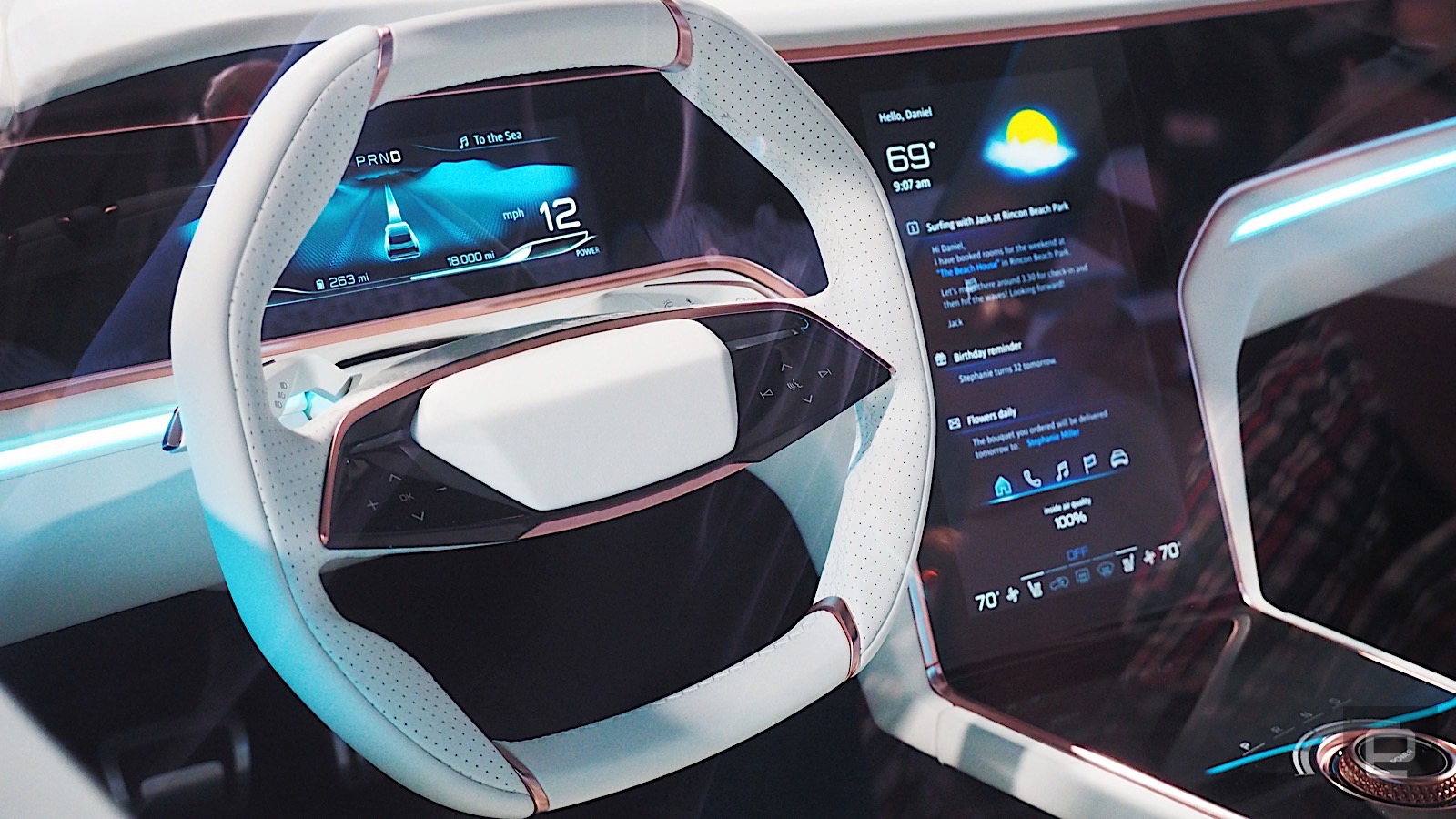
We attended the car unveiling in Santa Clara but we weren't given a chance to get inside the vehicles themselves. Still, the cars do look pretty great up close. They're quite large and roomy as you might expect SUVs to be. I was especially enamored by the large touchscreen instrument cluster and unique head's up display. I love that all the controls, as well as the speedometer, are within easy view. An SF Motors spokesperson said they were designed to be in a straight vertical line between your eyes and the road, for less distraction.
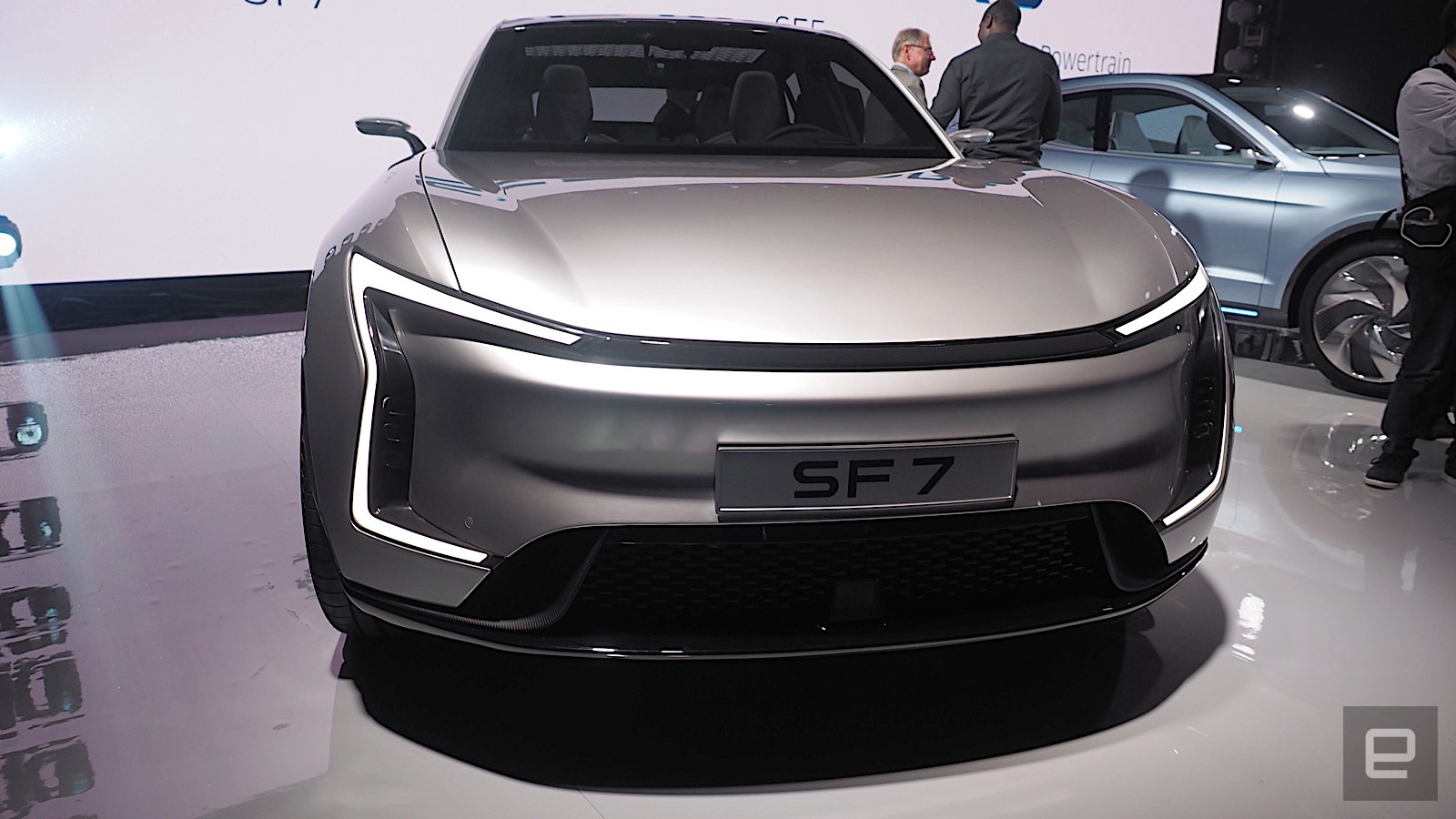
OLYMPUS DIGITAL CAMERA
Sokon is a well-known maker of vans, trucks and sports utility vehicles in China, but none of them are EVs. A couple of years ago, the company decided to launch a company in the US dedicated to EVs and autonomous vehicles, which is how SF Motors was born. In just two years, SF Motors has made significant strides in creating its first car. It set up its HQ in Santa Clara, California, a research and development center in Ann Arbor, Michigan, and now has seven R&D facilities in the US, China, Germany plus an upcoming one in Japan.
Thanks to the backing of a large company like Sokon, SF Motors is able to make its own investments. As mentioned above, In 2017, it paid $33 million to acquire InEvit, a battery module startup started by Martin Eberhard, whom you might recognize as one of the original co-founders of Tesla. SF Motor had even hired Eberhard as a consultant prior to the acquisition. Now, he serves as SF Motors' chief innovation officer.
SF Motors also seems well-poised to make a serious run at vehicle production. It purchased the AM General Commercial Assembly Plant in Mishawaka, Indiana last year, which was previously used to make vehicles from the likes of Mercedes-Benz and Hummer. It kept around 400 or so employees from the factory and will apparently be the only pure EV company to have manufacturing facilities in both the US and China.
OLYMPUS DIGITAL CAMERA
SF Motors isn't just about EVs; it's interested in autonomous tech as well. It just started self-driving tests in California, Michigan and China. The cars will also have "protective autonomy" -- basically Level 3 autonomy -- which are cars that can handle most driving tasks with "limited input" from humans. According to SF Motors, this technology uses deep neural network-based computer vision as well as LiDAR sensory perception. With all of that in mind, SF Motors hopes to get their "protective autonomy" vehicles on public roads by 2020.
As flashy as today's reveal is, there are still a lot of unanswered questions. We would've loved to get a better look and feel of the car's interior, as well as how it drives. Plus, we still don't know how much it costs, which will be an important consideration for most potential customers.
"From the creation of our 'protective autonomy' technology to our e-powertrain and battery achievements, we are on our way to becoming a global OEM and a vertical integrator," said SF Motors CTO, Yifan Tang, in a statement. "And, as much as we thrive on developing new ideas, our technology is meant for the roads, not the lab."