Showing posts with label VW. Show all posts

Monday, April 15, 2019

VW Reveals I.D. Roomzz Electric SUV With 280-Mile Range

The newest addition to the I.D. range is bigger than the I.D. Crozz and has three rows.

Auto Shanghai 2019 is literally just around the corner and Volkswagen wants to be among the firsts to introduce one of its latest creations – bound to strengthen the German marque’s electric I.D. range. For the uninitiated, China is currently the largest market for zero-emission vehicles in the world.
Dubbed as the I.D. Roomzz, the all-electric SUV is bound to stir the continuously growing global three-row SUV market but with zero emissions and smart in-car technologies. It sits on the modular electric drive matrix (MEB) platform but it’s bigger than the I.D. Crozz, which was debuted in Los Angeles in 2017.
In the front cabin, the I.D. Roomzz features a digital, glass-front panel. The dashboard and steering wheel floats in front of the driver as a visual display. In combination with the I.D. Pilot mode, the I.D. Roomz concept vehicle can be driven autonomously without an active driver.
The VW I.D. Roomzz has its own version of 4MOTION technology, with two electric motors powering the front and rear axles with a system output of 225 kiloWatt (302 horsepower). This allows the electric SUV to accelerate to 100 kilometers per hour (62 miles per hour) in 6.6 seconds and reach regulated speeds of up to 180 kph (112 mph).
More importantly, the VW I.D. Roomzz is powered by an 82-kWh battery, which allows ranges of up to 450 km (280 mi) under WLTP, or 475 km (295 mi) under NEFZ in China.
VW is set to debut the production version of the I.D. Roomzz, I.D. Crozz, and the Compact I.D. in 2020, with all three models to be sold globally. On the other hand, the I.D. Vizzion sedan and I.D. Buzz will debut its production version in 2022.
Categories: Volkswagen

Tuesday, January 22, 2019

The Biggest Challenge Facing Electric Cars Is Still Affordability

Falling EV battery prices resulted in longer range. Not lower purchase prices.

When Elon Musk announced job cuts at Tesla last week, he gave a clear reason for the belt-tightening. “We face an extremely difficult challenge: making our cars, batteries, and solar products cost-competitive with fossil fuels,” he wrote to his employees. “While we have made great progress, our products are still too expensive for most people.”
Tesla showed the world that electric cars can provide long range, luxury, and incredible performance. Its vehicles upended the notion that EVs were cramped and compromised city cars. The whole industry followed Tesla by increasing the size of its batteries. That’s a good thing. But it has not helped with EV affordability.
Yes, the cost of EV batteries continues to fall. So far, that hasn’t translated to lower prices for electric cars. “Decreasing prices as a function of the battery price has allowed automakers to put vehicles out there with larger and larger batteries,” Scott Shepard, an analyst at Navigant Research, told InsideEVs. “The purchase price hasn’t dipped down. As federal purchase incentives come out of the market, you’re likely to see prices stay at the same level for you the next four to five years.”
Shepard said that Tesla’s strategy to start with the top of the market made a lot of sense. “The price premium is significantly diminished in the luxury segment because there are a lot more bells and whistles,” he said. “In the economy segment, it’s significantly more difficult to make those trade-offs.”

A People’s (Electric) Car?

That’s precisely the point made this week by Hans Dieter Pötsch, Volkswagen’s chairman. He said that it will be difficult to make a viable business out of small, entry-level EVs.
Pötsch explained: “The current price level cannot stay the same if these cars are equipped with electric motors. Therefore, it will inevitably lead to significant price increases in the small car segment.” As a result, Pötsch said that EVs could very well remain “unaffordable for people on low incomes.”
If he’s right, we can expect wealthy people to buy electric Audis, BMWs, Jaguars, Porsches, and Teslas – and even relatively expense models from the likes of Chevy. But lower-income folks will have to wait for those cars to show up on the used market.
These trends are confirmed by a survey of more than more than 22,000 EV drivers conducted by PlugInsights, the world’s largest EV driver-research panel. There’s a big distinction between consumers buying expensive long-range EVs with big batteries and those driving lower-cost electric cars with smaller batteries.
The least expensive EV is the Smart EQ ForTwo. It sells for about $16,000 after incentives.
Forty-five percent of EV buyers who bought long-range EVs (Tesla cars and the Chevy Bolt) make more than $200,000 a year. With the introduction of the Model 3, the percentage of long-range EV buyers making more than $200k has decreased to about 38 percent. But the overall EV slightly shifted toward wealthier buyers.
Meanwhile, EV buyers who purchased an electric car with fewer than 150 miles of range are a different set. Only 17.5 percent of those EV drivers make more than $200,000. From 2011 to 2018, 38 percent of folks buying lower-range EVs make less than $100,000 a year.
Elon is right. He said it five years ago and he said it again last week. EV affordability is an “extremely difficult challenge.” His email to Tesla staff explained what he believes is at stake: “Our mission of accelerating the advent of sustainable transport and energy, which is important for all life on Earth.”

Sunday, December 16, 2018

Fun revival: Electric dune buggy could join VW I.D. line

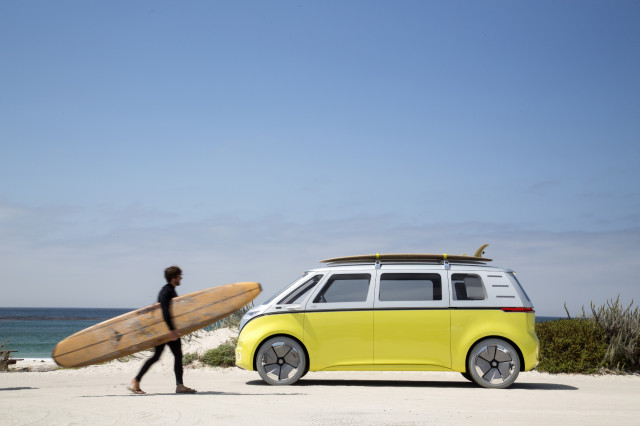
Volkswagen ID Buzz Concept


What's old is new, and what's new is old.

As if a Volkswagen revival of the classic Microbus—complete with a cargo-van version—weren't enough, the company revealed to British Autocar magazine that one of the next models in its upcoming electric I.D. lineup may be a revival of the off-road Meyers Manx dune buggy.
VW never built the Manx. The iconic, fiberglass-bodied dune buggies, first built in 1964, were kit-car conversions designed to fit on classic 1960s rear-engine VW Beetle floor pans—complete with VW engines hanging out the back, frequently with "stinger" tail pipes pointing proudly to the sky. (Meyers still builds some updated versions of the buggy kits.)
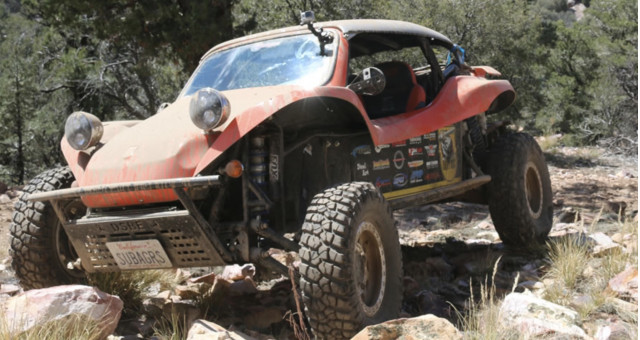
Meyers Manx Dune Buggy


Volkswagen's official version will be electric, based on its new MEB modular electric-car platform. The company has said other models based on the architecture will have up to 340 miles of range and will be able to charge at 125 kilowatts.

Such a minimalist design may need fewer batteries to accomplish the same mission—and without waving a pollution finger at the sky. Two electric motors are expected to give it all-wheel drive and an estimated 369 horsepower.
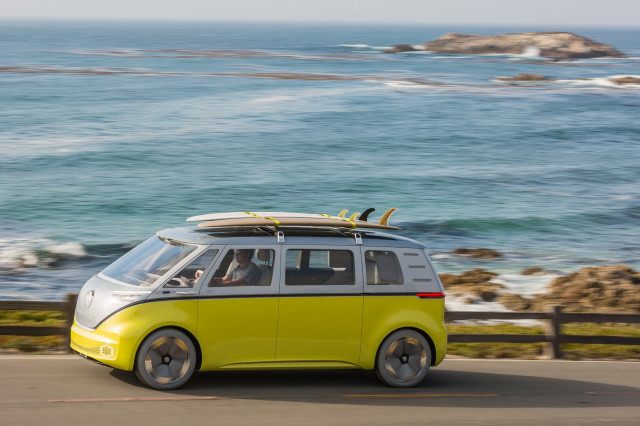
Volkswagen ID Buzz Concept


The electric Manx-style buggy could follow five or six other all-electric vehicles, ranging from an urban hatchback to a flagship sedan and long crossover—and that much-anticipated I.D. Buzz Microbus redux.
VW has also hinted it is working on retro-themed electric version of the classic Beetle after that. In all, the company says it will base 27 models on the new architecture to build 10 million new electric cars.

Sunday, July 22, 2018

Filing may uncover plans for hybrid VW Beetle coming soon

Volkswagen Beetle Dune Hybrid concept, New York City, May 2015


Just a few months ago, we heard that Volkswagen was not planning to develop a successor to the current Beetle but a recent filing shows that it might have one last hurrah for 2019.

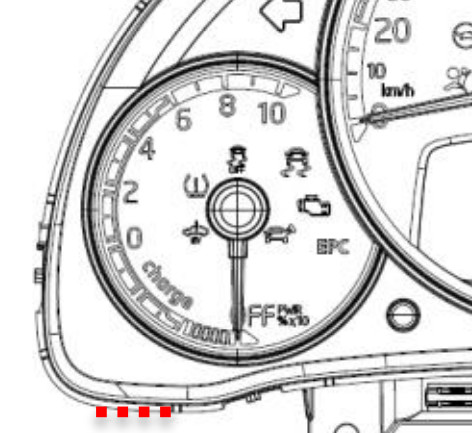
A June filing by supplier Magneti Marelli shows an instrument cluster that appears almost identical to the current Beetle cluster, but with an all new tachometer window that shows an electric charge gauge similar to the e-Golf’s cluster.
It may be an indication that Volkwagen is planning to build a hybrid Beetle similar to the concept that it showed a few years ago.
A spokesman for Volkswagen declined to comment on the filing.
Possible Beetle Hybrid gauge
Details on the potential new car are scarce, but the attachments in the filing show that Magneti Marelli submitted the information on June 14 and requested to keep a portion of the application confidential until December 14.
While the full user manual for the car is indeed confidential, they neglected to properly hide the diagram for the cluster in the public label document which displays the electric charge gauge.
The Beetle Hybrid concept was based on the 44 mpg Jetta Hybrid and its 1.4-liter gasoline engine combined with a 20-kw (27-hp) electric motor, but that car is no longer in production. This new Beetle could possibly be based on the Audi A3 e-tron that is still available. Unlike the Jetta, which was a traditional hybrid, the A3 e-tron is a plug-in hybrid which has a range of 16 miles on electric-only power. The A3 e-Tron uses a variant of the same 1.4-liter gasoline engine but coupled to a bigger 75-kw (100-hp) electric motor.
A report included in the filing shows that tests were completed on the cluster in May, which gives us some confidence that this is a product that is nearing production.
The diagrams for the cluster also show a light update for the speedometer but the rest of the cluster is generally identical to the most recent Beetle.
We will be digging further to see if this is the latest electrified Volkswagen and the last blast for the Beetle before it's exterminated.

Tuesday, July 3, 2018

New VW Camper Set to Launch Next Month

Look at those pictures. Take them all in. That van may not carry the Westfalia badge, but when the 2018 Caravan Salon in Dusseldorf rolls around on August 24th and Volkswagen reveals the production version of its all-new California XXL camper? There will be no doubt: the VW Camper Van is back!
Most recently, it has been Ford and Mercedes-based vans that wear the storied Westy name. That name, however, was made famous by VW- not the other way around. This latest VW camper, then, has some wrongs to right– and the company that brough you the original “Bulli” camper van in the 1960s hopes this new van will become just as iconic as its famous ancestor.
At nearly 6 meters long, the upcoming VW California XXL is a monster. As a result, there’s a lot more to the California XXL than just room for a folding or two. The XXL has heating elements built into the floor, climate-controlled mattresses that offer heating and cooling, a retractable wet-room shower, a chemical toilet, a full kitchen with counter top, sink, and fridges, plus a dedicated living and dining area. And, of course, most of the technology and on-board entertainment can be controlled through an app.
Under its ample skin, the Volkswagen California XXL is expected to feature a 2.0 liter version of the VW Crafter van’s diesel engine, pretty much ensuring that we won’t be seeing one in the US. Which is too bad, because the new VW camper also gets 4MOTION four-wheel drive and a pneumatic suspension that can be raised or lowered to put the XXL level on a campsite without the use of jacks. If you’ve ever spent a lot of time in an RV, you already know how slick that is.
What do you guys think of the reborn VW camper? Wouldn’t you love to take a California out to– California, on a long road trip? End up parking it somewhere outside of Napa Valley and enjoying the scenery for a few days? I would, but I’m not you. Let me know what you’d do with the California XXL in the comments section at the bottom of the page.

Source | Images: Volkswagen, via Autoexpress UK.

Thursday, December 28, 2017

VW IS BUILDING AN ELECTRIC RACE CAR FOR PIKE’S PEAK

Volkswagen showed the world it was serious about diesel performance by taking a diesel-powered Audi team to LeMans, where the cars dominated the 24 Hour endurance event for the better part of two decades. Now, well- let’s just say that VW is taking a step back from diesel. You know, because of reasons. Instead, they’re shifting their focus to electric cars. And, to prove they’re serious about that, they’ll be building an all-electric race car. For Pike’s Peak.
“I can emphasize it is the project for 2018,” VW motorsport director Sven Smeets said, in a recent interview with Motorsport. “For the future, we have to do well, and prove the concept is working with an eye to the future in the electric world in motorsport.”
Volkswagen will be joining Honda, Mitsubishi, Rimac, and others in the growing electric class at the historic Hill Climb event. Despite the heavy-hitting nature of its competitors, however, VW wants to do more than show up. VW plans to win. “For us it’s clear when we enter as a works team [it will] always be with cars very closely linked to the product on the road,” Smeets explains. “So, if we can call it e-WRX, it would be one of the first series we could have a proper look at because it would fulfill those requirements.”
Surely, Subaru will have something to say about Smeets’ proposed use of the WRX name- but this is about a race car, not blatant copyright infringement. Here’s hoping VW releases more info. and photos of its Pike’s Peak competitor soon.

Source | Images: VW, via Motorsport