Showing posts with label VW Beetle. Show all posts

Sunday, December 16, 2018

Fun revival: Electric dune buggy could join VW I.D. line

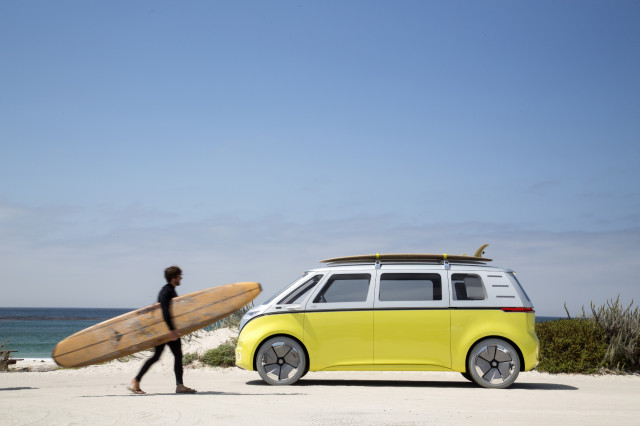
Volkswagen ID Buzz Concept


What's old is new, and what's new is old.

As if a Volkswagen revival of the classic Microbus—complete with a cargo-van version—weren't enough, the company revealed to British Autocar magazine that one of the next models in its upcoming electric I.D. lineup may be a revival of the off-road Meyers Manx dune buggy.
VW never built the Manx. The iconic, fiberglass-bodied dune buggies, first built in 1964, were kit-car conversions designed to fit on classic 1960s rear-engine VW Beetle floor pans—complete with VW engines hanging out the back, frequently with "stinger" tail pipes pointing proudly to the sky. (Meyers still builds some updated versions of the buggy kits.)
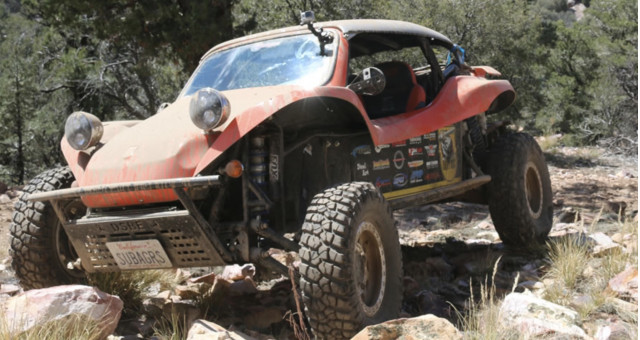
Meyers Manx Dune Buggy


Volkswagen's official version will be electric, based on its new MEB modular electric-car platform. The company has said other models based on the architecture will have up to 340 miles of range and will be able to charge at 125 kilowatts.

Such a minimalist design may need fewer batteries to accomplish the same mission—and without waving a pollution finger at the sky. Two electric motors are expected to give it all-wheel drive and an estimated 369 horsepower.
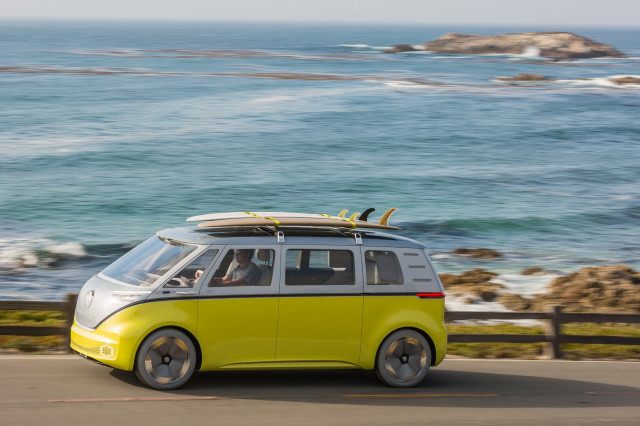
Volkswagen ID Buzz Concept


The electric Manx-style buggy could follow five or six other all-electric vehicles, ranging from an urban hatchback to a flagship sedan and long crossover—and that much-anticipated I.D. Buzz Microbus redux.
VW has also hinted it is working on retro-themed electric version of the classic Beetle after that. In all, the company says it will base 27 models on the new architecture to build 10 million new electric cars.

Saturday, November 8, 2014

New-wave Renault Twingo brings back old-time understeer


Understeer, the experts will tell you, is the tendency for a car’s front wheels to slip outwards under increasing cornering loads. 
The 'slip angle' of the front tyres increases as you go faster and faster, until the tyre breaks away entirely unless it’s tamed by an ESP system.
It’s a common condition, widely demonstrable in today’s front-drive cars, whose front wheels are well laden, even in a static condition, by the mass of an engine above.
Increase that load with energetic cornering and you fairly readily reach a point where the tyre won’t go precisely where it’s pointed. Let’s call this laden understeer.
But there's also a wholly rarer form of understeer, so hard to find today that I confess I’d all but forgotten about its existence until the new Renault Twingo came along. It’s unladen understeer – a common condition once upon a time in old-timers such as the rear-engined VW Beetle, Renault R8 and R10 (which would often abruptly change to oversteer and send you backwards through the hedge) and mid-engined models such as the Lancia Montecarlo and Fiat X1/9. 
Last time it came to notice, I think, was in early examples of the Smart Roadster and the Lotus Elise
This condition doesn’t result from the front tyres being overloaded by mass, but from the very reverse of this. The hoops are so lightly laden (car makers used to find it hard to specify tyres small enough in section) that they can find it hard to accept abrupt inputs of lock and steer the car as expected. You simply learn to steer a little more smoothly as a result.
In the case of the Renault Twingo, the condition is a mild curiosity, rather than a problem. The car is endemically very stable, and in any case it has a well honed chassis stability system that recognises the driver’s intentions and uses individually braked wheels to deliver them so exactly that for many, the location of the engine mass won’t even be apparent. 
The Twingo’s behaviour at the limit is nothing like that of its treacherous ancestors and (as our recent road test made clear), if anything, the chassis stability system is a shade too timid and intrusive. 
If you care about such things, you’ll also notice the unusual weight distribution in the ride quality. We’re all used to cars with a lot of nose weight that sometimes seem to lack front suspension travel, but the Twingo is different: bouncier but broadly equal in travel front and rear. 
Mostly it feels like a 50/50 car, but occasionally the rearward bias becomes apparent – again, a curiosity and not a problem. And it may become an important positive in a month or two, when the traction of our driven wheels in ice and snow is at a premium.
Whatever, for those of us who care about such things, it’s nice to have a rear-engined four-seat car back in the showrooms. It does have a special way of going which I, for one, find engaging and different. So welcome back, Twingo. You’re a breath of fresh air.

Friday, July 25, 2014

Electric Volkswagen Beetle Has 80+ Mile Range, Classic Looks

If you’ve seen one Chevy Volt or Nissan LEAF, you’ve seen them all. But if you’re driving a perfectly restored VW Beetle with an 85 hp electric motor, you are the personification of cool. The people at Zelectric Motors in San Diego created this jewel with the help of EV West. It’s a very neat and tidy conversion that looks like it came straight from the factory.
Since the electric motor has more than twice the horsepower of the original Volkswagen engine, acceleration is brisk (by VDub standards) and the top speed is somewhat north of 90 mph. Zelectric’s David Benardo says the car has a range of between 80 and 100 miles – more in the city, less on the highway. To put that in perspective, that is equal to or greater than the rated driving range of cars like the Nissan LEAF (84 miles) and the BMW i3 (81 miles).
If you have a donor car handy, Zelectric will be happy to help you convert it to electric power. They say the typical professional conversion runs between $25,000 and $30,000. For that amount of money, you get yourself a car that doesn’t look like everybody else’s EV, and will put a grin on your face while you’re driving it. An EV that’s fun to drive? What a concept!