Showing posts with label Volkswagen Beetle. Show all posts

Sunday, July 22, 2018

Filing may uncover plans for hybrid VW Beetle coming soon

Volkswagen Beetle Dune Hybrid concept, New York City, May 2015


Just a few months ago, we heard that Volkswagen was not planning to develop a successor to the current Beetle but a recent filing shows that it might have one last hurrah for 2019.

A June filing by supplier Magneti Marelli shows an instrument cluster that appears almost identical to the current Beetle cluster, but with an all new tachometer window that shows an electric charge gauge similar to the e-Golf’s cluster.
It may be an indication that Volkwagen is planning to build a hybrid Beetle similar to the concept that it showed a few years ago.
A spokesman for Volkswagen declined to comment on the filing.
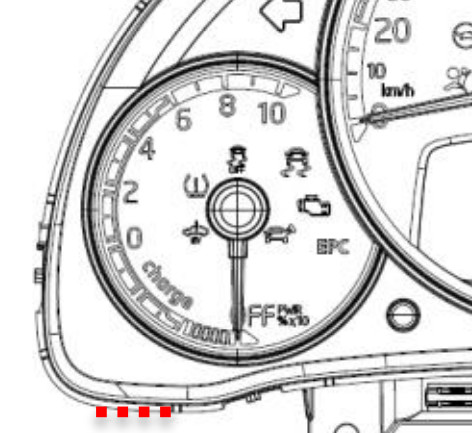
Possible Beetle Hybrid gauge
Details on the potential new car are scarce, but the attachments in the filing show that Magneti Marelli submitted the information on June 14 and requested to keep a portion of the application confidential until December 14.
While the full user manual for the car is indeed confidential, they neglected to properly hide the diagram for the cluster in the public label document which displays the electric charge gauge.
The Beetle Hybrid concept was based on the 44 mpg Jetta Hybrid and its 1.4-liter gasoline engine combined with a 20-kw (27-hp) electric motor, but that car is no longer in production. This new Beetle could possibly be based on the Audi A3 e-tron that is still available. Unlike the Jetta, which was a traditional hybrid, the A3 e-tron is a plug-in hybrid which has a range of 16 miles on electric-only power. The A3 e-Tron uses a variant of the same 1.4-liter gasoline engine but coupled to a bigger 75-kw (100-hp) electric motor.
A report included in the filing shows that tests were completed on the cluster in May, which gives us some confidence that this is a product that is nearing production.
The diagrams for the cluster also show a light update for the speedometer but the rest of the cluster is generally identical to the most recent Beetle.
We will be digging further to see if this is the latest electrified Volkswagen and the last blast for the Beetle before it's exterminated.

Friday, May 3, 2013

Volkswagen boosts Beetle Turbo and Jetta GLI with EA888 Gen 3 engine; more power, improved fuel economy


Ea888
The EA888 for the US. Click to enlarge.
The Volkswagen Beetle Turbo, Beetle Turbo Convertible, and the Jetta GLI receive a number of running changes to 2013 model year cars that go on sale this month. The most notable of these is fitment of a new version of the EA888 Gen 3 2.0-liter turbocharged and direct-injected TSI gasoline engine.
The new engine delivers a manufacturer-estimated improvement in fuel efficiency for the Beetle models of between 4-8% percent on the combined cycle and by up to 9% percent on the city cycle. The new engine produces 210 horsepower (157 kW), an increase of 10 hp over the previous Gen 2 TSI engine.
Peak power is generated 200 revs higher in the engine range, at 5300 rpm, and torque remains unchanged at 207 lb-ft (280 N·m). Thus equipped, the Beetle Turbo coupe takes 6.6 seconds to accelerate from 0 to 60 mph, 0.2 seconds less than the previous version. At 6.7 seconds, the Jetta GLI is a tenth faster with the manual transmission and two tenths quicker with the DSG dual-clutch automatic than the cars equipped with the Gen 2 engine.
The EA888 Gen 3 engine is designed to be lighter and more fuel efficient than the unit it replaces. Engine weight has been reduced by 8 lbs (3.6 kg), to 290 lbs (132 kg) overall.
Among the improvements on this engine are: a thin-wall crankcase casting; exhaust headers that are integrated into the cylinder head; smaller diameter main bearings; roller bearings for the twin balancer shafts; and a crankshaft that has four counterweights instead of eight.
A new factory in Silao, Mexico—part of Volkswagen’s ongoing $5-billion investment in the North American market—is producing the EA888 localized for the US market. The EA888, a global product for Volkswagen, is also produced in the EU and China.


Source: Green Car Congress

Friday, February 15, 2013

VW Building $8,000 Budget Car For China


vw-e-up

Times are still tough for many people, and buying a new car is simply out of the picture. China, however, is seeing an almost meteoric rise in car sales year after year, and a new interest in low-cost auto manufacturing could send sales through the roof. Volkswagen has announced its intention to build a budget car for Chinese consumers with a starting price around $8,000.

Because of the way Chinese tariff laws work, the car will likely be sold under a joint venture between VW and one of its Chinese allies. The goal price is between $8,000 and $9,400 in a market segment that sees over three million annual sales, and is growing. The car will likely use some existing Volkswagen technology, probably borrowed from other budget cars like the Up! and Golf.

Volkswagen isn’t alone in pursuing the economic end of the market. Nissan is working on a $3,000 car under the Datsun brand, and Indian automakerTata makes the Nano, which at launch could be bought for about $2,000 in India. How low will automakers go, and will America ever see a car as cheap as $8,000 again?


Source: AutoCar

Monday, December 3, 2012

2013 Volkswagen Beetle TDI Convertible - First Drive


Want proof that diesel is finally taking hold in North America? Look no further than this 2013 Volkswagen Beetle Convertible. For a while now, it's become easier to understand why more automakers are opting to pair their large-volume models with diesel, but it's only when a given technology or feature starts to infiltrate the industry's smaller segments that we can argue that something has truly taken hold. After an agonizingly slow buildup, we're prepared to say that the high-mileage fuel has finally come of age here, and the evidence is right under this VW's bulbous hood.

Consider this: Diesel has become so viable that it's trickled down to this car, a niche-within-a-niche-within-a-niche model. Niche number one? The Beetle is a retro-styled spinoff of VW's volume hatchback, the Golf. Niche number two? It's a convertible. It isn't until we get to niche number three that we even discuss its oil-burning nature. In fact, if you want to get even more stratified, the Tornado Red tester seen before you has a manual transmission, itself a lamentably narrow sliver of the marketplace. Yes, the outgoing New Beetle was offered here with TDI power, but its convertible variant never was. We've watched for years as Europe has played host to a whole mess of diesel droptops, but we simply can't remember the last time one was offered here.

That Volkswagen is bringing this triple-specific model to its North American dealers not only says a lot about the confidence it has in its TDI powertrains, it also says something about the company's relentless drive for volume, a fever pitch that seemingly cannot abide any white space left unfulfilled.

2013 Volkswagen Beetle TDI Convertible side view2013 Volkswagen Beetle TDI Convertible front view2013 Volkswagen Beetle TDI Convertible rear view

We've seen dodgy nichemobiles in the past – hell, the automotive landscape is littered with them – particularly convertibles. Thankfully, this Beetle is something of a sweetheart, with an easy charm and a flexible, efficient heart that just happens to burn oil.

The addition of diesel motivation really helps this car come into its own.
Of course, for the less adventuresome, VW will happily sell you a gasoline-fed Beetle Convertible motivated by its enduring 2.5-liter five-cylinder with 170 horsepower and 177 pound-feet of torque, or its 2.0-liter turbocharged TSI four with 200 hp and 207 lb-ft. Both are reasonable alternatives – the 2.5 is a lazy revver with a funky soundtrack and a standard automatic, but it makes for a perfectly serviceable (if uninspiring) cruiser, and the 2.0T delivers additional fun thanks to its added power, flatter torque curve, sport suspension and manual or dual-clutch gearbox ($1,100) choices. But despite monumental dynamic improvements over their New Beetle predecessors, neither model is really likely to make an enthusiast's shopping list.

Truthfully, even with a heaping 236 lb-ft dollop of torque and 140 horses, this 2.0-liter TDI isn't going to set the performance world on fire. But it really doesn't have to – that's not the Beetle's primary mission in life. And paradoxically, the addition of diesel motivation really helps this car come into its own. For one, it's well in line with the bubble-body's offbeat and frugal hippy ethos. For another, its peak torque chips in from just 1,750 rpm to readily facilitate the sort of leisurely, low-rev open-air cruising that the lidless Beetle just begs for.

2013 Volkswagen Beetle TDI Convertible headlight2013 Volkswagen Beetle TDI Convertible wheel detail2013 Volkswagen Beetle TDI Convertible taillights2013 Volkswagen Beetle TDI Convertible logo

41 mpg highway is the best efficiency figure you can get in a convertible.
We were admittedly concerned that clatter from the TDI might be off-putting in a model with no roof, but the engine is so well behaved that passengers probably won't even notice that your ride gets fuel from those other pumps. The TDI Beetle's method of internal combustion is generally only noticeable if you're standing next to it at idle, or from inside when pulling away from a stop light with the top down. Even then, it's only a momentary distraction, one not much more unpleasant than the base 2.5's low-rev acoustic wobble. Oh, if you really want to pile on the revs, you'll hear more of the engine, but with markedly better torque than either of the range's two gas-powered offerings, you won't need to dip into the throttle deeply as often, let alone depress the easily modulated clutch.

In addition to the TDI's torque windfall, its primary benefit is a matter of economy. The EPA rates this manual transmission model at 28 miles per gallon city and a whopping 41 mpg highway, the latter being the best efficiency figure you can get in a convertible. If you're the shiftless sort, VW will happily sell you a DSG dual-clutch example with 28 city and 38 hwy ratings, but we liked out tester's six-speed self-stirrer just fine, and our drive loops emanating from around hilly Santa Monica suggest the Fed's fuel economy figures will be easy to attain.

2013 Volkswagen Beetle TDI Convertible engine

We'd be remiss if we didn't note that we never really warmed to piloting its predecessor, the New Beetle – its cartoonish proportions made for a strangely unrewarding driving experience. The car's oversized, half-moon greenhouse offered tremendous headroom, but also placed the windshield way out front like a minivan, seemingly well ahead of the driver's feet. This made the New Beetle somewhat dimensionally tough to grasp, hurting the driver's confidence when placing it in aggressive corners. But there's no such problem here – like its hardtop counterpart, the new model now incorporates a flatter roofline and repositioned windscreen that not only gives the VW more traditional proportions top-up or top-down, it helps the driver feel more in control behind the wheel.

Curb weights start at just over 3,200 pounds, a 220-pound increase.
Aiding that new sensation is the Beetle's chassis, which is longer, lower and wider than its predecessor, not to mention stiffer – VW officials tell us that key reinforcements have been made all over, including the A-pillars and front roof crossmembers, along with the lower bodysides and between the B-posts. Altogether, the changes account for a 20-percent increase in rigidity, though there's a weight penalty. As a result of those strengthening measures and the one-touch power top mechanism, curb weights start at just over 3,200 pounds, representing a 220-pound increase. The result is worth it, though, at least over the LA Basin's well-tended roads riding on 17-inch rubber. The Beetle Convertible delivers a smooth ride with almost no perceptible cowl or steering column shake. There's also surprisingly eager turn-in thanks to the adeptly tuned front strut and rear multilink suspension and new electric power steering (the base 2.5 model sticks with hydraulic assist, but it's no more or less engaging). The 2.0T model receives an XDS electric limited-slip differential, inch-larger rubber and a bigger front antiroll bar – all of which make it the better handler – but the truth is that all models are plenty enjoyable for the type of driving this car character engenders.

2013 Volkswagen Beetle TDI Convertible interior2013 Volkswagen Beetle TDI Convertible front seats2013 Volkswagen Beetle TDI Convertible top2013 Volkswagen Beetle TDI Convertible trunk

As with the hardtop model, the Beetle's interior is fine work for the money, with genuine flair and a surprising amount of utility thanks to the new generation's larger dimensions. There's none of the decontented, built-to-a-price feel that mars the current Jetta – the cabin is notable for its robust switchgear and nice textures, along with its more supportive seats. Things can get predictably Germanic dour if opting for a black interior, but there are other choices available, including the painted body-color accents on our tester. We'd probably forego the optional navigation system, as the touchscreen is small and the menu logic not our favorite.

The top does a nice job sealing off the outside world – this is a true four-season car.
Thankfully, there's plenty of room up front for drivers of all statures, and the rear seats can actually a pair of grown adults surprisingly well, though the rear seatback is a bit upright. The latter split and fold to offer a decent-sized pass-through to the trunk, which has grown to 7.1 cubic-feet, a major improvement over the outgoing model's miserly 5.0 cubes. Behind the rear headrests is a new pyrotechnic pop-up roll bar system, a welcome bit of safety equipment not often seen on convertibles of this price point.

The three-layer top feels reassuringly stout, opening in 9.5 seconds and closing in 11 at speeds up to 31 mph, and it does a nice job sealing off the outside world when the weather isn't cooperative – this is a true four-season car. Just like it always has, the top furls up in a pram-like heap behind the rear headrests, but the stack is low enough that it doesn't compromise the driver's rear view – that demerit is reserved for the rear headrests, which really ought to be shingle-style for visibility's sake.

2013 Volkswagen Beetle TDI Convertible rear 3/4 view

Is the Beetle Convertible for you? That probably depends on your reaction to its styling as much as anything else. The new generation is far more masculine and purposeful than its predecessor, a fact underscored by its growing male ownership. While the New Beetle's pink slips went out to just 28-percent men, the 2012-present model is trending at 40 percent – 50 percent on turbo models. Regardless of one's sex, buyers can look forward to better standard equipment levels, interior space and fuel economy than its chief rival, theMini Cooper Convertible.

VW is offering a trio of limited edition launch models with decade-themed motifs – '50s, '60s, and '70s.
Incidentally, VW is offering a trio of limited edition launch modelswith decade-themed motifs – '50s, '60s, and '70s. The latter is our favorite, with its rich Toffee Brown Metallic paint with beige top and matching leatherette seating surfaces, but sadly, it's only available with the base 2.5-liter. 
There aren't too many droptops available at average new car prices anymore, but even if there were more choices in this end of the market, the 2013 Beetle Convertible would still be charismatic enough to warrant consideration. It's smartly styled, is surprisingly good to drive, and in TDI spec, it offers genuinely excellent fuel efficiency. It may be a niche-within-a-niche-within-a-niche play for the moment, but we're hoping that changes as more and more buyers take notice of the smiles on owner's faces as they breeze past gas stations with the wind in their hair. For VW's sake, we just hope the TDI Convertible finds favor more quickly than the fuel that powers it.


Source: Autoblog Green


Friday, March 16, 2012

The End OF Mexico’s VW Bug Cabs

Mexico and Volkswagen (VW) are strange bedfellows. Whether it’s pushing a VW Bus off an assembly line or building a classic VW Bug Type 1s up until 2003, Mexico and Mexico City love Volkswagen, especially as cabs. While it remains to be seen if 2012 will be the end of humanity, the year 2012 will be the end of the VW Beetle Taxicab of Mexico.

Mexico City’s Director of Taxi Services has declared that the VW Taxi Cab “has concluded its useful life.”

Mexico City is crowded, a population of more that 20 million people. This means a lot of vehicles on the roads and high pollution. With an effort to counter the pollution problem, Mexico City has laws on the books that say that no taxi can be older than eight years. With the latest Beetles being built in Mexico during the tail end of 2002 and production stopping in 2003, that eight year time limit has come and gone for the loved Beetle cabs filling the roads of Mexico. A two year time extension was put into effect in 2010 to give taxi drivers and companies a chance to update their fleets. Now that time extension has come to an end and no new time extension is in sight.

The overall impact of removing the Bugs from the streets of Mexico is not all that dramatic, over the years the number of VW Bug cabs in Mexico has dwindled. Currently there are around 3,500 of VW Bug cabs left in action, while most new public taxis are modern Renault-Based Nissan Platina or the second or third generation Nissan Sentras. We’ve always said that the greenest car is one that is already on the road, but after almost 80 years of production, the VW Beetle is long overdue for replacement.

VW Beetle production started in Mexico in the 1950s with Beetles put into service not only as taxicabs but as police squad cars, military vehicles, and utility vehicles. With the VW cabs Mexican run coming to a close in 2012 it truly is a testament to a classic, rugged, little car that is beloved the world over.


Source: Gas2.0

Saturday, March 10, 2012

New entry-level engines for the Volkswagen Beetle

Volkswagen has expanded the range of engines for the Beetle with a 77 kW / 103 hp diesel engine (TDI) and a 118 kW / 158 hp (TSI) gasoline engine.

The 1.6 TDI Beetle offers fuel consumption of 4.5 l/100 km (52 mpg US) equivalent to 119 g/km CO2) and achieves a maximum speed of 180 km/h (112 mph). Fully fueled (55 liters), the Volkswagen thus has a theoretical driving range of 1,222 km (759 miles).

The 1.2 TSI (77 kW) is a charged gasoline direct-injection engine. Fuel consumption is 5.9 l/100 km (40 mpg US) or 137 g/km CO2, with top speed of 180 km/h.

The top engine is currently a 2.0-liter TSI with 147 kW / 197 hp that has a combined fuel consumption of 7.7 l/100 km (30.6 mpg US) equivalent to 179 g/km CO2 and accelerates the Beetle to 223 km/h (139 mph).

The Beetle 1.2 TSI starts at €16,950 (US$22,200).


Saturday, February 11, 2012

The Two Roads of Volkswagen – Diesel and Hybrid

VW Jetta Hybrid

On a bright shiny white stage were Volkswagen’s greenest presentations at the Chicago Auto Show – a Beetle TDI (diesel), and the Jetta Hybrid, in pure flat white. Both of them looked pretty good up there on their clean-looking display, and I almost didn’t miss that there was nothing completely electric.

The Hybrid Jetta Has Good Mileage, Looks Great

Volkswagen wants you to know that the Jetta can be driven on battery power alone up to 44mph, that it goes 0-60 in under 9 seconds (perfectly average, by the way), and that it gets 45mpg combined. It only goes about a mile, mile and a quarter, under battery power alone, but that does still get you to the nearest station (hopefully) if you run the tank bone-dry. No official word on emissions, though, carbon dioxide or otherwise.

The problem with the Jetta is the same problem that nearly every other automaker has with integrating an electric motor and its batteries – the trunk space suffers. Oh, how it suffers. There’s a giant shelf eating up much of the trunk space, and a tiny pass-through for when you’ve got skis or something. The seats do fold down, but the batteries take up so much space that whatever you’re transporting had better be fairly flat or it’s not going in there.

The Diesel Bug Is Manly!

We’ve talked about the problems with diesel here on Gas2, but the up side is that the Beetle TDI isn’t going to be burning a whole lot of it. VW wants you to know that it gets 29mpg city and 39mpg highway (much better than either the Beetle 2.5 or Beetle Turbo, but not the best diesel mileage out there), and that it’s “more masculine” than previous Bugs. No, really, that’s what the press release they handed us said. The press release was on a thumb drive shaped like a key, by the way, making it easily the most awesome hand-out at the show.

In addition to not burning too much diesel, VW is taking steps to reduce emissions; this diesel Beetle does have a particulate filter and three catalytic converters (for oxidation, nitrogen oxides, and hydrogen sulfide). The engine then makes only 140HP for a 3,000 lb. car, but it should be pretty drivable.

VW also pointed out that even though the roof is flatter, there’s still space in the rear seat. I did not actually climb into the rear seat, but since it’s not a hybrid, there’s plenty of storage space once the seats fold down. Points for the diesel hatchback.

Final impressions on the VW green display – not bad, not bad, definitely worth a test drive (we weren’t allowed to drive these display cars either, so you’ll have no preconceptions there).


Source: Gas2.0

Thursday, February 9, 2012

Alook at the Volkswagen Beetle TDI from the Chicago Auto Show


While Volkswagen didn't host a press conference to launch its new diesel Beetle, the carmaker put the 2013 Beetle TDI on display at the Chicago Auto Show in its first U.S. appearance.

It's really the return of a long-lost friend, since VW sold the previous-generation New Beetle with a 1.9-liter four-cylinder turbodiesel engine from its 1999 launch through the 2006 model year.

Stricter emission standards sidelined the TDI Beetle after that, but it's back in the new generation that debuted for 2012.

According to details released last week by Volkswagen, the 2013 VW Beetle TDI is projected to deliver EPA fuel-economy ratings of 29 mpg city and 39 mpg highway.

That will likely produce a combined rating of 32 or 33 mpg, though VW Jetta TDI owners will tell you that the EPA ratings consistently underestimate their real-world fuel efficiency.

2013 Volkswagen Beetle TDI, Chicago Auto Show, Feb 2012

2013 Volkswagen Beetle TDI, Chicago Auto Show, Feb 2012

The 2.0-liter turbocharged diesel is rated at 140 horsepower and a generous 236 pound-feet of torque, so the Beetle TDI should deliver the usual low-end surge of power beloved by diesel drivers.

To refine the engine, VW has fitted balance shafts and crankshaft counterweights to smooth out the customary diesel rattle.

Buyers can opt for either a six-speed manual transmission or Volkswagen's "DSG" six-speed dual-clutch automatic manual transmission.

2013 Volkswagen Beetle TDI, Chicago Auto Show, Feb 2012

2013 Volkswagen Beetle TDI, Chicago Auto Show, Feb 2012

Special features on the new VW Beetle TDI include a unique design for the 17-inch alloy wheels, a chrome accent strip along the side window line, and of course various TDI badges.

A secondary instrument pod, containing not only gauges for oil temperature and turbo boost, but also a digital stopwatch, is located on the top center panel of the 2013 Beetle TDI instrument panel, distinguishing it inside from lesser models.

Pricing for the 2013 Volkswagen Beetle TDI hasn't yet been announced, but the car will appear at VW dealers later this year.


Source: Green Car Reports

Monday, January 9, 2012

Introducing the Volkswagen E-Bugster Electric Vehicle Concept


It wouldn't be an auto show without concept cars, and the Detroit Auto Show this year has its share.

From Volkswagen comes a new take on a familiar shape: the Volkswagen E-Bugster, an all-electric two-seat coupe version of its iconic Beetle.

Volkswagen isn't unveiling the car until the show opens, but with sites violating the maker's embargo, we felt you deserved to see the car too.

First, the styling, which blends a flat windshield, a low roofline with shallow windows, and a close-coupled hardtop to create a sporty coupe body.

It's rather like the new 2012 Mini Cooper Coupe, although (to our eyes) a less jarring modification to the known shape.

Power for the concept car is provided by a lithium-ion battery pack and a 85-kilowatt (114-horsepower) electric motor driving the front wheels. The 695-pound battery pack is mounted under the rear seat and below the floor of the trunk.

The charging port is sited under the large VW emblem on the hood, a nice touch. It offers Level 1 and Level 2 charging and, for areas where it's available, DC quick charging as well.


Source: Green Car Reports