Showing posts with label Toyota Prius. Show all posts

Sunday, February 4, 2018

Dealers start to worry about ebbing repair income from electric cars

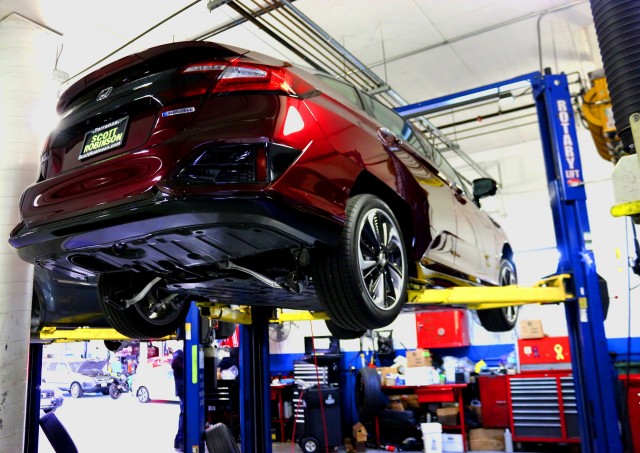
Honda Clarity Fuel Cell on lift at dealership


The average vehicle on U.S. roads these days is more than 10 years old, despite three successive years of record new-vehicle sales.
That's a result not only of the 2008-2010 recession but also vastly more durable and reliable vehicles compared to those of previous decades.

All of those vehicles provide a ready stream of service revenue to dealerships, especially while they're still in warranty.
Data from dealer trade groups shows that servicing is one of the two most-profitable lines of business for franchised dealerships, along with sales of used cars.
New-car sales are actually less profitable, but they do create a steady flow of customers who will come in for service in the future.
Electric cars, however, are poised to throw a monkey wrench into the gears of that finely tuned business model.
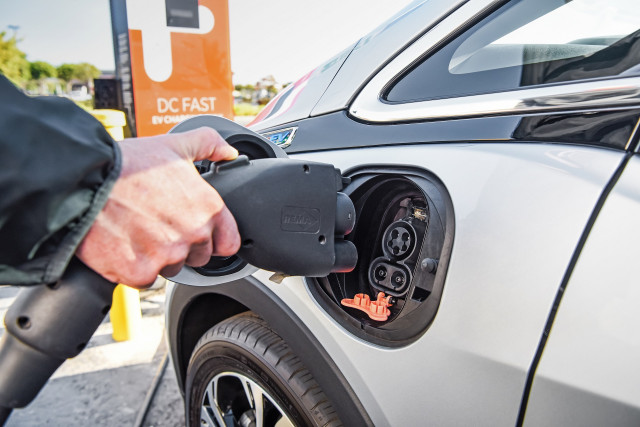
2018 Chevrolet Bolt EV


As a recent article in the "Fixed Ops" section of industry trade journal Automotive News (subscription may be required) notes, the reduced service requirements of battery-electric cars will generate far less revenue for dealerships.
Experts say everything in the back of the store—vehicle repair, parts, body shops, service customer retention—will be disrupted if the coming armada of electric vehicles, which require less maintenance than traditional cars and trucks, sells in high volume.
While plug-in electric cars, both battery-electric and plug-in hybrid, now account for only about 1 percent of new-vehicle sales, that percentage will clearly increase in the future.

Wally Burchfield, Nissan North America's vice president of U.S. aftersales, estimated a battery-electric vehicle would generate only two-thirds to three-quarters the service revenue from regular maintenance items that a gasoline car would.
We suggest that may be a bit optimistic.
Tires and wiper blades are the sole wear items on a Nissan Leaf electric car, though replacing the filter in the cabin air-intake system is also recommended.
2006 Toyota Prius and 2015 Nissan Leaf [photo: John C. Briggs]


Sure, toward the end of their lives, electric cars may also need suspension work, alignment, and brakes—but as with hybrid-electric vehicles, their friction brakes last far longer than other cars due to the use of regenerative braking to slow the car while recharging the battery.
Reports of Nissan Leafs and Toyota Priuses still on their original brake pads at 75,000 miles are not uncommon.
A UBS teardown of a Chevy Bolt EV and a gasoline-engined Volkswagen Golf concluded that replacement parts for the Bolt EV (with 24 moving parts) would be 60 percent lower than for the VW Golf (with 124 moving parts).

Some dealers may wish to take a leaf from the independent repair shops that have sprung up to fix the battery packs in hybrid cars, which dealers now almost universally say must be replaced completely if they malfunction.
Opening up high-voltage battery packs requires training and significant safety precautions, but often a malfunctioning battery needs only a module or some contacts cleaned to work properly—not the $4,000 replacement dealerships will usually say is an owner's only recourse.
Still, we'll believe your average franchised dealership is actually facing up to the realities of electric cars, however, only when we stop hearing about Nissan dealers that have sent years of periodic oil-change reminders to owners of Leaf electric cars.
And not until then.

Friday, April 21, 2017

Ten Best Hybrid Cars For Under $40,000

For many fans of electric cars, a hybrid like the Toyota Prius is so last year. Make that so last decade. They depend on a gasoline engine almost all the time but get a boost from an electric motor built in to the powertrain and a smallish battery that is recharged by the engine and by regenerative braking. Some people get annoyed when hybrids are referred to as “electric cars.” Whatever your point of view about hybrid cars, there is no question they are more fuel efficient than similar models that have just a conventional internal combustion engine under the hood.
15 years ago, there was only one hybrid available in the American market — the first generation Toyota Prius. It was ugly and slow. Only someone like Al Gore would drive one. Today, there are dozens to choose from and prices have dropped to the point where they cost very little more than conventional cars. Kelly Blue Book has put together its Top Ten Hybrids For Under $40,000 list with specs for all ten of them. If you are interested in purchasing a hybrid car, it may help you decide which models fit your lifestyle and which do not.

#10 — 2017 Toyota Highlander Hybrid

Starting price: $37,230
Fuel economy: 29 mpg combined (30 city/28 highway)
Total system power: 306 horsepower
The Toyota Highlander Hybrid has one option no other car on the list offers — 8 passenger seating, thanks to a third row seat. That right there could  make it attractive to people with large families who want a fuel efficient car. And it has one important difference from the Toyota Synergy Drive system found in the Prius — a V-6 engine. KBB says, “it’s actually the hot rod of the Highlander family.”
One drawback? It has a CVT (continuously variable transmission). Many hybrids use a CVT to eke out a few more tenths of a mile per gallon but many people find them annoying to live with every day. Test drive one before you decide if the CVT is your cup of tea.

#9 — 2017 Toyota Camry Hybrid

Starting price: $27,675
Fuel economy: 40 mpg combined (42 city/38 highway)
Total system power: 200 horsepower
For $10,000 less than the Highlander, the Camry Hybrid gets 10 more miles per gallon, thanks to the 2.5 liter four cylinder engine instead of the V-6 in the Highlander. KBB says, “The Camry Hybrid is available in several flavors, including an LE model that marries combined fuel economy of 40 mpg with a starting price under $28,000. Stepping up to the sport-tuned SE or top-of-the-line XLE will cost you money and a bit of fuel economy, but it’s good to have options.”
Inside and out, the Hybrid is pure Camry, one of the top selling cars in America because of its high quality, excellent fit and finish, and comfortable ride. The Hybrid has all of those things plus a significant boost in fuel economy.

# 8 — 2017 Chevrolet Malibu Hybrid

Starting price: $28,750
Fuel economy: 46 mpg combined (49 city/43 highway)
Total system power: 182 horsepower
The Malibu Hybrid uses a version of the Voltec powertrain found in the Chevy Volt to make it one of the most fuel efficient sedans you can buy. It has a smaller battery than the Volt and you don’t have to plug it in. For just $1,000 more than the Camry Hybrid, the Malibu offers more miles per gallon. “It’s also stylish, a pleasure to drive and offers a long list of tech highlights including built-in 4G LTE Wi-Fi plus Apple CarPlay and Android Auto capability, notes KBB.

#7 — 2017 Toyota RAV4 Hybrid

Starting price: $29,990
Fuel economy: 32 mpg combined (34 city/30 highway)
Total system power: 194 horsepower
The Toyota RAV4 is one of the most popular small SUVs in America. The hybrid version does all the same things the regular version does but delivers better fuel economy. It comes with the same Hybrid Synergy Drive found in the Camry Hybrid but adds all wheel drive capability and the higher seating position many drivers prefer. It has plenty of cargo room for those who want to carry lots of stuff around without sacrificing fuel economy.

#6 — 2017 Hyundai Sonata Hybrid

Starting price: $26,835
Fuel economy: 42 mpg combined (39 city/45 highway)
Total system power: 193 horsepower
Hyundai offers the longest warranty in the business, a big plus for many consumers. It’s also a midsize sedan and features a 6 speed transmission instead of a CVT. KBB says,”The Sonata Hybrid is appealing for all the same reasons the traditional, gas-only Sonata has become a staple on our annual list of 10 Best Sedans Under $25,000. It’s roomy, comfortable and has one of the segment’s best designed and most practical interiors.” The starting price is attractive, too.

#5 — 2017 Kia Optima Hybrid

Starting price: $26,890
Fuel economy: 42 mpg combined (39 city/46 highway)
Total system power: 192 horsepower
The Kia Optima and the Hyundai Sonata are identical mechanically. The only difference is in styling with both cars offering an attractive, contemporary appearance. “Available infotainment and driver-assist features include Apple CarPlay and Android Auto compatibility, smart cruise control and autonomous emergency braking,” are features that KBB highlights.

#4 — 2017 Kia Niro

10 best hybrid cars
Starting price: $23,785
Fuel economy: 50 mpg combined (52 city/49 highway)
Total system power: 139 horsepower
The Kia Niro is the SUV version of the Hyundai Ioniq. It offers great styling and superb fuel economy. (I thought it was a new Mercedes model when I first saw it at a Kia ride and drive event in San Antonio last year.) KBB says, “The new-from-the-ground-up Kia Niro is a dedicated hybrid vehicle for efficiency-minded drivers who’d rather drive something that looks more like a regular car. It even drives like a regular car, thanks to well-sorted interplay among the gas, electric and braking systems, as well as a sophisticated 6-speed automatic transmission that feels more familiar than the continuously variable transmissions more common in today’s hybrids.”

#3 — 2017 Honda Accord Hybrid

Starting price: $30,480
Fuel economy: 48 mpg combined (49 city/47 highway)
Total system power: 212 horsepower
The second generation Honda Accord Hybrid is flying out of dealer showrooms as savvy shoppers who want all the goodness of the traditional Accord are happy to get their hands on a version that offers outstanding gas mileage as well. KBB says it is simply the most fuel efficient midsize sedan you can buy. “In addition to its highly efficient, well-integrated hybrid powertrain, the Accord Hybrid delivers all the comfort, convenience and excellent resale value of its more established sibling.” KBB calls the Accord Hybrid “compelling.”

#2 — 2017 Hyundai Ioniq Hybrid

Starting price: $23,035
Fuel economy: 58 mpg combined (57 city/59 highway)
Total system power: 139 horsepower
Check out that starting price. Then check out those fuel economy numbers. A mechanical twin to the Kia Niro, the Hyundai Ioniq is “nothing less than the most fuel-efficient hybrid on the market,” raves KBB. “It even offers more passenger and cargo volume than the Prius. Other bonuses are the Ioniq’s commendable handling and braking. From our first review: Lightweight, independent rear suspension and a low center of gravity provided handling that was better than expected. One of the most pleasant surprises with the Ioniq was the linear braking feel. The brakes weren’t grabby or jerky. Despite the ability to regenerate energy, they simply felt like regular brakes, a detail that made it easy to forget we were driving a hybrid.”

#1 — 2017 Toyota Prius

Starting price: $25,570
Fuel economy: 52 mpg combined (54 city/50 highway)
Total system power: 121 horsepower
Despite its praise for the Hyundai Ioniq, Kelly Blue Book still ranks the Toyota Prius as the pick of the litter when it comes to hybrid cars under $40,000. “The proven Prius remains king of the hybrids. If city/highway combined fuel economy of 52 mpg isn’t quite enough for you, the latest Prius is available in an Eco version that delivers 56 mpg combined. And while the refined, reliable and recently restyled Prius is also more agile than ever, as we explain in our expert review it’s also quite composed: On the highway, the 2017 Prius hybrid delivers a smooth ride and a quiet cabin with very little wind or road noise evident.”
Those into picking nits may quibble about the Pruis’ polarizing styling. People either love it or they hate it. Like every Prius, it also comes with a CVT, a choice not everyone enjoys.

Conclusion

You may or may not agree with the ranking that Kelly Blue Book assigned to these ten cars but if you are considering a hybrid, you owe it to yourself to take at least some of them for a test drive. While we may wish for the day when the whole world drives electric, that utopia is still quite far in the future. In the meantime, hybrids offer much improved fuel economy (and lower emissions) with little or no sacrifice in comfort, convenience, or styling.
Source and photo credits: Kelly Blue Book

Monday, March 14, 2016

Volkswagen dedicated hybrid Prius fighter to be called XL3?

2017 Volkswagen Phideon, 2016 Geneva Motor Show
Gasoline may cost $2 a gallon or less in many parts of the U.S., but new competitors to the Toyota Prius seem to be popping up all over the place.
The 2017 Hyundai Ioniq range of hybrid, plug-in hybrid, and electric models just made its global debut at the Geneva Motor Show, only a few weeks after the Kia Niro hybrid crossover SUV.

Now it appears Volkswagen, a laggard in hybrids against many of its Asian competitors, may introduce its own dedicated hybrid car as well.
According to the British magazine Auto Express, VW will launch a dedicated hybrid model that will maximize the fuel efficiency of its existing hybrid powertrain. 
It could be sold under the XL3 name, connecting it to the ultra-efficient two-seat diesel-electric plug-in hybrid model, sold in very low numbers at very high prices and not exported to North America.
Volkswagen XL1 (European model), New York City, Dec 2013
Such a car, the magazine's sources indicate, would use a newer generation of Volkswagen's hybrid powertrain, now offered in the 2016 VW Jetta Hybrid.
It would feature a specially-tuned version of the turbocharged 1.4-liter four-cylinder engine, with cylinder deactivation to boost efficiency further.
The single electric motor, sandwiched between the engine and VW's automatic direct-shift gearbox, would have an output of 30 kilowatts (40 horsepower).
Like most conventional hybrids, it would use a small high-voltage lithium-ion battery pack to give it an all-electric range of only 1 mile or so at lower speeds and light acceleration.
2015 Volkswagen Jetta Hybrid, 2014 New York Auto Show
The projected fuel consumption of the future Volkswagen XL3 would be as high as 94 miles per British gallon on the European test cycle, or perhaps 50 to 60 mpg combined under tougher EPA rules.
That corresponds to a consumption of 3 liters per 100 kilometers, hence the "3" in the name XL3just as the "1" in XL1 referred to its goal of using just 1 liter per 100 km.
VW's long-term plan to meet rising U.S. fuel-economy rules had relied on its TDI diesel engines, but the six-month-old diesel emission scandal has rendered that plan highly uncertain.
While VW Group globally focuses on adding plug-in hybrid versions across most of its volume vehicle lines, the company will likely need many more conventional hybrids to comply with not only fuel-economy rules but also carbon-emission targets outside North America.
A dedicated hybrid model could be one way to boost those numbers. You might even say it seems to be all the rage these days.

Friday, February 26, 2016

Honda Says Two Thirds Of All Its Cars Will Be Electric By 2030

Does it seem that Honda suffers from a bit of schizophrenia when it comes to electric cars? It was one of the first companies to introduced a hybrid vehicle when it brought the original Insight to market in 1999. That car was a three passenger hatchback that was optimized for aerodynamic efficiency and it introduced America to the word “hybrid.” Toyota followed soon with the first Prius.
Honda Clqrity
While the Prius has been very successful for Toyota, the Insight was just too goofy for mainstream drivers. It looked weird and it drove weird. Honda then went on to stumble its way forward with a Civic Hybrid that started off full of promise but crashed after issues with battery life surfaced. The company had to re-tune the car to save the battery, but that made it no more efficient than an ordinary Civic, even though it cost $5,000 more. Sales plummeted to near zero.
Next, Honda brought out an all new Insight. This one didn’t look so strange, but it did look exactly like a Prius. It sold in the dozens. Next up was the CR-Z, billed as the world’s first hybrid sports car. It had the looks, but its leisurely performance to 60 mph was measured in furlongs per fortnight rather than miles per hour. It too evoked only the most tepid response from shoppers.
Honda finally wised up and brought a very good Accord Hybrid to market. As soon as customers realized what a good car it was and started demanding more, the company stopped selling them. What’s up with that?
But now, Honda says it has gotten religion when it comes to hybrids, plug-in hybrids, battery electric cars, and hydrogen fuel cell cars. During the annual State of the Company speech in Japan recently, CEO Takahiro Hachigo told the audience that two thirds of all Honda cars will have an electric motor by the year 2030, according to AutoBlog. “We will make a plug-in hybrid type available for our major models and increase the number of models sequentially.”
The Clarity fuel cell sedan goes on sale in Japan this spring. It should be available in the US about 12 months later. Honda says it will use the same chassis to manufacture a plug-in hybrid car for 2108. Is Honda really ready to get off the schneid when it comes to electrified cars? It better be, if it expects to remain in business very long.

Sunday, June 28, 2015

Recharge Wrap-up: Renault-Nissan hits 250,000 EVs, will the next Toyota Prius be an SUV?


Will the next Toyota Prius be an SUV? Mazda and Toyota recently reached an agreement to share powertrain technologies, which will help Mazda comply with California's tightening ZEV restrictions with a plug-in vehicle. On the flip side, Toyota will have access Mazda's Skyactiv diesel powertrain, which a source tells Motoring will be used in an SUV based on the Toyota Prius (and, as Hybrid Cars suggests, on the Toyota C-HR concept). Interestingly, the collaboration will also give Mazda access to Toyota's fuel cell technology, which could mean more hydrogen powered cars on the road and the subsequent expansion of hydrogen fueling infrastructure. Could it also make way for a long-awaited hydrogen powered rotary-engine sports car from Mazda?Read more at Motoring.

Samsung SDI unveiled two new lithium-ion stationary batteries at Intersolar Europe. In doing so, Samsung throws its hat in the ring with the likes of automakers Tesla and Mercedes-Benz, using knowledge from electric vehicle batteries in the arena of home solar energy storage. In addition to its 3.6-kWh battery, its new 5.5-kWh and 8.0-kWh batteries offer storage solutions at a larger, more practical scale for solar customers. Called the All-in-One, the battery system, borrowed from electric vehicles, is made up of a photovoltaic inverter, battery PCS and lithium-ion battery, and promises efficiency, compactness, fast installation and an affordable price. Read more from Samsung SDI.

The Renault-Nissan Alliance has sold its 250,000th electric vehicle. The quarter-millionth EV was a white Renault Zoesold to a French computer engineer from Bordeaux named Yves Nivelle. While he credits a government program offering a €10,000 rebate for EV buyers trading in an older diesel vehicle for helping him make the decision to pull the trigger on the new Zoe, "I have to say, I was convinced the first time I drove the car. It's a real pleasure to drive and it feels good to do my part for the environment," says Nivelle. The Alliance had sold around 31,600 EVs from January to May this year, up 15 percent from the first five months of 2014. See the video above, and read more in the press release below.

PRESS RELEASE

Renault-Nissan Alliance sells its 250,000th electric vehicle

• Historic EV milestone reached in early June
• Alliance sells half of all EVs globally
• EV sales up nearly 15 percent through May vs. same period last year
• Nissan LEAF remains world's best-selling EV
• Frenchman from Bordeaux bought 250,000th Alliance EV: a Renault ZOE

PARIS/YOKOHAMA (June 24, 2015)—The Renault-Nissan Alliance, the world's leader in zero-emission mobility, has sold its 250,000th electric vehicle: a white Renault ZOE sold to a French engineer.

The Alliance reached the historic milestone in early June, 4 ½ years after the launch of the Nissan LEAF, the world's first mass-market zero-emission vehicle.* The Alliance today accounts for half of the electric vehicles sold worldwide. Nissan LEAF remains the best-selling electric vehicle of all time, with more than 180,000 units sold.

From January through May, the Alliance sold about 31,600 EVs -- up nearly 15 percent over the same period of last year.

"Demand for our electric vehicles continues to grow thanks to government incentives and the expanding charging infrastructure," said Carlos Ghosn, Chairman and CEO of the Renault-Nissan Alliance. "The positive response of our customers is also driving demand. These vehicles enjoy some of the highest levels of satisfaction rates from our customers around the world."

Frenchman from Bordeaux takes delivery of 250,000th EV
The 250,000th owner is Yves Nivelle, a computer engineer, who traded in his 21-year-old diesel car for the subcompact Renault ZOE. Nivelle bought his EV after the French government introduced an environmental bonus in April to allow owners of older, polluting diesel cars to trade them in and get a rebate of €10,000 on a new EV.
"The government's environmental bonus was a big factor in my decision to get an EV," Nivelle said. "But I have to say, I was convinced the first time I drove the car. It's a real pleasure to drive and it feels good to do my part for the environment."

Alliance has full range of six 100% EVs; Renault leads in Europe

With six models on the road, the Renault-Nissan Alliance is the only global car group with a full range of 100% electric vehicles. In addition to the LEAF, Nissan also sells the e-NV200 van, which has been on sale in Europe and Japan since last year. In addition to the ZOE, Renault also sells the Renault Kangoo Z.E van, the SM3 Z.E. sedan and the Twizy, a two-seater urban commuter vehicle.

Yokohama, Japan-based Nissan has sold 185,000 electric vehicles worldwide since December 2010, when the Nissan LEAF went on sale. LEAF has collected numerous industry honors, including the 2011 World Car of the Year, European Car of the Year 2011, and Car of the Year Japan 2011-2012. The LEAF is sold in 46 markets. Nissan's top EV markets are the United States, with about 80,000 sales since LEAF's launch, Japan with about 53,500 units, and Europe with about 41,500.

Renault, based in Boulogne-Billancourt, France, has sold 65,000 electric vehicles worldwide since its first model, the Kangoo Z.E., went on sale in October 2011. Kangoo Z.E. was voted International Van of the Year 2012.

Renault was the No. 1 EV brand in Europe for the last two months, with a market share of 26 percent. Renault's top markets are France, the United Kingdom, Germany and Norway. In France, where ZOE is the most popular EV with almost half the market, the government's environmental bonus allows drivers to lease the ZOE, including the battery, for as little as €99 a month.

The Renault-Nissan Alliance was recently chosen as the official passenger-car provider for the United Nation's COP21 climate conference in Paris from Nov. 30 to Dec. 11. The Alliance will provide a fleet of 200 EVs to shuttle delegates to the annual conference. It will be the first time the U.N. will use a zero-emission fleet for its entire passenger car shuttle at a COP event.