Showing posts with label plug in hybrid. Show all posts

Friday, April 10, 2015

Cadillac CT6 Plug-In Hybrid Coming To Shanghai

cadillac-ct6
Last week GM revealed its new flagship luxury car, the Cadillac CT6, which debuts a new naming nomenclature and chassis structure for the brand. While the Cadillac CT6 debuted with a 400 horsepower twin-turbo V6 engine, CEO Johan de Nysschen told The Detroit Bureau that a plug-in hybrid version with similar performance would debut at the Shanghai Auto Show later this month.
The timing couldn’t be better, as de Nysschen was just quoted as saying that Cadillac’s only plug-in car, the Volt-based ELR, would not continue after its product cycle ends. With an average of less than 100 sales a month (due mostly to its Tesla-rivaling MSRP of $76,000), the ELR may be popular with its owners, but woefully outdated once the CT6 plug-in hybrid debuts. Out with the old, in with the new, as it were.
Cadillac is keeping details of the CT6 plug-in hybrid close to the chest for now, though Cadillac officials did hint that a lithium-ferrous-oxide battery larger than the lithium-ion battery found in the Chevy Volt will be part of the equation. This may imply that the Cadillac CT6 has a different plug-in drivetrain from the Volt or the just-revealed Chevy Malibu Hybrid, though officials have suggested similar fuel economy in the neighborhood of 45 MPG, with an electric driving range of more than 30 miles per charge.
So why a Shanghai debut? Simply put, because Cadillac needs more plug-ins to compete in the Chinese market as the local government seeks to further incentivize green car sales. The CT6 will go on sale in China at first, but will definitely come to the American market if for no other reason than to improve the economies of sale and profit margins.
More importantly, de Nysschen says that battery-powered drivetrains will play an increasingly important role within the Cadillac lineup. Despite an almost entirely-new lineup, Cadillac sales have been falling, buffered only by the hot-selling Escalade SUV. Are the lack of plug-in vehicles to blame? Considering competitors like Mercedes, Audi, and BMW pledging to sell more and more models that plug-in more than they fill-up, I think there’s something to the notion that Cadillac is just a few steps behind its biggest competitors.
Here’s hoping the new Cadillac CT6 plug-in hybrid can close the mineshaft….err electrification gap.

Sunday, June 3, 2012

Revolve Launches New European Plug-In Hybrid Delivery Van


Hope springs eternal, as Alexander Pope notably said, and so it is in the world of plug-in hybrid vehicles.

A new British partnership has unveiled two drivable prototypes of a lightweight plug-in electric urban delivery van with a small diesel range extender.

The two companies, Intelligent Energy (IE) and Revolve Technologies (Revolve), hope to sell the extended-range electric van to fleet operators in the U.K. and elsewhere, including the U.S.

The pair spent 18 months on the concept, development, engineering, and testing of the van, which uses an aluminum chassis and space frame with composite body panels.

Its 25 kilowatt-hour lithium-ion battery pack was provided by Axeon, and the electric motor by EVO, with noted British vehicle consulting firm Ricardo developing other components. The small diesel range extender is a 67-horsepower unit from a European Ford.

The partners say the van achieves 31.4 g/km of CO2 emissions, or 193 mpg (though that figure comes from a different test cycle than the U.S. EPA uses), and ultimately they hope to reduce that to 25 g/km, or 250 mpg.
IE has established a subsidiary, Emerald Automotive, that will continue development through to manufacturing--assuming sufficient sales interest develops.

The project was partly funded by the U.K. government's Technology Strategy Board as part of its Low-Carbon Vehicles Innovation Platform.

Prototype of range-extended electric delivery van by Revolve Technologies & Intelligent Energy, UK
Total development funding was approximately $8 million (more than £5 million).
Further details will be provided when the van is unveiled at a media event within a few months.

If this all sounds familiar, it may be because it's the same approach that was taken by Bright Automotive, a promising startup company that aimed to develop a 100-mpg plug-in hybrid electric delivery van in the U.S.
Despite a $5 million investment by GM Ventures in August 2010, an agreement with AM General for van assembly late last year, and other signed contracts, Bright went out of business and closed down after more than two years of inaction on its application for low-interest loans from the U.S. Department of Energy.

In this case, we hope the British partnership keeps in mind a quotation made famous by Edmund Burke.


Source: Green Car Reports

Monday, November 28, 2011

GM Executive Confirms 2014 Chevrolet Cruze Plug-In Hybrid


The Chevrolet Cruze compact sedan is an important car for General Motors.

It's hugely outselling its lackluster predecessor, the Chevy Cobalt, and the EPA rates the special Cruze Eco model at 42 mpg in the highway cycle, giving it gas-mileage bragging rights.

Plug-in hybrid to join diesel model

But Chevrolet has big plans for future Cruze models. Now we learn that among them are a plug-in hybrid version that could debut as soon as 2014, following the 2013 Cruze clean-diesel model that was confirmed by CEO Dan Akerson in July.

Ten days ago, toward the end of the Los Angeles Auto Show media preview, GM executive Jim Federico told Australia's Go-Auto site: "The plug-in Cruze has a place and it will be a hybrid."

2011 Chevrolet Cruze

2011 Chevrolet Cruze

Federico's full title is Executive Director, Group Vehicle Line Executive/Vehicle Chief Engineer for Global Compact, Small, Mini and Electric Vehicles. In other words, he's a man who knows the product plan.

“Plug-in Cruze doesn’t make Volt redundant at all," Federico told Go-Auto. "Plug-in Cruze would have a different powertrain. Plug-in hybrids use both the engine and motor all the time.”

Paralleling the plug-in Prius

And that's the reason for the plug-in Cruze: It won't be a range-extended electric vehicle like the 2012 Chevrolet Volt, powered solely by an electric motor that gets its energy either from a lithium-ion battery pack or a gasoline-powered generator once the pack is depleted.

Instead, the 2014 Chevrolet Cruze Plug-In Hybrid will use a conventional hybrid drivetrain, paired with a larger battery pack that can also be plugged in to recharge it.

2012 Toyota Prius Plug-In Hybrid, production model

2012 Toyota Prius Plug-In Hybrid, production model

This setup is very similar to the 2012 Toyota Prius Plug-In Hybrid that hits dealerships next March. That car has a 5.2-kiilowatt-hour battery pack (versus the 1.4 kWh of a standard Prius) and delivers 9 to 13 miles of electric range--though its engine may switch on at any time regardless of remaining range.

Next-generation Two-Mode

The plug-in hybrid Cruze will use a front-wheel drive adaptation of GM's large and costly Two-Mode Hybrid system, which is currently offered only in full-size sport utility vehicles and pickup trucks.

A front-wheel drive adaptation of the current Two-Mode system was originally intended for a 2010 Saturn Vue plug-in hybrid model. When Saturn was killed during the GM bankruptcy, it was briefly destined for the 'Vuick,' a re-badged version of the Vue that was swiftly killed.

For awhile, it looked like it would land in the Cadillac SRX luxury compact crossover. But that program was killed in May, for reasons of added weight and sub-par performance. The Cruze plug-in hybrid represents a fresh start with the next generation of the system.

Many green options = product churn?

What to make of a plug-in hybrid Cruze model? It certainly shows GM moving forward on multiple fronts to offer a range of green technologies that meet the differing needs of its customers.

The 2013 Cruze diesel, for example, may be the best option for buyers who rack up lots of miles at freeway speeds, when diesels can be most efficient. A plug-in hybrid Cruze, on the other hand, may be better for frequent stop-and-go traffic and drivers who do lots of short trips.

Chevrolet Cruze EV, test fleet in South Korea, October 2010

Chevrolet Cruze EV, test fleet in South Korea, October 2010

And just for the record, GM has tested a fleet of all-electric Cruze EV sedans in Korea as well.

But we chatted with a GM insider who suggested that if the Cruze plug-in is really planned for a 2014 launch, it indicates that the near-term product range is continuing to change. That's not always such a good thing.

This past Summer, CFO Dan Ammann said the company's product plan needed to settle down and solidify to reduce the amount of money wasted in frequent changes of direction.

GreenCarReports reached out to GM representatives for comments on Federico's assertion and the idea of a 2014 Chevrolet Cruze plug-in hybrid model. We had not received any responses by the time this article was published; we'll add any information we may get from GM as it arrives.


Source: Green Car Reports

Thursday, November 10, 2011

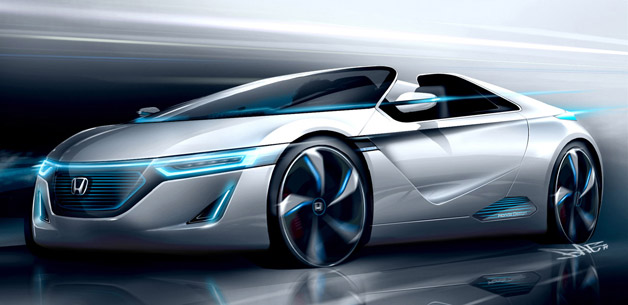
Honda previews Small Sports EV and AC-X plug-in concepts for Tokyo


Honda plans to take to the Tokyo Motor Show this December with the largest display of any automaker in attendance. The company will show off a range of production and concept vehicles, including a slew of motorcycles.

Honda RC-E electric motorcycle concept
The car side of the line will offer visitors the chance to get cozy with a new plug-in hybrid concept as well as an EV. The ACX offers plug-in enthusiasts a vehicle that can function equally as well in urban environs or on the open highway thanks to a two-mode drive system with an engine drive mode for a sportier experience and an automatic drive mode for everything else.

Meanwhile, Honda says that the Small Sport EV Concept "maximizes the fun of driving while achieving excellent environmental performance." Details are markedly absent other than that brief description, so we're hoping Honda will shed more light on the model once it debuts in Tokyo.

The company is also planning to pull the sheets off of a new electric motorcycle based on a 250cc chassis. The RC-E is meant to show off the kind of riding enjoyment that can come from an all-electric drivetrain on two wheels.


Source: Autoblog Green

Wednesday, July 27, 2011

Johnson Controls invests in Odyne; JCS to be preferred supplier for Li-ion for Odyne PHEV systems

Odyne Systems, LLC, a provider of hybrid systems for medium- and heavy-duty trucks, and Johnson Controls Inc. (JCI) have completed both an investment agreement and a long-term hybrid master supply agreement. Under the new agreements, Johnson Controls has made a strategic investment in Odyne to fund expansion and to accelerate wide-scale commercialization of Odyne’s hybrid systems for work trucks. Additionally, Odyne designates Johnson Controls-Saft as a Preferred Supplier of advanced lithium-ion battery systems for its plug-in hybrid system.

The Odyne plug-in hybrid system significantly increases a large truck’s efficiency through operation of the hybrid system on the road and use of the large battery system at the job site. Odyne’s modular system can be installed on a wide variety of new and existing vehicles to reduce fuel consumption, lower emissions and operate quietly at the job site.

This is the first phase of a multi-stage investment on the part of JCI and is in line with a broader investment and growth strategy at Odyne. Johnson Controls shares our passion for innovation and delivery of reliable, advanced hybrid system solutions, and we look forward to the new partnership.

—Joe Dalum, President and CEO of Odyne Systems


Source: Green Car Congress

Wednesday, December 15, 2010

Pennsylvania Steps Up With $7.9M Investment in 21 alt-fuel Projects

These are the announcements that warm the hearts of all alternate vehicle aficionados. We wish every State in the Union had such plans.

Pennsylvania recently announced the investment of $7.9 million in 21 alternative fuel projects in the state. The projects include those addressing biofuels, natural gas, and technology for hybrid and electric plug-in vehicles. Awards include (ranked by amount):

  1. PHL Taxi Management LLC—$900,000 – to purchase and deploy 50 new CNG taxis in Philadelphia that comply with the Americans with Disabilities Act, and to build a publicly accessible CNG fueling station in the city.
  2. 451 Tyburn LLC—$837,400—to build a publicly accessible CNG station in Fairless Hills and deploy heavy-duty CNG shuttle buses for public transit service in region.
  3. Endless Mountains Transit Authority—$750,000—to convert five public transit buses to CNG that will be fueled at a public fueling station built by Dandy Mini Marts in either Towanda or Sayre.
  4. Giant Eagle Inc.—$750,000—to purchase 29 compressed natural gas (CNG) and electric/plug-in vehicles, and to install 10 public electric vehicle charging stations—the first of their kind in Pennsylvania.
  5. Waste Management of Pennsylvania Inc.—$700,000—to build a CNG fueling station at its hauling facility in Washington, PA, which will also be available to other fleet operators. The company intends to use natural gas in its fleet of trash and recycle trucks.
  6. Energy Cooperative Association of Pennsylvania—$631,787 – to help 12 school districts purchase and use 1.8 million gallons of blended biodiesel and 280,000 gallons of B100.
  7. Momentum Dynamics—nearly $587,000—to develop a technology that will recharge EV and plug-in hybrid vehicles wirelessly.
  8. Western Pennsylvania Operating Engineers Joint Apprenticeship and Training Program—$486,066—to convert heavy equipment construction fleets to accept locally produced biofuels and to demonstrate the performance, cost-effectiveness, maintenance, training and research necessary to prove the concept’s viability.
  9. Energy Cooperative Association of Pennsylvania—$425,860—to help five municipalities and school districts in southeastern Pennsylvania continue fueling 500 vehicles with biodiesel.
  10. Venango Leasing Co.—$362,500—to develop a CNG fueling station with convenient public access alongside an existing fuel station in Barkeyville and to purchase equipment that will enable its existing fleet to run on a mix of CNG and diesel.
  11. Dean Cerimeli/U-HAUL—$346,000 – to purchase and convert the engines of 20 vans to run on liquefied petroleum gas that will be deployed throughout the state.
  12. YRC, Inc.—$250,000—to install a biodiesel blending system at its Carlisle Truck Freight Terminal.
  13. International Battery Inc.—$235,000—to demonstrate the long-term performance and manufacturing viability of an advanced lithium battery pack suitable for hybrid electric and electric buses and commercial trucks.
  14. Philadelphia City Treasurer, Office of Fleet Management—$205,416 – to offset the cost of purchasing more than 1 million gallons of B5 biodiesel for use in the city’s fleet.
  15. The city of Philadelphia’s Mayor’s Office of Sustainability—$140,000 for its $500,000 project—to add 10 charging stations and 18 electric vehicles (EVs) and plug-in hybrids to existing, successful local car sharing operations.
  16. Lower Merion School District—$121,641 – to purchase and use nine CNG school buses.
  17. Bryn Mawr College—$88,682—to increase its existing CNG storage capacity, and purchase one CNG transport bus and two Ford Transit Connect CNG vans.
  18. Self Heating & Cooling Inc.—$48,710—to develop a public propane AutoGas station in Horsham Township and add two propane-powered vehicles to the company’s fleet.
  19. Cumberland County Commissioners—$15,360—to purchase 96,000 gallons of blended biodiesel.
  20. East Stroudsburg Area School District—$10,540—to convert two existing, 20,000-gallon tanks for biofuel storage and purchase B5 biodiesel.
  21. West Chester University of Pennsylvania—$6,000—to cover the incremental cost of purchasing B20 biodiesel to power vehicles on campus.

Thursday, February 25, 2010

Lotus to Introduce Plug-in Series Hybrid

Evorahybrid
Shot of the Evora 414E Hybrid concept. Click to enlarge.

Lotus Engineering will unveil the Lotus Evora 414E Hybrid concept at the upcoming Geneva Motor Show. The concept is a high-performance technology demonstrator with a plug-in series hybrid drive system—featuring the Lotus Range extender engine and new technologies for enhanced driver involvement.

For the Lotus Evora 414E Hybrid—so-named because it produces 414 PS (306 kW, 408 hp) of power—Lotus Engineering developed a drivetrain system consisting of twin motors each limited to providing 152 kW (207 PS/204 hp) of power and 400 N·m (295 lb-ft) of torque to each wheel via independent, single speed, reduction transmissions integrated into a single housing, enabling torque vectoring dynamic control of the vehicle. The 414E Hybrid accelerates from 0-60 mph (97 km/h) in less than 4 seconds.

Evora
A conventional Evora. Click to enlarge.

A Lithium Polymer battery pack provides 17 kWh of energy storage capacity. The battery pack is optimized for energy density, efficiency and high power demand, with more than 100 kW discharge capability. All electric range is up to 35 miles (56 km), and total hybrid range is more than 300 miles (483 kilometers).

The 1.2-liter, 3-cylinder Lotus Range Extender engine provides 35 kW (48 PS/47 hp) of power at 3,500 rpm via the integrated electrical generator and features an innovative architecture comprising an aluminium monoblock construction, integrating the cylinder block, cylinder head and exhaust manifold in one casting. This results in reduced engine mass, assembly costs, package size and improved emissions and engine durability.

The engine uses an optimized two-valve, port-fuel injection combustion system to reduce cost and mass and can be operated on alcohol-based fuels and/or gasoline. The generator converts mechanical energy to electrical energy to replenish the battery pack charge and provides additional vehicle range in a small light weight package. The generator is also used as a motor to start the range extender engine. The low mass of the range extender unit (85 kg) and compact package makes it ideal for the series hybrid drivetrain in the Evora 414E Hybrid.

All the operation and management of the range extender engine, the power management of the batteries and motor control are controlled by Lotus’ electronic control units and software systems.

For everyday commuting journeys, up to 35 miles can be travelled using battery power. The battery can be charged overnight using a conventional domestic supply through a socket concealed by the rear number plate.

Lotus used its own vehicle simulation tools to determine the size, capacity, power and performance of all the components in the drivetrain system to optimize the system operation. Overall this is far more energy-efficient, weight-efficient and cost-effective than fitting the vehicle with a larger and more expensive battery, which for the majority of short journeys is a redundant weight, which increases energy requirements, Louts says.

Lotus claims that with regard to the total lifetime CO2 emissions of the vehicle, including the energy required to manufacture and run it, the range extender solution has a lower overall CO2 footprint than a fully electric car of comparable performance and operating range running with a larger battery.

Innovation has always been at the heart of Lotus and is needed now more than ever. The Evora 414E Hybrid is the perfect demonstration of Lotus Engineering’s core competencies: lightweight architectures, efficient performance, electrical and electronics integration and driving dynamics. The technology demonstrator represents an encapsulation of the advanced technologies that Lotus Engineering continues to develop to overcome the current environmental challenges facing the automotive industry and showcases the future direction that the sector is taking and why Lotus Engineering is perfectly placed to lead the technological development in this area.

—Robert Hentschel, Director of Lotus Engineering

Driver interaction. The Evora 414E Hybrid provides less of a psychological step change for people familiar with high-performance cars compared to other electric and hybrid sports cars. The car has a simulated paddle shift gear change offering ultra quick gear changes reminiscent of a dual clutch transmission, while actually single speed. This enhances the driver interaction with the vehicle and provides a driving experience similar to current internal combustion engine high performance sports cars. The Evora 414E Hybrid uses a column mounted paddle shift to simulate the gear change and a synthesized engine sound changes frequency with virtual gear selection. The drive torque is also modulated to simulate a physical feeling of a gearshift jolt.

The virtual gearshift simulation, like a conventional gearbox, is used to change the driving characteristics and response of the vehicle. The most significant aspect that this offers the driver is the ability to control the vehicle deceleration by simulating engine braking through a virtual downshift in gears. Unlike true engine braking, the Lotus system does not dissipate the energy of the moving vehicle through internal engine friction but uses the electric motors to regenerate the energy back into the battery. While many electric and hybrid vehicles provide engine braking, this is generally at a fixed rate or preselected rate. In some driving situations this can either be too aggressive, slowing the vehicle unnecessarily, or too light, requiring additional braking application.

The Lotus system effectively allows the driver to select the appropriate level of regeneration by simulating stepping down by one, two or even three gears. The simulation of engine braking through both the gear noise change and the retardation of the vehicle is fully intuitive to a driver familiar with a conventional gearbox. The simulated gearchange capability can be selected for greater driving involvement or switched off for more relaxed driving.

The Evora 414E Hybrid uses the Lotus Engineering and Harman International developed HALOsonic suite of noise solutions. The first of which is Electronic Sound Synthesis. This generates engine sounds inside the vehicle through the audio system where it provides an exciting sports sound in line with the brand and nature of the vehicle together with a high level of driver feedback in an intuitive manner. In addition, it also generates sound on the outside of the vehicle through speakers mounted at the front and rear to provide a warning to increase pedestrian safety, which is especially important for electric and hybrid vehicles which can be difficult to hear at slower speeds.

There are four driver selectable engine sounds currently on the vehicle, two of which have been designed to have characteristics of a multi-cylinder conventional V6 and V12 engine. There is also a futuristic sound and a combination of a conventional engine and a futuristic sound, enhancing the brand identity of the vehicle as a step forward in electric vehicle design.

The addition of this Lotus patented simulated gearshift concept not only provides for an exciting and involving driving experience that customers would expect from a Lotus, but also enhances the driver’s control of the vehicle while providing the capability for more efficient operation through a greater use of energy regeneration.

Structure. The Lotus Evora 414E Hybrid structure is the same award-winning, versatile vehicle architecture (VVA) used on the Lotus Evora. The low volume architecture was designed with the upmost flexibility in mind. The Evora 414E Hybrid is an example of how to integrate a compact packaged drivetrain, offering excellent performance and range, while using this underpinning. The complete chassis has remained unchanged from the Evora which maintains the structural integrity and strength performance of the original car.

The structure progresses the Lotus ‘bonded and riveted’ technology with new and unique extrusions and folded panels, whilst providing production build modularity and lower cost repairs. The chassis has been designed for scalability so that it can be extended in width, length and height. The strength and stiffness of the low volume VVA chassis can be modified cost effectively by varying the wall thickness of the extrusions, without altering the exterior dimensions. The ability to lengthen or shorten extrusions with the option to tailor the chassis stiffness vastly increases the number of vehicles that can be developed from this vehicle architecture.

Lotus is also showcasing a series hybrid vehicle technology application, including the Lotus Range Extender Engine, in the PROTON Concept to be unveiled at Geneva.


Source: Green Car Congress

Thursday, May 14, 2009

Toyota To Lease 150 Plug-In Hybrid Vehicles in Europe


Charge Port of a Plug-In Prius


Toyota has announced it will make available 150 plug-in hybrid vehicles to various fleets across Europe. They already have some of these vehicles in test modes using NiMH batteries but the difference with this set will be the use of a lithium ion battery pack.

Unfortunately, these vehicles will not be available to the general public for quite some time. Aggravating, since Toyota built the wonderful Toyota RAV 4 EV over 10 years ago. Why would it take so long to bring the relatively simple Prius type plug-in to market? We desperately need these alternate energy vehicles in dealer showrooms.

From Green Car Congress:

Toyota Motor Europe (TME) will lease more than 150 units of its experimental Plug-in Hybrid Vehicle (PHV) to selected fleet customers across Europe as a next step towards commercialization. Toyota says it will deploy more than 500 new PHVs in global trials—including in Europe, Japan and the US—by 2010.

France will be the first country to participate in the three-year European pilot, with discussions ongoing in the UK, Germany and the Netherlands. Based on Toyota’s full hybrid technology, the new PHV will come equipped with a lithium-ion battery, extending the vehicle’s range in electric vehicle mode. The first wave of PHVs will reach Strasbourg in late 2009.

In the future, the PHV will be the perfect complement to Prius. It offers a low carbon transport solution for customers wanting to drive longer distances using electricity, while still experiencing the traditional benefits of a full hybrid. There is no better time to put our new PHV through its paces. We have to assess its performance in a variety of markets with different infrastructure constraints, driving conditions and customer expectations.

—Tadashi Arashima, President and Chief Executive Officer of TME

Toyota’s PHV can be driven as an electric vehicle for city commutes, while for high-speed, long-distance journeys it operates as a full hybrid, with its gasoline engine serving as both a power source and battery generator when required. The battery is charged during driving, deceleration or braking, or by connecting its plug to a standard electrical point at home or at work.

In partnership with EDF, Toyota has been road-testing a PHV (equipped with a Nickel Metal Hydride battery) in Europe since 2007. Around 100 units of the new lithium-ion PHV will be leased to selected fleet customers and public bodies in Strasbourg, France, for a period of three years. (Earlier post.)

Part of the Strasbourg-based PHV fleet will come equipped with an innovative charging system that ensures safe charging, communication between the plug and the vehicle, identification of the vehicle and automatic invoicing of electricity. A large number of charging points will also be established in users’ homes, the offices of business partners, in public parking lots and on public roads.

Thursday, March 12, 2009

A Breakdown of OEM Plug-in Hybrid Electric Vehicles (PHEV's)

Moving on from the all-electrics, let's focus our attention on what is described as plug-in hybrid technology. Felix Kramer, of California Cars Initiative, gets most of the credit for advancing the concept of the PHEV. Felix and his technical assistant, Ron Gremban, converted a Toyota Prius several years ago so that it would have extra batteries, could run on electricity alone and could be plugged into a standard 120 volt outlet to recharge. Their efforts were successful and now we have a cottage industry growing up that offers to convert the Prius's for current owners.

This movement towards PHEV's is gaining momentum and now we see most major auto makers with at least one model in the works. The beauty of PHEV's is that they alleviate the "range anxiety" of pure electric vehicles. With a gasoline engine on board and gas stations located at every corner, there is little fear of running out of fuel. The PHEV will operate in EV mode until the batteries are depleted and then the gasoline generator kicks on to provide current for the motor and charge the battery pack.

GM EV1 Series Hybrid

I would like to start the lineup by looking backwards 10 years to the GM EV1. When General Motors was creating the wonderful EV1, a concept that emerged was a serial hybrid model that used less batteries than the all-electric model and also had an on-board generator. Unfortunately, the car never made it to production but if it had, it would have been a hit. This early PHEV had everything the EV1 had with the added bonus of a longer range due to the gas generator.


Chevrolet Volt

Introduced to the world at the Detroit / North American Auto Show in January of 2007, the Chevy Volt is quite possibly the most hyped and anticipated vehicle in history. This car has been trumpeted as the savior of GM and the vehicle that will change the automotive industry forever. Not sure the Volt will live up to either of those expectations, but I am sure this is a very well thought out design and will prove to be a great car. This vehicle is greatly anticipated and there are thousands of individuals who have committed to purchase it when it rolls off the line.

Here are some specs for the Volt:

- 16 kWh lithium ion battery pack.
- 40 mile all-electric range (AER).
- Series hybrid design - the gas generator does not turn the wheels. Its function is to provide current for the electric motor and to recharge the battery.
- Four doors and seats four, due to large battery pack running along the center line.
- Regenerative braking.
- High tech interior with "iPod" touch and feel.
- MSRP will be close to $40,000 but the Volt qualifies for the $7,500 federal tax credit.

Fisker Karma

Here is another beautiful, sexy, powerful alt energy sports car. Fisker's Karma looks like it was intended for the race course and not for daily driving and it is easy to envision the car in attorney's and doctor's garages. You're going to need a hefty wallet to afford this mid-life crisis car though, as its estimated MSRP is $80,000. Of course, this price is still a bargain compared to the Tesla Roadster.

Powered by the Q-DRIVE plug-in hybrid system, the fully charged Karma travels up to 50 miles solely on electric power. Once the 50 miles have been exceeded, the car will operate in hybrid mode with the gas engine kicking in. The Karma is a series hybrid design utilizing lithium ion batteries and a gasoline generator that provides current to the motor and battery pack.

Here are a few more specifics:
  • 0-60 in less than 6 seconds (0-100 km/h 6 seconds)
  • Top speed 125 mph (200 km/h)
  • Two Driving Modes: The driver will be able to select between two modes of driving. The first mode is Stealth Drive, which is the quiet economy mode for optimal relaxed and efficient driving. By flipping the second paddle behind the steering wheel, the car will switch to Sport Drive, which will access the full power of the vehicle.
  • Regenerative brakes featured to recapture braking energy
  • Low center of gravity provides optimal sport vehicle driving dynamics
Look for the Fisker Karma in the fourth quarter of 2009.

China's BYD F3DM

Here you have the world's first production PHEV. The Chinese beat everyone by a mile and now have a massive head start over the competition. BYD's parent company is one of the world's largest supplier of lithium ion batteries and so this gives them a distinct advantage in building the PHEV battery. BYD is using a 13.2 kWh lithion-phosphate ion battery pack to provide an all-electric range of 62 miles. It is this author's opinion that a 62 mile range is the absolute sweet spot for a PHEV. 62 miles certainly covers the overwhelming majority of worker's daily commutes, which means that no gasoline would be used during the work week.

The F3DM will be introduced in Europe in 2010 and the United States in 2011. So what is the best attribute of the F3DM? It is retailing for $22,000 equivalent dollars in China as we speak. This is nearly half the price of a Volt. Imagine this car for sale in the US for less than $25,000 and with the $7,500 federal tax credit, you are looking at taking one of these home for less than $18,000. Wow. Hurry up BYD and bring this car to the States.

Jeep Patriot EV

Chrysler has very ambitious plans for electric vehicles which include the Jeep Patriot EV. This will be a range extended electric vehicle, capable of traveling 40 miles purely on electric power and then another 360 with the gasoline generator. Absolutely no range anxiety with this SUV. The Jeep Patriot EV uses an electric-drive motor, advanced lithium-ion battery system and a small gasoline engine with an integrated electric generator to produce additional energy to power the electric-drive system when needed. Chrysler has promised an EV or PHEV by 2010 and maybe this is the one we will see in showrooms.


Jeep Wrangler EV

Here is the second PHEV in Chrysler's lineup. The Wrangler EV is basically the same as the Patriot, with a 40 mile AER and a genset that extends its range to 400 miles. the Wrangler is an extended range electric vehicle utilizing lithium ion batteries and a powerful electric motor. Again, we could see this vehicle as early as next year. This Jeep should be offered before the Dodge Circuit EV debuts as the MSRP will be considerably lower. Either the Wrangler or the Patriot EV will make a wonderful daily driver that significantly impacts a users gasoline usage.


Chrysler EV

The Chrysler EV is basically an award winning mini-van with all the innards of an extended range electric vehicle. Like the Jeep products, the Chrysler will have a a 40 mile all-electric range and a total range of about 400 miles. The van seats seven and is much needed in the US. Imagine all the soccer moms in the country hauling the kids around on electric power alone!


Toyota Prius Plug-In


Actually, Toyota is contemplating spinning off the Prius as a separate line and may introduce their plug-in vehicle under a different brand. Until we hear more from Toyota, we will assume that their plug-in will be a Prius. The latest reports have them available late in 2010 in limited numbers. It is also reported that this model will only have an 8 to 10 mile electric range and will top out at 62 mph. So when driving on the freeway, the gasoline engine would always be running. It is disappointing that Toyota has decided to restrict their plug-in variant in this fashion and give it such a small range.

It is taking longer to compile the list of PHEV's than anticipated, so I will break the list in two. Look for the rest of the plug-in vehicles in the next post.


Wednesday, March 11, 2009

AT and T Commits to 15,000 Alternate Energy Vehicles Over the Course of the Next Ten Years


Are you ready for some really good news? Heaven knows we are inundated with woeful news every day so this story is a welcome breeze. AT&T has gone on record stating they will deploy 15,000 alternative energy vehicles in their fleet over the course of the next decade. If every fleet in the nation adopted this same policy, imagine the impact.

The majority of new purchases will be compressed natural gas (CNG) vehicles with the remainder being hybrids (hopefully the plug-in variety). CNG cars and trucks are a great alternative to gasoline and it is a mystery why their use is not more widespread. Expanding the CNG fuel infrastructure would be easily accomplished and not be too costly, which would help the adoption towards this clean burning energy greatly.

Alt Energy Autos promotes the use of these vehicles and applauds AT&T for making a difference and making a statement to the world.

From Green Car Congress:

T&T plans to invest up to $565 million as part of a long-term strategy to deploy more than 15,000 alternative-fuel vehicles over the next 10 years. AT&T expects to spend an estimated $350 million to purchase about 8,000 Compressed Natural Gas (CNG) vehicles and approximately $215 million to begin replacing its passenger cars with alternative-fuel models, beginning with hybrids.

AT&’s investment represents the largest US corporate commitment to CNG vehicles to date. The new deployments will bring AT&T’s alternative-fuel fleet to more than 15,000 vehicles by 2019.

AT&T and other US corporations have a unique opportunity to partner with the new administration as it works to lead the country out of this economic downturn. While there are no easy solutions to the challenges facing our nation, this investment is a first step on our part to help boost other industries while at the same time encouraging wider use and production of efficient vehicles and domestic fuel alternatives.

—Randall Stephenson, chairman and CEO of AT&T

The Center for Automotive Research (CAR) in Ann Arbor, Mich., estimates that the new vehicles will save 49 million gallons of gasoline and reduce carbon emissions by 211,000 metric tons over the 10-year deployment period.

Over the next five years, AT&T will replace about 8,000 gasoline-powered service vehicles with vehicles powered by domestically available CNG. CNG vehicles are expected to emit approximately 25% less greenhouse gas emissions than those traditionally powered by gasoline.

The vehicle chassis will be built domestically by a US automotive manufacturer. AT&T will then work with domestic suppliers to convert the chassis to run on CNG. AT&T will also work with natural gas service providers to build up to 40 new CNG fueling stations across its operating region to provide the fueling infrastructure needed for the new vehicles.

As it begins to retire gasoline-powered passenger vehicles in its fleet, AT&T has committed to replacing them with alternative-fuel models. AT&T expects to replace 7,100 passenger cars over the next 10 years. The alternative-fuel vehicles, which will be used by employees in a variety of diverse work functions across AT&T’s operations, are expected to offer up to a 39% improvement in fuel economy and to reduce greenhouse gas emissions by up to 29%.

During the initial phase of the deployment, gasoline-powered passenger vehicles will be replaced with hybrid models. As technologies evolve, additional alternative-fuel vehicle types will be considered for inclusion.

In 2009, AT&T will deploy nearly 800 of the CNG and hybrid electric vehicles. A Green Technology insignia will make the vehicles easy to identify on the road.

The new CNG/passenger vehicle commitment follows AT&T’s deployment of 105 alternative-fuel vehicles in more than 30 US cities in June 2008. In addition, AT&T piloted four Ford Escape hybrids, which were deployed in late 2007 in California.

AT&T has determined that a mix of solutions is right for its fleet and that multiple technologies can help reduce its operating costs over time, while effectively reducing its fuel consumption and impact on the environment.

Tuesday, January 27, 2009

General Motors to Unveil European Volt, aka the Opel Ampere


Another questionable moniker, yet there it is. The Opel Ampere. Maybe they should have named it the Capacitor, or Resistor, or Farad, or Impedance or Wattage, but Ampere it is. Even the Opel Ohm would have been catchy, but alas and alack, twas not meant to be. Less imaginative minds have prevailed, it would seem.

From GM-volt.com:

It has been known for some time that that Chevy Volt is a global vehicle intended to be sold and driven in many of the countries GM does business. Europe is clearly a key market intended for this car. We have also heard that the Volt will first appear there under the Opel brand, which is known for advanced technology.

The automaker has just announced that it will reveal what appears to be the European version of the Chevy Volt at the Geneva Auto Show on March 3rd.

They have given the five-door four-seater car its own name, the Opel Ampera. As well a teaser photo has been released. There are no technical specs at this point, however the photo shows the body is unmistakably that of the Chevy Volt although with signature Opel branding features. It is unknown whether this vehicle will use a diesel or gasoline range extender, but the first 60 km of driving will indeed be on pure electricity.

Per said Alain Visser, GM Europe Chief Marketing Officer, “With the Ampera, Opel will be the first European automobile manufacturer to provide customers several hundred kilometers of non-stop electric driving,”

It was also noted that “additional information on the Opel Ampera will be released March 3 at the Geneva Motor Show.”

UPDATE: GM Voltec spokesperson David Darovitz has confirmed to GM-Volt.com that the car is indeed the European version of the Chevy Volt.

The vehicle will also be produced as the Vauxhall Ampera.