Showing posts with label hybrid. Show all posts

Thursday, March 15, 2018

Ford to electrify most SUVs, promises to pass Toyota in hybrids

Ford hasn’t given up on hybrids and electric cars, despite letting its existing models languish since 2013.
That was the message conveyed by various executives at an event Thursday morning at the Ford Product Development Center in Dearborn, Michigan.
The company will build a hybrid version of five SUVs it sells by 2020, promised Jim Farley, Ford's president of global markets, and produce six battery-electric vehicles by 2022.
Buyers, however, should no longer expect Ford’s hybrids and plug-in models to be all about the highest fuel efficiency.
Taking a page from Elon Musk’s playbook at Tesla, Farley said that to amortize the high cost of electric-car batteries today, the company will focus on performance and utility vehicles for its hybrid and electric vehicle.
“We don’t think people should have to go to a car to get that benefit,” he said.
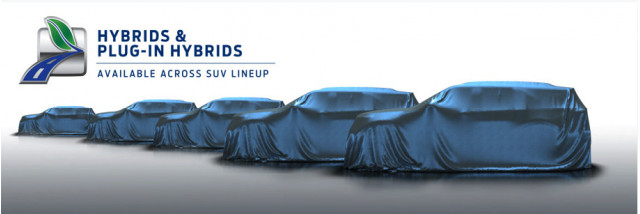
Ford's future hybrid and PHEV lineup


In addition to a hybrid version of most SUVs it produces, from the tiny EcoSport to the large Explorer, the company has already announced that its next F-150 full-size pickup truck will include a hybrid version.
That model will come complete with a generator for contractors off the grid, RVers, and even home backup power.
Ford will also offer a hybrid version of the Mustang, which it had previously said more than a year ago. In fact, he said, it aims to pass Toyota in hybrid models as soon as 2021.

No announcement was made as to whether the Focus Electric compliance car, now in its seventh model year, will continue into the next generation.
The C-Max Hybrid that was popular in its first model year but has languished in sales since is already on its way out, with production to end within a few months. The C-Max Energi plug-in hybrid went of out production late last year.
The announcement implies that there will be hybrid versions of the new Bronco and the Expedition, as well as any new versions of the Escape and the Explorer.
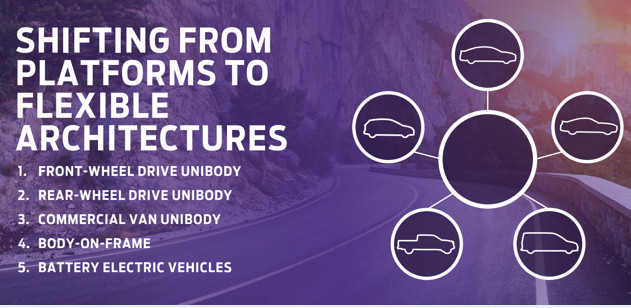
Ford's future product planning


The only notable vehicle that leaves out, beyond traditional cars is the new Ranger midsized pickup truck, based on a Southeast Asian design, which will offer four-cylinder turbo and diesel options.
The Escape Hybrid was the first crossover utility vehicle available as a hybrid when it debuted in late 2004. These days, a new Escape Hybrid would have plenty of competition from the popular Toyota RAV4 Hybrid as well as the Nissan Rogue Hybrid.
Buyers in the past have been slow to adopt hybrid systems in large pickups and SUVs, complaining that they compromise utility and don’t offer the impressive 50 mpg-plus fuel economy figures that they expect to come with any hybrid badge.

GM offered five different full-size SUV and pickup truck models with hybrid powertrains between 2008 and 2014, but they failed to sell for a host of reasons and were withdrawn after 2014.
In reality, larger hybrids can bring more fuel savings, because standard versions of big SUVs and pickups drink fuel like pirates on a raid. That means that a 20- to 40-percent improvement saves far more gallons of fuel than in smaller, more efficient compact models.
That consumer reluctance has made big pickup trucks among the last types of vehicles to benefit from automakers’ investment in batteries and electric powertrains.
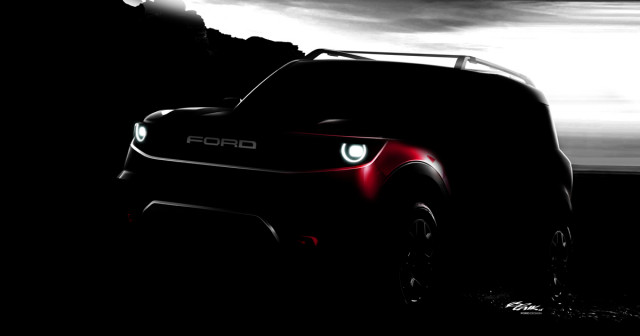
Ford's upcoming small off-road crossover SUV


Ford’s counterparts in Detroit have recently announced different strategies for improving fuel economy in big pickups.
General Motors will introduce a new 6-cylinder turbodiesel in the redesigned Chevrolet Silverado and GMC Sierra, joining the Ram 1500 EcoDiesel and the new Ford F-150 Power Stroke that use 3.0-liter V-6 turbodiesels.
Meanwhile, Fiat-Chrysler will also offer a mild-hybrid version of the new Ram, but it doesn’t plug in.
Combined with higher performance and such features as a generator in a new F-150 Hybrid, hybrids in trucks might be more appealing going forward.
-- Eric C. Evarts

Wednesday, December 21, 2016

Toyota changes course, offers to share hybrid technology with rivals

2016 Toyota Prius, Catskill Mountains, NY, Dec 2015


Over the past six months, Toyota has made some remarkable decisions about its present and future car technologies.
After years of staunch opposition to battery-electric vehicles, it committed to launching one by 2020.

Now, the company has decided to offer its proprietary hybrid technology in volume to other automakers.
That decision, announced two weeks ago as part of a wider announcement of powertrain strategies by the company, marks a clear change of course.
Since 1997, when the company launched the first Prius hybrid model in Japan, it has fiercely guarded its hybrid-electric technology.
It has signed a few licensing deals, among them to Nissan for the 2007-2011 Altima Hybrid sold in the U.S. and to Mazda for a hybrid Mazda 3 compact sold only in Japan.
2011 Nissan Altima Hybrid


But those deals were limited and fairly low-volume.
Now, as described last week in an article by Reuters, Toyota plans to work with its suppliers at a much earlier stage to standardize components, making it easier for future generations of its hybrid technology to be used by other automakers.
Selling its signature hybrid system to other makers will not only give Toyota greater economies of scale, but likely prolong the life of that technology.

Toyota launched its fourth generation of the Prius last year, and while the car is considerably better to drive and more fuel-efficient than past versions, its sales in the U.S.—a major market—have lagged.
That is likely due to a combination of several factors, including continued cheap gasoline, the ongoing shift in buyer preferences from passenger cars to utility vehicles of all sizes, and perhaps the extreme styling of the latest Prius.
The company also made an unexpected choice in the 2017 Prius Prime, its latest plug-in hybrid Prius: it defaults the car to run solely in electric mode if the battery has charge remaining, unlike most other plug-in hybrids except the Chevy Volt.
2017 Toyota Prius Prime and 2017 Chevrolet Volt with Green Car Reports editor John Voelcker


That may indicate an increasing understanding of the benefits of all-electric propulsion by the company whose green-car technologies previously stretched from hybrids and plug-in hybrids to hydrogen fuel-cell vehicles, while jumping over battery-electric cars.
The hybrid-sharing strategy is a long-term one, and will involve changes to parts specifications and technical standards that will be largely invisible to buyers.
"Toyota suppliers produce a lot of technology which can only be used by Toyota," the president of the company's powertrain unit, Toshiyuki Mizushima, said to reporters, as quoted by Reuters.

"We want to change that to a system where we develop technology with our suppliers at an earlier stage," so that non-Toyota customers can have buy those components and systems directly from suppliers.
But whether the hybrid technology it hopes to sell to other makers carries the company's name or not—"Toyota Inside," anyone?—it will lower the cost for all users.
It may also reflect a realization that almost 20 years after launching hybrids, Toyota is the sole global automakers dedicated to propagating the technology across all its product lines.
2001 Toyota Prius Sedan


As much simpler battery-electric vehicles slowly gain market momentum, they are likely to surpass the continuing low penetration of hybrids in the overall global market.
Which suggests that, just possibly, Toyota's two-decade bet on hybrid technology to offset its continuing sales of otherwise not notably fuel-efficient cars and trucks may not be paying off as it anticipated.
Either way, expect to see more hybrids with Toyota technology inside even as that company scrambles to catch up with General Motors, Tesla, and other unlikely competitors in electric cars it didn't envision back in 1997.

Thursday, September 22, 2016

Ford Unveils Its Long Term Electric Vehicle Strategy

It costs more to build an electric car than a conventional car. Not only that, passenger cars are rapidly losing market share to SUVs, crossovers, and light pickup trucks. Rather than beat its head against a wall trying to sell hybrid, plug-in hybrid, or battery electric sedans, Ford has a better idea. It will electrify is best selling, highest profit models instead.
Ford electric vehicle marketing plan
Last week at its annual Investors Day, Ford told its shareholders what its plans for the electric vehicle future will be. CEO Mark Fields said, “We want to become a top player in electrified solutions, and I call it moving from a compliance mind set to one of leading where we can win, such as with our commercial vehicles.” The translation? Ford will put its efforts into making electrified powertrains for the vehicles it sells the most of, namely SUVs and light duty trucks.
Ford’s product chief, Raj Nair, then took to the podium to say, “The view is by 2030, we will reach a tipping point where the number of electrified product offerings will be greater than the internal combustion engine. Ford is choosing to invest today to be prepared for this eventual outcome.
“Let me elaborate on how we’re building on our early efforts, to lay the foundation for long term success once we reach this tipping point. There are really four key elements to our strategy. The first one Mark touched on, playing to our strength — electing to compete in areas where we know where we have a dominant position in the marketplace. Commercial vehicles, trucks, utilities, and performance: These are sectors where we have iconic nameplate brands, tremendous favorable opinion, and more pricing power.
“It’s also going to allow our product development and marketing teams to take a different approach, in terms of how we go to market and start to showcase the full benefits of electrification beyond just fuel efficiency.
“Trucks, commercial vehicles, sport-utilities, and performance vehicles are all parts of the market where Ford has a strong position, and where it currently generates big profit margins. Those are the segments where Ford will focus its electrification efforts, on the theory that those customers are most likely to buy into Ford’s innovations — and are most willing to pay for them.”
In other words, rather than building an electric sedan just to satisfy regulatory requirements, Ford is planning to bring electric drivetrains to market in ways that will make customers feel they add significant value. That may mean a plug-in hybrid F150 that can use the instant torque of an electric motor to get heavy loads moving from rest. It could also mean SUV’s with an electric motor at each wheel to give superb road holding in slippery conditions.
It also could mean a plug-in hybrid Mustang that runs on electric batteries in normal driving but can rely on a powerful V8 engine when the driver whistles down to the engine room for maximum power. Or imagine commercial delivery vans that operate quietly and cleanly on battery power. They might never need fuel, only a nightly recharge.
Will Ford’s plan give it the flexibility to electrify its fleet without suffering economic losses? It’s a novel strategy and one that just might work. Check back in 2030 to see how this all turns out.
Source: The Motley Fool  Image credit: Ford

Thursday, May 5, 2016

More than half of new McLarens will be hybrids by 2022


McLaren has an ambitious growth plan. After building just 1,654 cars in 2015, CEO Mike Flewitt expects the Woking, UK,-based company to churn out 3,000 units in 2016, but doubling production is only the start.

Flewitt predicts that figure will swell to 4,500 to 5,000 annually, which "is about capacity," for the company's production facility, he told Automotive News Europe. The increase in production is key to a revenue-driven research-and-development effort that will allow the company to create 15 new products and introduce "a completely new powertrain architecture ... specifically designed for a hybridized application," Flewitt said.

"In the latter part of this business plan to 2022, more than half our cars will be hybrids," Flewitt told ANE. "This second powertrain will run in parallel to the eight cylinder we have today and will have hybrid technology integrated into it from day one." This new model would arrive near the end of the decade, Flewitt said, but unlike the company's current and only hybrid, the P1, it won't be a plug-in hybrid.


Tuesday, November 18, 2014

Low Gas Prices Hinder Hybrid Sales, But Plug-Ins Still Selling

Prius Ride Along 13 - plug-in
The national average for a gallon of regular gas has fallen to just $2.88 a gallon. That’s helped truck and SUV sales grow, but has put a hurting on hybrid sales. Sales of the Toyota Prius are hurting in particular, and hybrids share of the market seems stalled at 3%. Plug-in car sales are a different matter though.
As the LA Times notes, even inside of California where the Prius has been a best-seller for a couple of years, hybrid sales are slipping. One of the most obvious culprits are conventional gas-powered cars, many of which have narrowed the fuel economy gap that the Prius once enjoyed. Many conventional mid-size sedans can now get 30+ MPG on the highway, while hybrid cars still carry a $3,000 or $4,000 premium over comparable gas models.
Despite there now being more than 40 various hybrid vehicle offerings from just about every major carmaker, hybrid car market share is holding steady at 3% of the total market. Toyota hopes its next-gen 60 MPG Prius will turn the tides in favor of hybrids once more, but in the face of dropping gas prices, nothing is garaunteed.
But another factor not discussed by the LA Times are the increasing numbers of plug-in models available to consumers that may attract people who may have otherwise purchased a conventional hybrid. While plug-in car sales were down in Ocotober, year-to-date plug-in car sales are up 28% over the same time in 2013, with sales surpassing 75,000 units so far this year. While that’s still a fraction of total U.S. sales (and less than the total number of Prius sold so far in 2014 alone), it represents an increasing trend in America of plugging in rather than gassing up. Nissan LEAF sales alone
As Martha might say, “It’s a good thing.”

Friday, July 11, 2014

Lexus NX Brings Turbo And Hybrid Drivetrains

2015-lexus-nx

After my time with the 2014 Honda Accord Hybrid, I am convinced that a fun and efficiency hybrid experience is possible, and it’s given me a lot to look forward to. One car I’ve been keeping an eye on is actually a crossover, the 2015 Lexus NX, which comes to North America with your choice of a 2.0 liter turbocharged engine, or a hybrid drivetrain with a sporty side.
Based on an all-new engine architecture, the 2.0 liter turbocharged engine has been designed to switch between the more efficient Atkinson cycle and the more powerful Otto cycle using a new valve control system. While Lexus isn’t ready to discuss MPG numbers on either drivetrain, their goal is deliver a driving experience that balances efficiency with fun driving dynamics, which extends to the new six-speed automatic transmission as well. Engineers have also cleaned the engine’s interior operating functions to the point where oil changes are only necessary every 10,000 miles. Lexus rates the 2.0 liter turbo at 235 horsepower and 258 ft-lbs of torque, which puts it in the middle of the pack in terms of power.
The Lexus NX 300h, meanwhile, gets a unique hybrid drivetrain with a battery pack split in two for better weight distribution and a transmission “kickdown” feature thanks to an electric motor generator and electric drive motor. This delivers sportier performance from the 2.5 liter Atkinson cycle engine and electric motor combination than you’d normally see in a hybrid. The new Lexus NX even measures G-forces, adjusting engine speed and gear selection to your acceleration, not the kind of feature you expect to find on a hybrid.
With the NX, Lexus gets what I’ve been saying all this time; hybrids don’t have to be boring or slow or stale. If automakers can manage to blend efficiency and fun in a quality vehicle, they’ll have no problem selling a ton of them. Now what I want is to see a drag race between the turbo and hybrid models and see which one comes out on top.


Source: Gas 2.

Thursday, July 10, 2014

Volvo Planning Plug-In Hybrids For Every U.S. Model

2015-volvo-v60-plug-in-hybrid-r-design-1-1

According to Plug-In Cars, Volvo has decided to offer a plug-in hybrid option on all its future US models, beginning with model year 2017. Only 2.0 liter turbocharged gas or diesel engines will be available as well as Volvo continues its efforts to downsize its emissions. Unfortunately, previous work on an electric C30 has quietly ceased and no further electric only Volvos are planned at this time.
The New York Times reported earlier this year that Volvo will replace its entire model lineup over the next few years, staking its immediate future on a single chassis architecture, engine and transmission.
The new V60 plug-in hybrid will lead the way, providing up to 30 miles of range in the Pure electric only mode – more than enough for most driver’s daily commute. It can run in Hybrid mode for extended range, or Power mode for maximum performance with all 240 horsepower on tap. This is just an example of the Volvo hybrids we can expect in the future.
Volvo says this strategy, built around what it calls Scalable Product Architecture, will give it a wider range of options to make vehicles of different sizes, weights and horsepower ratings, with either front- or all-wheel drive, while retaining the economic benefits of using many common parts. In the Volvo system, the internal combustion engine powers the front wheels while the electric motor powers the rears. This reduces some of the complicated combination motor and transmission components found in other hybrids, and could also help bolster Volvo’s performance credentials as well.
Pricing in America has not yet been announced, but the V60 plug in hybrid sells for the equivalent of $85,488 in the UK.


Source: Gas 2.

Monday, June 23, 2014

2015 Audi R8 e-tron Coming, More EVs to Follow


2015 Audi R8 e-tron is happening

The latest buzzword in the automotive industry is “electric”. You can thank Toyota’s Prius, Elon Musk, and movies like Who Killed / Revenge of the Electric Car for that. As more and more companies move towards electrification, they’re pushing battery technology forward – and it’s changing rapidly, with performance going up as prices come down. Suddenly, Mercedes had an all-electric supercar. Then, it was BMW, with its stunning i8. Now, however, it’s Audi’s turn – and the latest rumor is that Audi’s R8 e-tron is on track for a 2015 release.
When Audi first teased us with the prospect of an electric Audi R8, the car promised thrilling performance but an underwhelming range of “just” 130 miles. It wasn’t enough, and the concept was shelved quietly in 2013. Such is the pace of battery technology, however, that the batteries in the new-for-2015 Audi R8 e-tron have pushed its range up to 280 miles …

etron-cutaway
… which the bigwigs at Volkswagen and Audi seem to believe is close enough to the electric car industry’s standard-bearing Tesla Model S’ 300-ish mile range to make a flagship EV worth a go, production-wise.
Audi’s R8 e-tron will act as a “halo car”, drawing foot traffic into Audi showrooms as the brand releases more electrified sedans and SUVs, with plans to include electrification and hybridization across the company’s product lineup.
Now, while the future definitely seems electric, I have to wonder if electrics are really the way to go. Before I buy an electric car, for example, I’d want to know where I’ll be able to plug it in, and how long will I have to wait until I have enough “juice” to get home.  And, because many electrics cost more than a conventional car, how many of miles will I have to drive before I get my money back?  Of course, very little of that matters to the big manufacturers, like Volkswagen/Audi, who are scared to death that an already-disruptive Tesla will start to cut into their business in a big way once its more mainstream “Model E” (or, whatever that’s finally called, anyway) hits the market and the Hybrid and EV-only laws proposed by China and the UK (two hugely important markets for the Audi R8) go into effect.
With that in mind, Audi may be smart to commit to a full line of electric vehicles. In catching Tesla, will Audi be getting ahead of the rest of the OEMs? Let us know what you think in the comments section, below.


SourceAuto News (Sub), ImagesFourtitude.