Showing posts with label FCA. Show all posts

Sunday, December 16, 2018

2020 Jeep Renegade Hybrid Nearly Ready

The Jeep Renegade plug-in hybrid electric vehicle (PHEV) that will be launched in early 2020 is inching closer to production. Currently, the Fiat Chrysler Melfi Plant in Italy is being readied for the production run. Pre-production copies will be made in 2019, before the final versions in 2020. €200 million is the amount reportedly invested in the new powertrain’s launch.
“With over 742,000 Renegades produced to date in Italy, the Melfi plant and the Renegade are the ideal location and the perfect product to launch the PHEV, further strengthening the offer of this highly successful Jeep,” said FCA’s Pietro Gorlier.
The subcompact Renegade PHEV has a rear-mounted electric motor for the rear wheels and retains the normal front-wheel drive. Details about the PHEV Renegade’s performance are scant at this point, but one writer, Paul Acoba, suggested it might be similar to the Pacifica Hybrid. “FCA is preparing to add a battery pack in their little Renegade, possibly giving it the ability to have an EV-only mode in line with the Chrysler Pacifica PHEV. If FCA gets the timing right and markets it correctly, this could be a boon for Jeep in a way that already has its writing on the wall.”
Adding a battery and an electric motor to a small SUV with established sales might be a good idea for FCA. Car and Driver wrote the Renegade has real off-road ability and an option for a manual transmission, so it may be more rugged than the typical compact SUV.
The gasoline base model starts at around $18,000 and rises up to $27,000 with all the bells and whistles. No word, yet, on what the price of the hybrid might be, but expect mid 30s-40K to compete with cars like the Volvo XC40.

Wednesday, July 25, 2018

Fiat Chrysler Automobiles CEO Sergio Marchionne dies suddenly

Sergio Marchionne
Sergio Marchionne


Sergio Marchionne, the man who engineered a historic merger between Fiat and Chrysler to rescue the Detroit automaker from financial collapse, died Wednesday in Switzerland. He was 66.
Marchionne died after complications from surgery last week. On Saturday, Fiat Chrysler Automobiles quickly replaced him as CEO with Mike Manley, who most recently led Jeep and Ram brands, when it was clear that Marchionne wouldn't recover. Marchionne is survived by his sons Alessio and Tyler, and his longtime partner Manuella Battezzato.
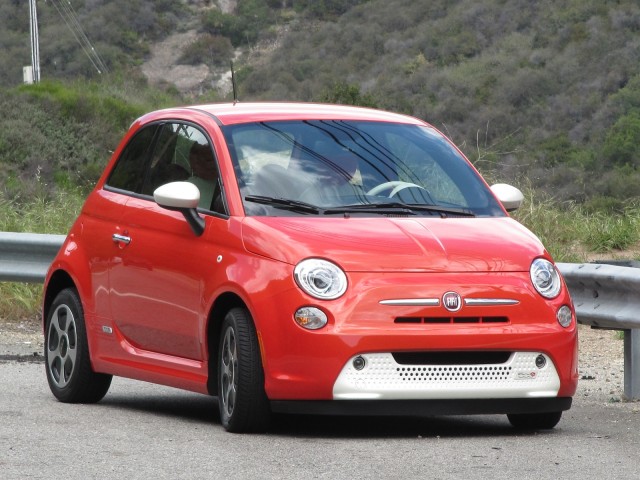
During his tenure Marchionne was plainspoken and blunt about many topics, including electric cars. He famously dissuaded people from purchasing the electric Fiat 500e, which is sold in California as a "compliance car."
"I hope you don't buy it," he said in 2014, shortly after the car debuted. "Every time I sell one it costs me $14,000." (The 500e, with 84 miles of electric range, sells for $33,990 before tax credits, though Fiat leased a lot of them for $199 a month.)

“Unfortunately, what we feared has come to pass. Sergio Marchionne, man and friend, is gone,” John Elkann, grandson of former Fiat CEO Gianni Agnelli and chairman of Fiat's parent company Exor, said in a statement.
2013 Fiat 500e electric car, Los Angeles drive event, April 2013


A Canadian born in Italy, Marchionne was known as a chain-smoking workaholic among many in the automotive industry. Trained as a lawyer and an accountant, he worked first in finance and as a tax consultant before he was plucked from a Swiss trading firm to work at Fiat. Battered by sagging revenues and skyrocketing costs, Marchionne helped turn Fiat around.
After taking the reins of Fiat in 2004, Marchionne famously unwound a partnership with General Motors and got GM to pay $2 billion for the privilege.
With that money, he turned Fiat into Europe's fastest-growing automaker and developed a range of models for sale worldwide.

He reintroduced the Fiat, Alfa Romeo, and Maserati brands to the U.S. and turned Ferrari into the fastest-growing maker of sports cars, even introducing hybrids to the brand.
In 2009, he negotiated with the U.S. government to take over bankrupt Chrysler Corp.—for free—and merged it with Fiat.
In June, FCA announced it had paid back its sizeable industrial debt and would focus on crossovers, SUVs, and trucks to stay profitable.

Saturday, January 14, 2017

EPA Accuses Chrysler Of Diesel Emissions Cheating

It’s deja vu all over again. Yesterday, the EPA accused Chrysler of deliberately installing software that allows certain diesel engines sold in its vehicles in the United States to exceed pollution limits set by the agency. Chrysler stock plunged 15% on the news before trading was halted. It latter recovered somewhat but still finished the trading day down 10%.
Dodge Ram diesel pickup

Nitrous Oxides Are A Health Risk

Like the diesel emissions scandal that swept over Volkswagen in 2015, at issue is the level of nitrous oxide emissions from the vehicles affected. Nitrous oxides are considered far more of a health risk than carbon dioxide, especially for the young, the elderly, and those with preexisting respiratory conditions.
Cynthia Giles, an assistant administrator at the E.P.A., tells the press that nitrous oxides “threatens public health by polluting the air we breathe,” said  She said the software in question allowed the engines in question to spew more of them out their tailpipes than permitted by regulations. She said there is “no doubt” that the software “is contributing to illegal pollution.”
The EPA alleges that 104,000 Chrysler vehicles are involved, including Jeep Grand Cherokees from model year 2014, 2015, and 2016. Dodge Ram 1500 pickup trucks with 3 liter diesel engines sold are also involved. EPA regulations call for a maximum penalty of $44,500 for each non-conforming vehicle.

Why Now?

The fact that the EPA initiated this action just days before President Obama leaves office is no coincidence. No one expects Trump’s EPA to care one way or the other about human health. Instead, its focus will be on gutting as many environment regulations as possible to promote manufacturing. Whether people die as a result is of no concern to The Donald.
“It’s very important that they’re doing this now,” says Frank O’Donnell, president of Clean Air Watch, a Washington advocacy group. “They’ve got polluter lobbyists massing at the gate of both Congress and the White House. This case underscores the importance of keeping a federal environmental cop on the beat at E.P.A.”
Sergio Marchionne, the mercurial CEO of Fiat Chrysler, was quick to blast the EPA action.  “There’s not a guy” at Chrysler “who would try something as stupid” he told reporters during a conference call. “We don’t belong to a class of criminals,” he added. “We have done, in our view, nothing that is illegal.”
That last part may be a reference to the fact that Volkswagen has just entered guilty pleas to charges of conspiracy to commit wire fraud and to violate the Clean Air Act, and to customs violations and obstruction of justice. In addition, six Volkswagen executives have been indicted on various criminal charges.

Has Fiat Acted In Bad Faith?

Notwithstanding Marchionne’s remarks, Fiat is in plenty of hot water with European authorities over similar diesel cheating allegations. Fiat was the only company who failed to send a representative to a recent meeting between EU regulators and car makers. Ignoring the meeting seriously annoyed EU officials. Tests have confirmed that Fiat used the simplest means yet to discovered to defeat diesel emissions testing. In Europe, the testing protocol is 20 minutes long. Fiat allegedly simply programmed all its emissions controls to shut off after 22 minutes.
Diesel emissions cheating is rampant in the industry, driven by manufacturers’ desire to be able to advertise high fuel economy. Chrysler’s decision to offer the 3 liter diesel engine in its Ram 1500 pickup trucks allowed it to trumpet that its trucks got better fuel economy than those from Ford and Chevrolet. It is no coincidence that Ford has just announced it will offer a diesel engine in its own light duty pickup truck, the F 15o, starting in 2018.
John German, senior fellow at the International Council on Clean Transportation, whose initial work on Volkswagen’s emissions levels exposed cheating by that company, sys the E.P.A case against Chrysler was not as clear cut but he expects the company to have difficulty defending itself against the government’s accusations.
“Fiat Chrysler will not only have to defend their software, but prove that it does the bare minimum to protect the car’s engines,” Mr. German says. The complexity of modern diesel technology and the trade-offs between emissions controls and engine performance have motivated companies Fiat Chrysler to cut corners, he says. “It’s very enticing to take shortcuts,” he said. “But it’s absolutely possible for a diesel car to fully comply with U.S. emissions standards and have good drivability and performance. It just costs money.”

Diesels Are Different

In general, regulators permit manufacturers to decrease or eliminate pollution controls on diesel engines at certain times to protect them from damage from overheating and other factors. Many diesel engines have difficulty handling internal moisture from condensation at start-up, especially in cold weather. The rules allow the pollution controls to be bypassed at such times, but several manufacturers have pushed the rules beyond their logical intent.
Tests by independent laboratories have found some companies have set their software to turn off when ambient temperatures are as high as 70 degrees F, meaning they operate in some climates virtually pollution control free during much of their useful life, depending on what climate they operate in.
A report released by the The International Council on Clean Transportation just last week says that diesel emissions from cars are as much as ten times higher than those from heavy duty trucks and buses, primarily because testing protocols for commercial vehicles are much more stringent and done in the real world rather than in laboratories. The ICCT was instrumental in exposing the extent of the Volkswagen diesel emissions cheating.

What About The Future?

Diesel engines have been favored by manufacturers and governments for decades. Not only are they more fuel efficient than gasoline engines, when designed for commercial use they can last far longer. Diesel engines in buses often go at least a million miles before any major servicing is needed. Diesels are also famous for their abundant low end torque.
Electric motors also have strong pulling power as they have maximum torque at 0 rpm. The way out of the diesel pollution crisis that grips the world is not more or better software, it is a transition to non-polluting, clean  electric vehicles with no tailpipe emissions whatsoever. The dawn of electric trucks and buses is rapidly approaching.
Source: New York Times

Friday, January 29, 2016

Dodge Dart, Chrysler 200 Get The Heave Ho From FCA

The first rule of business is to give the customers what they want. Right now, when gasoline costs less than Pepsi, what customers want are trucks, Really big trucks, the kind of heavily muscled, in your face trucks that make you feel you are in your own version of Mad Max as you commute to work every day. Such trucks are also excellent for picking up some finish nails at Home Depot or a quart of milk on the way home. People are also crazy for all sorts of SUVs — the bigger the better.
Chyrsler 200 sedan by FCA
What people are not so crazy about are sedans. 4 door transportation modules are just not cool right now. Fiat Chrysler’s profits fell 40% last year, according to the Detroit Free Press. FCA boss Sergio Marchionne blames a lot of that on poor sales of its Dodge Dart and Chrysler 200 sedans. So he has decided to throw them overboard and let the FCA banner be carried forward solely by trucks, SUVs, and assorted Jeep products. The only sedan Chrysler will sell from now on is the 300.
During a conference call with Wall Street analysts on Wednesday, Marchionne said, “There will be a number of things that will be put in place in the next 18 months — things that have been agreed and detailed, that will effectively withdraw the Chrysler 200 and Dodge Dart from the marketplace, for a long period of time, during which we will be continuing discussions with potential partners. We have decided to de-focus, from the manufacturing standpoint, to de-focus on the passenger car market. There are two cars in particular, the Dodge Dart and Chrysler 200, which will run their course,” Marchionne said “Without creating additional capacity, in the United States, we need to … to try and deal with the development of both Jeep and the Ram brand.”
Part of the reason for this is that FCA has run out of factory space to build all the trucks, SUVs and Jeeps the market wants. Those vehicles make a lot of profit, sedans only make a little profit. The choice was easy; the sedans had to go. Marchionne has hinted they might return if someone else wants to build them. Both cars have gotten good reviews and won praise for their excellent styling. The news surprised investors. FCA spent $1 billion to overhaul its Sterling Heights Assembly Plant to build the Chrysler 200 midsize sedan that just went on sale in 2014. It also spent $600 million to launch the Dodge Dart compact car in 2012.
My old Irish grandmother would wonder whether Chrysler is cutting off its nose to spite its face. Yes, the market for trucks and SUVs is red hot at the moment, but what happens when the famously mercurial tastes of consumers change? And how will FCA make a fleet composed solely of behemoths comply with upcoming fuel economy standards? No doubt, Machionne, in his infinite wisdom, has a plan, but what it is remains a mystery.

Sunday, December 6, 2015

FCA US launches largest private fleet of CNG-powered semitrucks in Michigan; largest private CNG station in N America

FCA US LLC has invested $40 million in FCA Transport, the FCA US-owned truck fleet, to convert its 179 Detroit-based parts-haulers to run on compressed natural gas (CNG) rather than traditional diesel. The move gives FCA the largest private fleet of CNG-powered heavy-duty vehicles in the state of Michigan.
The company spent $1.8 million to enable the 36,000-square-foot maintenance facility to handle the new CNG-powered fleet. The $5-million on-site CNG fueling station, designed and built by TruStar Energy, is the largest private CNG station in North America.
Prior to the changeover, the FCA Transport Detroit fleet used nearly 2.6 million gallons of diesel fuel per year while driving about 16 million miles to deliver parts to assembly plants from suppliers and FCA US component facilities. The company expects to experience net fuel cost savings of about 35% per year with the CNG-powered fleet.
Beyond cost savings, FCA Transport estimates the Detroit fleet’s transition to CNG will reduce co2 emissions by more than 16,000 tons per year. This decrease is equivalent to the annual carbon dioxide emissions that come from burning more than 17 million pounds of coal, or the reduction of CO2 emissions from the annual energy use of nearly 1,500 homes.
FCA Transport drivers and mechanics participated in extensive hands-on training to prepare them to drive, fuel and maintain the new trucks. It included maintenance, repair and operating courses taught by Cummins, Allison Transmission, Agility Fuel Systems and FCA’s own in-house trainers.