Showing posts with label Who Killed the Electric Car. Show all posts

Monday, March 5, 2018

Electric-car pioneer Paul Scott looks back on 15 years of plugging in

Paul Scott and Barbara with Zero electric motorcycle  [photo: Charles Ryan-Barber]
Paul Scott and Barbara with Zero electric motorcycle [photo: Charles Ryan-Barber]


Most of the U.S. was unaware that modern electric cars got their start in California between 1996 and 2002.
Many of the earliest owners and EV advocates from those days remain involved 20 years later, though their names may be familiar only to a small group of activists.
One of those people is Paul Scott, who's been part of several important events in the early history of modern EVs.

What follows are his words, lightly edited for style and clarity by Green Car Reports.
Life is a journey. I was a young hippy from San Antonio who found a new home in Eugene, Oregon, until a visual effects company offered me a job in Santa Monica, California.
After 23 wonderful years in Eugene, I had little notion of how life-changing that move would be. Shortly after the move, my life changed forever at age 49 when I received some sobering news from my doctor. 
When death knocks at your door, you tend to think about what you have done with your life and what you always wanted to do.
In that moment I decided it was time to get serious about going clean, meaning clean energy. I would get the solar-power system I’d always wanted, so if nothing else, I’d leave a legacy of clean energy.
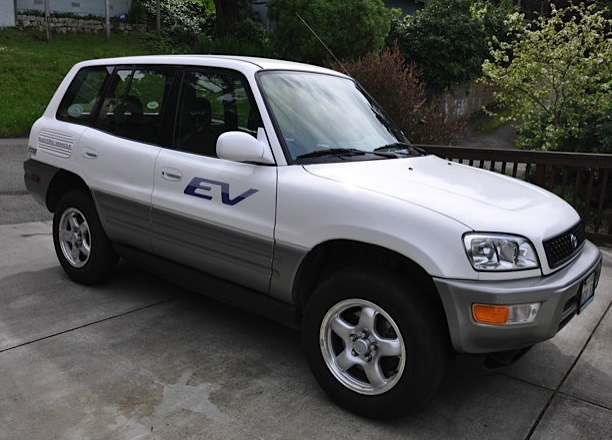
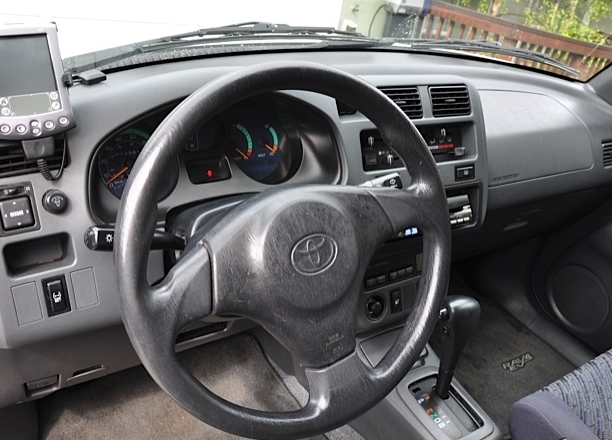
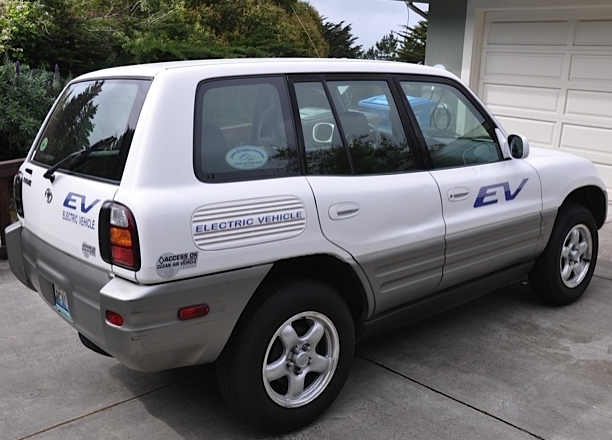
Researching solar panels and installation, I came across an electric-car website talking about the first-generation Toyota RAV4 EV electric car.
I was intrigued, and asked the group if there was any way I could test-drive one. The next day Bob Seldon brought his RAV4 over and let me take it for a spin.
I was floored by how nicely it drove, and Bob encouraged me to buy one. Toyota was willing to sell its electric cars, even then, while other makers were only leasing them—including the General Motors EV1.

I took a deep breath, accepted Bob’s advice, and went for it. On my 50th birthday, the solar-panel installation was completed, and our first electric car arrived a couple of months later on December 21, 2002.
My wife and I were now powering both our home and our car on sunlight. It was an incredible feeling to know we had eliminated most of our personal pollution.
That gave me a new-found passion in my life: clean energy and driving electric.
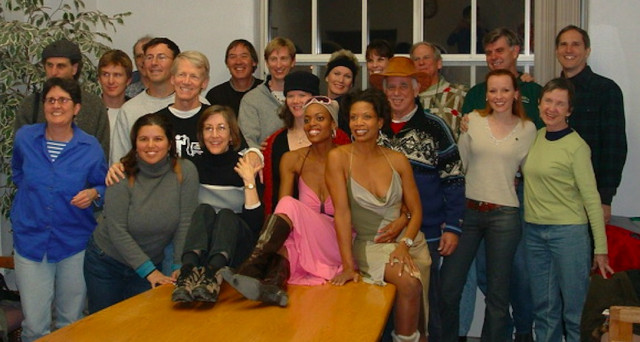
Cast and crew of 'Who Killed the Electric Car?' at Sundance Film Festival


Around that time, I discovered DontCrush.com, a website sounding the alarm that the manufacturers of those limited numbers of first-generation electric vehicles were taking them back and destroying them.
A group of EV advocates—Doug and William Korthof, Alexandra Paul, Linda Nicholes, Mike Kane, Sherry Boschert, Chelsea Sexton, and Marc Geller— began to organize events to publicize this.
Director Chris Paine had attended nearly all of our meetings, and ended up filiming and documenting our events for almost three years.

We began as a tiny group wanting to save a single vehicle—and our small but mighty team managed to save 200 trucks in the end. That gave us the confidence to go bigger, and we did. 
One day, I received a phone call from Chris Paine, saying his movie—Who Killed The Electric Car?—had been accepted into the Sundance Film Festival.
With that validation there was no looking back.

Monday, June 12, 2017

Elon Musk Goes On Twitter Rant About Automakers Killing EVs


Who killed the electric car?
Most of us know that phrase as the title of a documentary that explores factors that limited production of EVs, specifically General Motors’ EV1. The actions of automakers, specifically those of GM, are one of those factors blamed in the film.


Now one of today’s key figures in the EV world is also blaming GM, claiming the genesis of his company was inspired by the automaker crushing EVs.
Tesla CEO Elon Musk took to Twitter to take investors to task for shorting his company’s stock. In so doing, he said that he and others started Tesla in 2003 as a response to GM sending electric vehicles to the crusher.
He further asserted that since large “legacy” automakers were busy killing off whatever EV programs they had, the only chance for EVs was for him to start his own company, even though, in his opinion, any new company started to sell EVs was certainly doomed to failure.
Musk says he didn’t start Tesla to make money or chase government incentives, and he thought Tesla was the only chance for EVs, despite what he calls a 90 percent probability of failure. On that note, he also claims the company almost failed “many times.”
Musk’s Tweetstorm brings back memories of the 2006 film referenced above.
Certainly, Musk had already made plenty of money before Tesla, so perhaps he’s telling the truth about not starting Tesla to make money, but on the other hand, just about all businesses aim to turn a profit at some point.
Maybe Musk was simply on the defensive after reading an article that claimed Tesla is the most shorted stock in the U.S. equity market, with short interest in the company totaling around $10.4 billion.
If so, he might be cheered to know that as of the end of the day Thursday, Tesla stock was at $370 a share, which was an all-time high. The company’s stock is up 73 percent since the beginning of 2017 and 61 percent over the past 12 months. Much of that is based on anticipation of the upcoming Model 3, which is set to launch this year.
The rise of Tesla’s stock has caused consternation among industry observers, as legacy automakers have taken hits on Wall Street amid sales that are leveling off and dropping after the industry hit its post-recession peak. This despite the fact that legacy companies like GM are seeing record earnings, sales slump or not, while Tesla has yet to show a sustained profit.
Tesla has a lot riding on the Model 3, and a history of development delays caused by defects and other problems. Perhaps Musk is feeling a little punchy, knowing that any launch problems with the Model 3 will cause critics to pounce – and be a boon to those who shorted the stock

Monday, December 16, 2013

InsideEVs Exclusive Interview with General Motors EV1 Marketing Director John Dabels – Part 2

Mark Hovis (InsideEVs): The question that Sam Dellinger and I have which is covered in the film (Who Killed the Electric Car) is how could GM justify crushing the EV1s?
John Dabels Speaks Candidly About The EV1 Project
John Dabels: That is relatively simple answer.  It starts with controlling the distribution of the cars.  I fully support GM’s decision.
Mark Hovis: To crush the cars??
John Dabels: Yes.   When you buy a car and take title, that triggers an obligation by the manufacturer to provide service parts.  I am paraphrasing the law, but if you buy a car at any authorized dealership in the US, the manufacturer must provide service and parts for 10 years. So, you buy an EV1 in California and you move to Bangor, Maine.  GM has to provide service.  Leasing takes care of that problem.
Mark Hovis: I buy that. Our contributors at InsideEVs understand the lease.
John Dabels: The mistake GM made was not to lease the EV1’s again and even a 3rd time.
Mark Hovis: Why wouldn’t you put them in a museum?
John Dabels: There are few around.  (Editor’s note: there is about 40 still in existence in one form or another today)
Mark Hovis: Not enough!
Not The Best "Final Image" Of The EV1
Not The Best “Final Image” Of The EV1
John Dabels: The disposal of the cars was poorly handled, I agree with that.  As far as the reason, it was the triggering of the title that GM was concerned about.  Anyway that is the rationale for that.
Mark Hovis: It looks like GM could have gotten the word out better on this issue. Failure to do so left it open to the conspiracy.
John Dabels: A little more insight into the inner workings of the EV1 program.  Toward the end of 1992, GM is still hemorrhaging cash.  The Board replaces Bob Stempel as CEO with Jack Smith.  If you cut through all the official press releases, what occurred was a palace coup – the Financial staff takes over the CEO position with the help of Board member John Smale of P&G, who became chairman.  Neither Smith nor Smale is what anyone would call a car guy.

I wish discussion of the palace coup would come out more when people are assessing the EV1 program.  I’m not naïve about the financial needs of a company.  I spent my early years at GM on the financial staff.  But what a lot of financial staff people do not understand is where profits come from.  I know that statement might seem odd but financial guys seem to spend more time looking at how to reduce cost than how to generate more revenue.  Show me a company that saved its way into prosperity.
Hovis: OK but how did the financial guys really affect the EV1?
The Only "Functional" GM EV1 Given To The Smithsonian.  This particular EV1 was returned to GM in 2000 by Leasee Phil Karn (phot0 via Jeff Tinsley)
The Only “Functional” GM EV1 Given To The Smithsonian. This particular EV1 was returned to GM in 2000 by Leasee Phil Karn (phot0 via Jeff Tinsley)
John Dabels:  The most vivid example occurred at one of the regular meetings with corporate staff.  Time is Fall 1992.  There are eight people in the meeting, which is held at the then GM building on West Grand Boulevard.  The conference room is near the Board room.   There are four of us and four corporate staff.  Bob Stempel is the only non-financial guy from the corporate staff. The meeting starts at 3:00.  A portion of the meeting addresses all the positive publicity the EV1 program is generating for GM.
We stress that much of the positive image of GM is among younger people, who have shied away from most GM products.  Jack Smith, then GM president, asks “Are many of these people  old enough to buy cars and if not what do we care?”   That question is a perfect example of the difficulty in educating the financial staff on the value of the program.  Take someone who is say 14 years old now.  Do you know how many cars they are going to buy in their life?   They might buy twenty cars or more.  You want that person to consider your product.  Don’t make them mad! (Not John’s exact words)
Now, in all fairness, we (GM) had financial pressures at that time.   But the meeting was effectively the death knell of the EV1.   At 5:00 Jack stands up, turns to Bob Stempel and says “Bob, you can’t afford the program.” A few days later, the board meets and asks Bob Stempel to resign and puts Jack in as CEO.
That part of the story never gets told.   But the story is indicative of a program going from having support by senior management  to no support.   At the same time worldwide you’ve got all this interest and positive publicity about GM.  But it was ignored.
After the palace coup, the hatchet is taken to the  program. Jack Smith’s team was heavy on financial guys.  A few years later Rick Wagoner, also a financial guy replaces Jack Smith.  So was the decision to cut back on the program a right one?  A number of years later Rick Wagoner admitted cutting back was a mistake.  Here was a tiny program by automotive standards generating very positive publicity and many product innovations.
GM EV1 Interior
GM EV1 Interior
Sam Dellinger: Boy, that must have been frustrating.
John Dabels: Understatement of the week.  We used to rank information according to credibility. Word of mouth is number one and media is number two.  So where is advertising? Toward the bottom of the credibility scale. We tried to explain how the $6- 8 million marketing budget was worth some maybe $600-800 million worth of advertising.
Sam Dellinger: Tesla doesn’t advertise. (Note Sam owns a Model S Signature, Chevy Volt and a 10kWh PV solar array. Sam is retired and living the dream)
GM Could Have Used Elon Musk A Decade Or So Ago
GM Could Have Used Someone Like Elon Musk A Decade Or So Ago
John Dabels: Elon Musk understands  very well the value of the media.  We could have used him.  With the positive press about EV1, GM had more families coming to showrooms – Buick, Chevrolet, Cadillac and other divisions – than you would otherwise.  You have a teenager saying “You know what dad, GM has an EV1  program and it is really cool.  Let’s go look at their cars“  Tell me any father that doesn’t want to be “cool.”
Sam Dellinger: I agree the car was cool.  Still is.
John Dabels: But none of the value of the media coverage was ever recognized by the financial staff.
Mark Hovis: What about sales volume?  Wasn’t that important?
Dabels: The EV1 program  was always going to be limited volume. By automotive standards, Tesla volume is a rounding error. Yet they’ve got all the press with this tiny volume. Musk understands the value of the media.  The unit volume for EV1 never should have mattered but it did matter.
Mark Hovis: What would the EV1 program look like today had GM stayed the course?
John Dabels: EV1 would be the number #1 electric vehicle.  GM would be miles ahead. There would be a lot more people in EV’s.   GM would have more overall market share…and might have avoided bankruptcy.
Mark Hovis: You spoke of the land speed record.
John Dabels: Yes.  183 miles per hour. Not bad for what some people considered a glorified golf cart. We  modified a pilot production car and set the land speed record.  What also took a regular EV1 and had a drag race with a Miata, and Nissan 280ZX.  The EV1 won, of course.  I think the video is on YouTube.
Below: Video John was speaking of
Sam Dellinger: Anything else?
John Dabels: That’s enough for now.  Some parts of the story you might not have heard.  When people ask about a conspiracy, I tell them there was no conspiracy to kill the car because we weren’t smart enough to think of one.   I’ve given this a lot of thought and I believe the reason the Ev1 died was due more to a lack of understanding inside the company of EV1’s value, rather than some external force. The real story of EV1’s demise might not be as exciting as the film but it is a lesson for all.


Source: Inside EV's

InsideEVs Exclusive Interview with General Motors EV1 Marketing Director John Dabels - Part 1

Back In "The Day," General Motors EV1 Was The Green Car To Have
Back In “The Day,” General Motors EV1 Was The Green Car To Have
It is hard to be an EV fan and not know a little about the EV1. Whether you were exposed to the EV1 through the 2006 documentary “Who Killed the Electric Car”, or if you have been a fan right from the beginning. I recently had the pleasure of spending the afternoon with John Dabels, the Marketing Director of the EV1.
John Dabels wearing his EV sweater from "Who Killed the Electric Car"
John Dabels wearing his EV sweater from “Who Killed the Electric Car”

The interview

Mark HovisCan you tell us a little about your previous experience prior to joining the EV1 program?
John Dabels: I was Director of Marketing at Buick for a number of years prior to heading up the EV1 marketing team. Most people would not think that Buick marketing would be a good training ground. You have to understand something here. We had an inside joke that the median age for a Buick owner was “deceased”.
But during the period at Buick, we had a number of breakthroughs. We also set some records, increased market share and reduced the median age.  Buick was the first auto company to use what is called geo-demographic profiling.
Another innovation but one that was highly controversial was an ad for the Buick Regal Grand National.   The GM Board did not get it.  In fact one of the more well-known Board members thought the ballerina was a hooker.  At the same time when we showed the ad to sales reps from dealers and our field staff at a meeting in  Hartford Connecticut, they went wild.  About 45 seconds into the ad, several hundred people  were standing on their chairs cheering.   The ad pointed out a huge difference between generations.  Board members did not understand and were furious and the people who sold cars loved it.  And, yes, I came within a hairs breath of being fired.  But it still a great ad, all these years later.

Joining the EV1 Team

Ken Baker was program manager.  He also came from Buick.  The interview was brief.  Ken asked  if I would be interested in joining the program.  Doing what, I asked?  He responded, “Develop demand for electric vehicles worldwide.” I asked if he had  any instructions? Ken Baker pushed a blank sheet of paper and said “you go figure it out.”  That was the end of the interview.
Traditional marketing jobs are responsible for overseeing advertising, promotional programs, events, web development and sometimes guidance for product development.  The role at EV1 the job also included public relations and government relations. At the time we were the only staff outside GM corporate to have a separate government relations activity.  This created angst with the group in Washington.
Sam Dellinger: How did this cause angst?
Now Meets Old: Tesla Model S Lined Up Next to GM EV1
John Dabels: An example.  I recall sitting in the executive dining room at the Tech Center with Chief Environmental lobbyist for GM.  The environmentalist said “Dabels you are my worst enemy. My role is to convince congress and states that environmental laws shouldn’t be implemented and you’re out there proving me wrong.  You need to stop.”  I asked, Do you sign my paycheck? No. That’s right. Our group works for the chairman and until I am told differently that’s what I’m going to do.
Mark Hovis: Tell us how did the specs for EV1 get developed?
John Dabels: That’s a funny story.  The chief engineer , who came out of Chevrolet, had a sign on his office door that read “Do not enter without data”.  So I entered and he exclaimed “Where’s your data?” My retort was the last people who owned on-road EV’s were either dead or in nursing homes.  That wasn’t satisfactory.  So I went back to my office, wrote some specs for range, acceleration, and some other criteria.  Those became the benchmarks.
Most of numbers were reasonable  expectations for that size car.  Range was tougher.  Based on some anecdotal data people seemed to view 100 miles range as acceptable but 99 miles as far less so.  Most people don’t come close to driving 50 miles per day but a 100 miles seemed to be the psychological target.   Acceleration for a 2-passenger car needed to be 8-9 seconds, not some slug of 13-14 seconds.  We also wanted to be able to carry golf clubs. Not Rodney Dangerfield’s clubs but two smaller size bags.   That’s how many of the specs were written.
Below: Video primer on GM’s EV1
Mark Hovis: What kind of budget did you have to work with?
John Dabels: Buick’s marketing budget in today’s terms was probably $800 million. The  budget at EV1  was a “rounding error” about $6 million.  But to give you an idea the interest in the EV1, over a three-year period our group generated more positive press for GM than the rest of the company combined with our $6 million budget. You can’t buy the kind of press we were generating.
Mark HovisDo you feel like GM was behind the project when you started and at what point did they lose interest?
John Dabels: Yes. What happened? I can tell you what happened…and it didn’t come out in the movie (Who Killed the Electric Car). What went wrong?
We did not do a good job  educating people inside the company about the benefits of EV1 as we did outside the company. We took it for granted that people inside the company understood the value of the program. In retrospect that was a major  mistake on the program – and I think the biggest mistake.
GM EV1 Cutaway circa 1996 (click to enlarge)
Now a little history leading up to the program that people either don’t understand or don’t want to talk about.  Roger Smith, GM’s chairman and CEO, reorganized GM in early 1980’s. The rationale was to increase profitability.  However, GM had literally printed money from 1929 – 1980.
On the Cadillac  Eldorado, for example, GM  had a variable  profit rate of more than 60 percent.  That’s what I mean by printing money. Then GM staff announced they are going to reorganize and break into two operating groups –  Chevy, Pontiac and GM Canada in one group and Buick, Oldsmobile and Cadillac in another group.  Bob Stempel was to manage the Buick/Olds/Cadillac group.  Bob was a really good engineer for whom I have a lot of respect.  But the reorganization created a lot of confusion and frustration at the divisional level.
The focus changed from building cars and trucks to maximizing earning.  In addition to the reorganization, Roger Smith has GM buy Hughes Aircraft and EDS.  I agree GM needed to consolidate some systems but the EDS fit was not good.  Plus,  Ross Perot is sitting on the board.   So Ross is Ross and he’s been successful.  Some of his points about GM were very good.  But he is such a thorn in Roger’s side that he pays him 700 million to leave.
The final straw was Saturn.  Roger did not think the existing divisions could be effective in competing with imports.  Saturn is like a black hole, sucking up money faster than you can count.  The initial cost is so high it would likely never make any money.
So leading in to the EV1 program you have the combination of the reorganization, money going to buy Hughes and EDS and Saturn, all using profits normally directed toward product development.  And the continued emphasis on cutting costs.  And we wonder why the divisions didn’t support it (EV1)?
Ultimate Fate Of All But 40 Of The 1,117 EV1s Produced
You have a slew of high-volume  midsize cars that are getting long in the tooth now, and are not getting refreshed because supposedly there is no money left.  That’s part of  what happened  to GM in the 80s.  By not putting money into product the GM divisions  lost market share and became a very frustrated group .
In 1990 Roger Smith announces at the LA auto show that GM is going to launch the EV1. This is his last major declaration as CEO and retires. In the meBantime, you have starved the division for product development, your market share is going down, you have disgruntled people and then a recession begins. Now GM is  starting to hemorrhage cash. The divisions look at us (EV1) and say, we’ve gone through Hughes, we’ve gone through EDS, we’ve gone through Saturn and now we’ve got the EV1 group  getting preferential treatment.  Were they a little upset?  Yes, and rightfully so.  But what was not explained as a benefit of the EV1 program was all the advanced  electronics that were developed.  Many of the developments  had immediate application in all GM cars.
Mark Hovis: The question that Sam Dellinger and I have which is covered in the film (Who Killed the Electric Car) is how could GM justify crushing the EV1s?