Showing posts with label Tesla Model 3 Hatchback. Show all posts

Monday, November 5, 2018

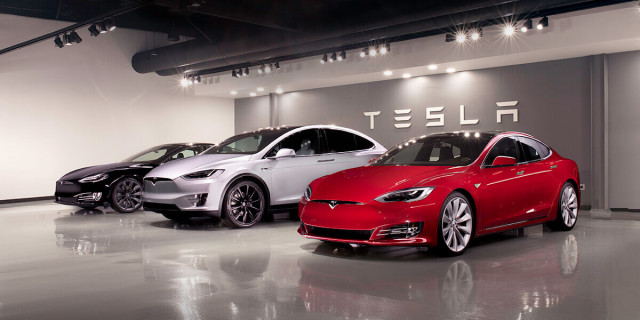
U.S. Tesla Sales In October 2018 Up By 861%

In October 2017, Tesla sold just 2,115 cars. This past October, over 20,000.

It’s not the last month of a quarter, so no one should expect sales of 30,000 electric cars like in September, but even in October Tesla is able to achieve a groundbreaking result of growth of 861% year-over-year.
Our estimates stand at over 20,000 Teslas delivered for the month, and each model noted growth.
  • Model 3 – 17,750
  • Model S – 1,350
  • Model X – 1,225
  • Total: 20,325 (up 861%)
Rolling 12-month sales continue to climb up and approaches 150,000.
In the first 10 months of 2018, Tesla delivered over 134,000 BEVs:
  • Model 3 – 95,882
  • Model S – 19,745
  • Model X – 18,800
  • Total: 134,427 (up 261%)
Cumulative sales of all three models is now approaching 300,000:
  • Model S – 137,892
  • Model 3 – 97,654
  • Model X – 58,552
  • Total: 294,098

Saturday, August 4, 2018

Tesla Model S and X reportedly to get minimalist Model 3 interior

2018 Tesla Model S and 2018 Tesla Model X


Apparently the problem with the Tesla Model S and Model X was that they're too normal.

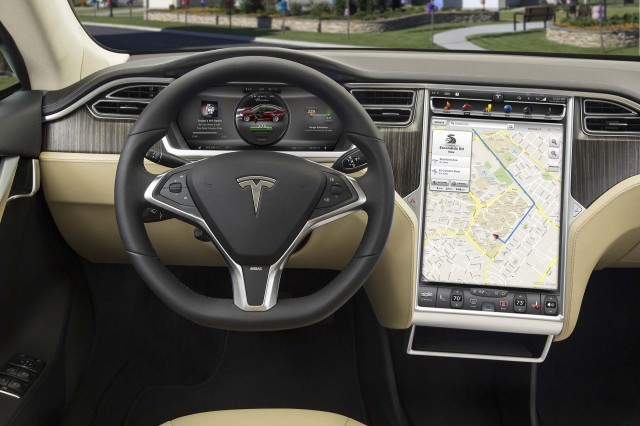
They have a separate instrument cluster—a digital one—behind the steering wheel and a few solid controls. Tesla must think that's too much.
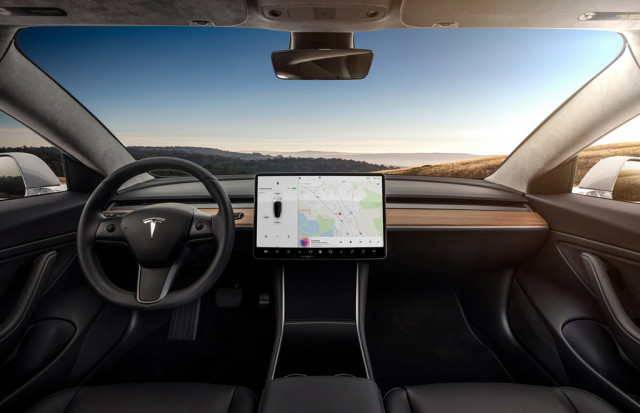
The company is designing a new interior for them that looks a lot like the one in the Model 3, first reported by Electrek.
2017 Tesla Model S
2017 Tesla Model S


Electrek reported it had received internal company documents and photos that show drawings of the new interior with a large, horizontal touchscreen mounted in the center of the dash and a band of hidden climate-control vents running the width of the dash, just as in a Model 3.
patent application dated in mid-June confirms that Tesla is planning to implement an electronic control system for the air vents in the Model S and Model X, similar to the way the Model 3 works.
The concept images show a touchscreen that looks bigger than the Model 3's 15-inch screen, with no visible frame or bezel. It's unclear whether these pictures are drawings or photographs of the actual screen sitting in a mocked-up interior, so it's unclear whether the frameless design could make it to production.
2018 Tesla Model 3
2018 Tesla Model 3


Unlike the Model 3, the Model S and Model X will retain a small instrument cluster recessed into the top of the dashboard behind the steering wheel almost like a head-up display screen, although a small hood over the screen would indicate that drivers are meant to view it directly through the steering wheel, rather than on the windshield.
The images show the second screen displaying speed and other information, though that information is also shown on the center screen.

The company is likely making the change for two reasons: First, to save money. With a single dashboard design, the company's software interface engineers won't have to design two versions of the cars' controls, one vertical and one horizontal, as they do now. 
Second, the move may be meant to prepare the cars' interiors for autonomous driving.

Along with the new floating-screen dashboard, the documents show Tesla's more expensive models are supposed to get upgraded interior materials and seats.
Critics have long remarked that the cars' interior materials are unfit for $80,000 to $130,000 luxury cars. The new interior will also incorporate a wireless phone charger and offer improved interior storage, addressing another long-time complaint.
The update is scheduled to arrive in about a year, so buyers who enjoy a few physical controls in their cars might do well to look at 2018 models.

Friday, August 3, 2018

Consumer Reports Still Not Fully Impressed By Tesla Model 3


Concerns seem pretty minor, though.

The Tesla Model 3 has been reviewed by any number of publications since it debuted last year and the torrent of accolades that have been poured out in that time that may have washed away some of the more critical voices out there. Consumer Reports, which purchased their own example of the mid-sized sedan and have already issued an initial video review, has not allowed the praise from others to stop them from raising some quibbles and publishing its full review with the somewhat disparaging subtitle “Fully electric but not fully baked.
This newly published review, it has to be said, seems to be a warmed-over version of that initial take. In print form, it starts with the same criticisms as its original video (embedded below) — they knock the suspension, saying it’s “overly stiff”, call the rear seat uncomfortable, and repeat that the driver controls, located on that single screen mounted to the dash, are distracting.” They also bring up the braking issue they had, which Tesla fixed with an over-the-air (OTA) update.
Those issues aside, they appear to really like it, repeating many of the positives they noted in their original review. They say the steering is precise, and it handles like it’s glued to the road. The one piece of new information we can see from its extended time with the car is their attempts to test the range. They say that while it is rated to achieve 310 miles on a charge, while “using Tesla’s higher regenerative braking mode” they managed to squeeze out a nice 350 miles.
One criticism from the original video not repeated here has to do with wind noise. This writer has read a few reports noting wind noise, as well as some seeing substantial improvement after a treatment from service technicians, so it’s possible they had this issue addresed. You can read their complete road test results here, but you’ll have to be a subscriber to do so.

Wednesday, August 1, 2018

Tesla Model 3 Track Mode Unlocked – Sets Track Record

Sasha Anis and his crew of tuners at Mountain Pass Performance may be known for their big brake kits, coilovers, and suspension mods for the Tesla Model 3, but today, they took the wraps off their latest and perhaps greatest achievement: disabling Electronic Stability Control (SC) and the Traction Control System (TCS) without disabling the Anti-lock Braking System (ABS) on the Model 3. 
While details on the modification have yet to be shared, Sasha did share that they have designed a defeat system that, unlike the defeat devices implemented by internal combustion vehicle manufacturers, is designed to let the vehicle play a little nicer on the track.
The factory Stability Control and Traction Control systems were designed to maximize traction and safety in the Model 3 while on the street, but when it hits the track, drivers are looking for more control over the vehicle. These two automated systems continuously override the accelerator inputs, even going so far as to kill the acceleration when the vehicle is pushed to the limits.
Racers like to have more control over the vehicle, so Sasha and his crew of misfits took on the challenge and have essentially unlocked the famed “Track Mode” on the Tesla Model 3 … and theirs is a rear-wheel drive model, not an all-wheel drive Performance Edition.
Naturally, Sasha quickly took the newly modified Model 3 out to the road to test out the new modes and found that he was able to easily get the vehicle to break traction around a turn, confirming that ESC and TCS had been disabled, then stopped abruptly, confirming that ABS was still functioning.


After the road test to confirm the new modifications were successful, Sasha and the team at Mountain Pass Performance took “the future” — the name of their Model 3 — to the track to see just how much it had improved. The results were astonishing. Over the last few weeks, the team at Mountain Pass Performance has developed a new Big Brake Kit for the Model 3 along with a set of custom coilovers and some suspension mods for the car — all of which stacked onto the capability added by a good set of rims and tires. The MPP hardware modifications took the car to a new level, but this new “hack” blows the lid off of the entire thing.
I won’t spoil the fun. Sasha reached out to us and shared that the, “Car also went wildly faster today with the traction control disabled and some more setup work. It would have set a new record in its class by almost a second if this was a competition. The record is a 1:20.3 by an M3 and we did a 1:18.9!!!” The modification was achieved “with CAN communication with the Motec,” according to a post by Mountain Pass Performance on its Instagram feed.
Not only does this new modification validate the direction he’s headed with “the future” — it also confirms that the Model 3 is a serious contender and, while the progress made by Mountain Pass Performance is stunning, the outfit has only been playing with it for a few weeks, so there is no doubt that this is only the beginning and Sasha Anis and the crew at Mountain Pass Performance will be sitting on top with a new record.


Elon Musk and the team at Tesla have created a beast, but they tamed it before unleashing it on the streets. Sasha Anis and his team at Mountain Pass Performance are now enticing the beast to reveal its inner nature. They are putting the car on a strict workout regimen designed to squeeze as much performance out of this thing as possible, while feeding it only a diet of fresh and clean renewable energy.
The results today confirm that the Model 3 is indeed a monster on the track and that Tesla has an opportunity to open up an entirely new segment of customers in the racing community if it’s willing to play nice and officially open up “Track Mode” features to drivers of its vehicles. An even better bet would be to go straight to the guys over at Mountain Pass Performance to figure out what racers actually want from the car … and work with them to build up a custom set of track capabilities for the Model 3.
What’s even crazier about this accomplishment is that Sasha did this with just the RWD version of the car. It’s not the Performance Edition or even the AWD configuration — just a single, lonely motor in the back of the car. In other words, it’s the zero-to-sixty in 5.1 seconds version, not the zero-to-sixty in the “pin you to the back of your seat” 3.5 seconds version. That’s straight up nutty to think about. This accomplishment has me excited once again about electric cars and for the future as we crack open a new chapter in track racing where, from the very outset, electric vehicles are starting on top thanks to Sasha and his team of hackers at Mountain Pass Performance.

Wednesday, May 23, 2018

Elon Musk Admits: Tesla Model 3 Has a Brake Problem


Tesla CEO Elon Musk has come under scrutiny in recent weeks after taking the “totally normal” step of locking contractors out of his buildings and denying them entry unless another Tesla employee personally vouched for them. Now, however, it’s Tesla’s cars that are coming under fire, with Consumer Reports calling out “big flaws” in the Model 3 electric sedan- specifically when it comes to the car’s brakes.
Brakes, as you might imagine, are kind of a big deal. These allegations seem to be real, too. Real enough, anyway, that Elon Musk is publicly admitting that there is, in fact, a braking issue with the vehicle. One that, he claims, can be fixed with a software patch.


What are we, the public, supposed to do with this information? Do you think Musk will be willing to answer direct questions about TSLA liability in regards to known brake issues with its “mainstream” Model 3? How do you think news like this will impact Model 3sales? Let us know your thoughts in the comments section at the bottom of the page.

Sources | Images: Consumer Reports, via CNBCAutoEvolution.

Thursday, November 23, 2017

Tesla Model 3 Configurator Goes Live – For the Fortunate Few


It appears Tesla is going to start delivering Model 3 units to preorder customers.
Some users on Reddit have posted that they have received an email allowing them to design their Model 3, and have shared screenshots of the online configurator. Perhaps most surprising to some is that the first production models say “delivery in 4 weeks,” suggesting Tesla is working out its production issues and will begin handing over the keys to preorder customers next month.
There are literally no surprises with the online configurator, if you have been following news of the Tesla Model 3. The first production units will all come equipped with the long range batteryoption as well as premium upgrades, bringing the total to $48,000 including the $1,000 deposit – but not including any destination fees. Those wanting the base $35,000 vehicle will have to wait until early 2018, while the dual motor all-wheel-drive option is coming in spring 2018.
Those at the front of the line appear to be current Tesla owners living in the state of California, just like the American automaker promised. For the initial production, customers get to choose their color, wheels, and whether they want Enhanced Autopilot and full self-driving capability.

Tuesday, October 3, 2017

Tesla Delivers 26,150 Cars In Q3, Aims For More Than 100,000 Model S and Model X In 2017

Tesla says it built 25,336 vehicles — 260 of them Model 3 sedans — in the third quarter of 2017. It delivered a total of 26,150 vehicles, broken down as follows:
  • 14,065 Model S sedans
  • 11,865 Model X SUVs
  • 220 Model 3 midsize sedans
Tesla Model S Model X
The company reports there were 4,820 Model S and Model X vehicles in transit at the end of the quarter (and 40 Model 3’s, apparently). Tesla does not count a vehicle as delivered until all the paperwork has been completed, the car is fully paid for, and in the possession of the original owner. Those vehicles will be counted in the fourth quarter.
Q3 was Tesla’s best quarter for its large cars and represents a 4.5 percent increase over the same quarter last year and a 17.7 percent increase over the second quarter of this year. The company announced it expects the number of Model S and Model X vehicles delivered in the second half of 2017 to top the 47,077 delivered in the first quarter by several thousand units, bringing total deliveries for 2017 to over 100,000 vehicles. If that prediction holds true, Tesla deliveries of its large cars will be up nearly a third this year versus last year.
Tesla was at pains to explain that Model 3 deliveries were lower than anticipated, due to production restraints. “Model 3 production was less than anticipated due to production bottlenecks. Although the vast majority of manufacturing subsystems at both our California car plant and our Nevada Gigafactory are able to operate at high rate, a handful have taken longer to activate than expected. It is important to emphasize that there are no fundamental issues with the Model 3 production or supply chain. We understand what needs to be fixed and we are confident of addressing the manufacturing bottleneck issues in the near-term.”
There is no cause for alarm, in other words. If anyone is disappointed that more Model 3’s did not find their way into the hands of buyers, they should bear in mind that every new manufacturing process takes a while to sort out the bugs. The machinery to build the cars wasn’t even installed until this spring. Relax, people. Elon has got this.
Source: Tesla